BATTAMBANG
Our Complete Travel Guide to Battambang
One of the reasons we love Battambang so much is that it has a bit of everything. In the morning, you can be admiring the French colonial architecture along Street 1.5 over a very good coffee, and a short bike ride later you’re cycling past lush green rice paddies on your way ride a bamboo train.
While many visitors come for the French colonial buildings, there’s much more to Battambang than its architecture. From ancient Angkorian temples and more recent, darker history to quirky attractions, beautiful countryside and a lively arts scene, there’s plenty of things to see.
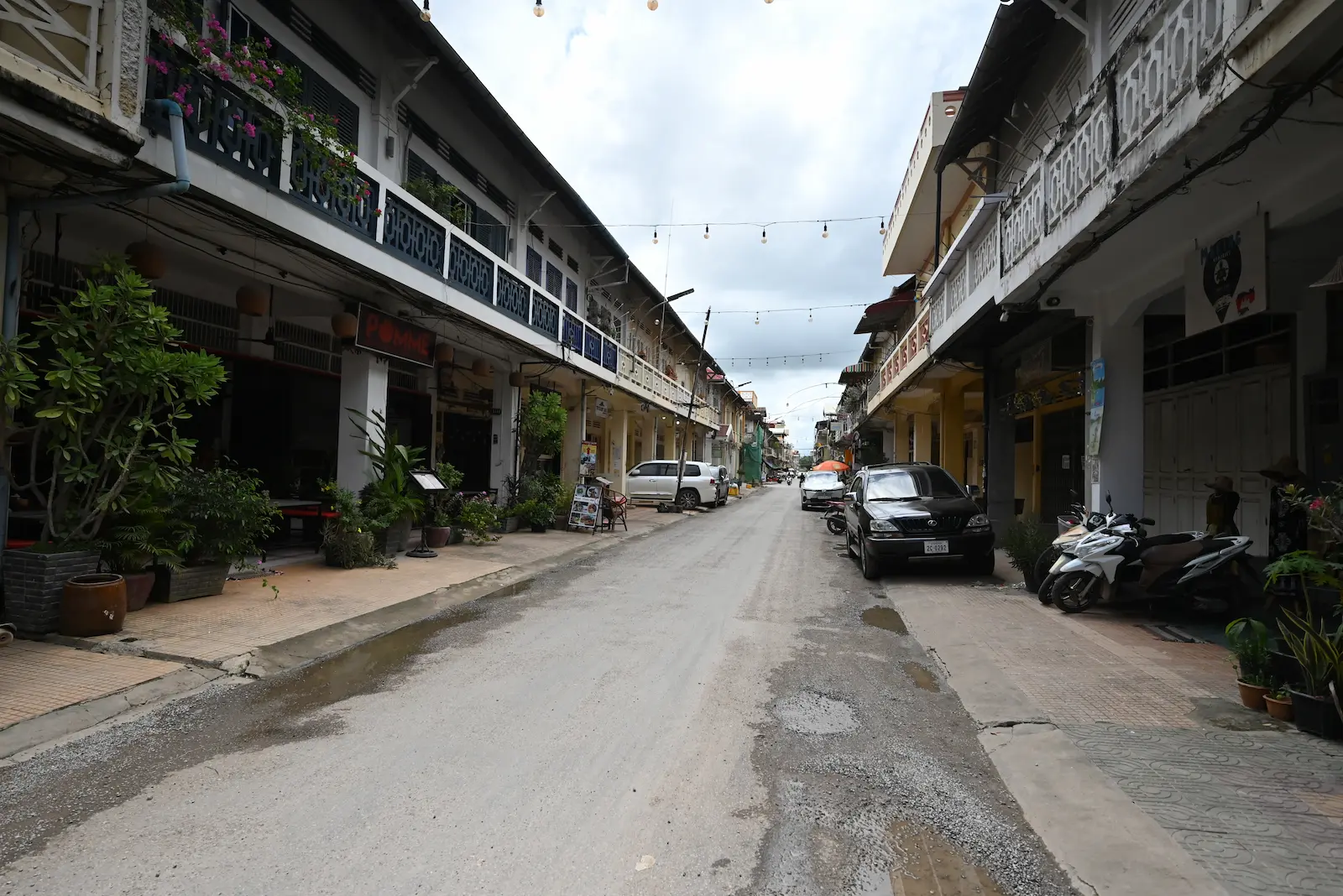
Battambang, in northwest Cambodia, is known as the rice bowl of the country, and agriculture is an important part of life here. Tourism doesn’t dominate Battambang like it does in some other Cambodian cities, so it has a real ‘what you see is what you get’ feel to it.
There is a thriving creative community, with artists, musicians and performers contributing to the city’s cultural life. And then there’s the food. Ask Cambodians about Battambang and chances are they’ll tell you how good the food is. The province has long been known for its agricultural produce and local dishes, and is a UNESCO Creative City of Gastronomy.
It is also a city with a special place in our hearts. Nehru was born in Battambang province, Mel lived here for six years, and it’s where we met. We’ve both spent many years exploring the city and surrounding countryside. In this guide, we share our favourite places to visit, things to do and practical tips to help you plan your trip to Battambang.
A Little History of Battambang
Battambang has a long history, with some of Cambodia’s earliest evidence of human occupation discovered at nearby Laang Spean Cave. The region later became part of the Khmer Empire, and you can still see the remains of Angkorian temples at Baset, Banan and Ek Phnom.
By the late 18th century, Battambang had come under Siamese control, where it remained for more than a century. One of the most interesting buildings from the end of this period is the Governor’s Residence, commissioned in 1905 by the last Siamese governor, Chhum Abhaiwongse. It has a European appearance, but it was actually built just before Battambang returned to Cambodia in 1907 as part of an agreement between Siam and France.
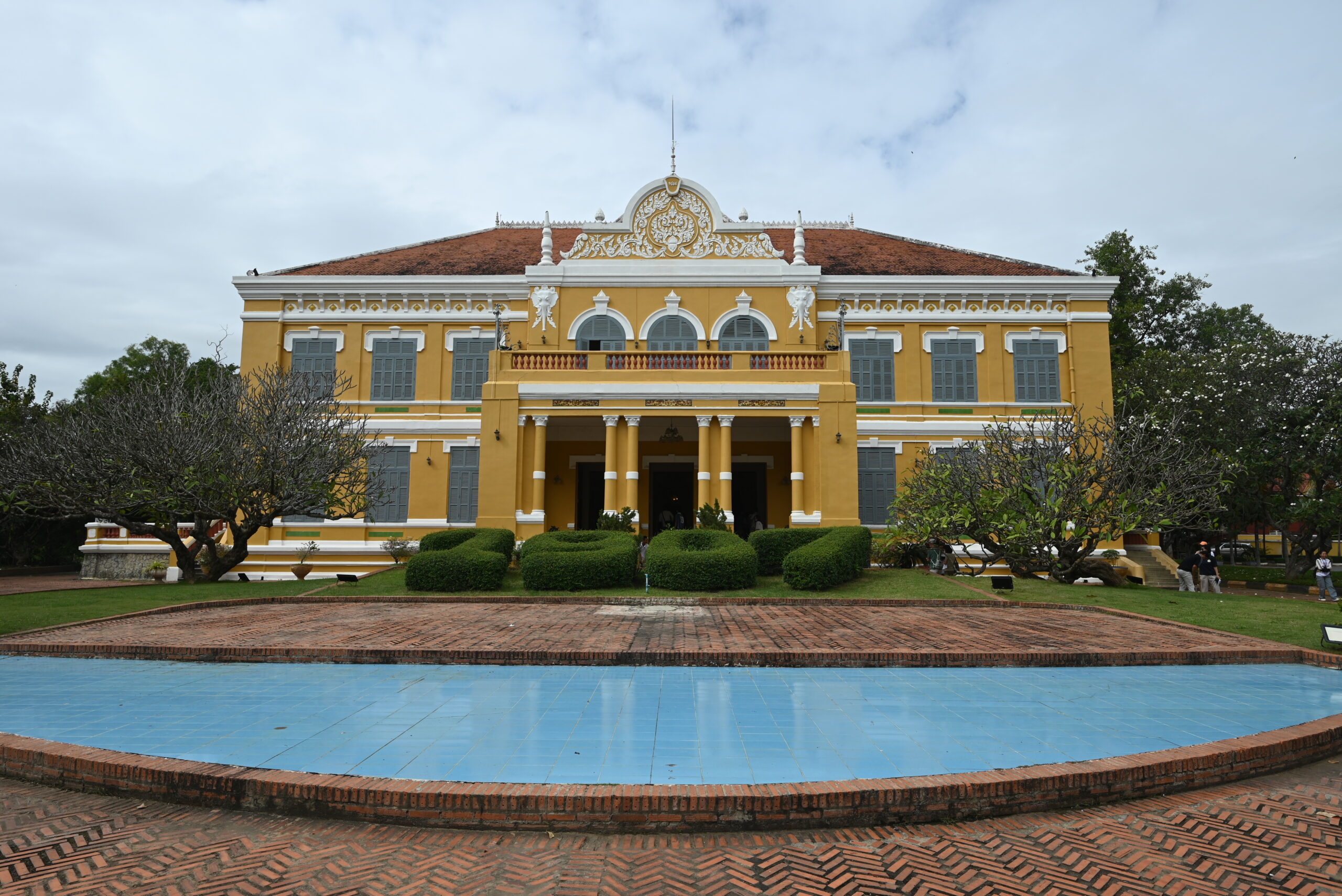
Under French administration, Battambang developed into an important regional centre. Roads, bridges and government buildings were constructed, and the streets around the Sangke River became the heart of the town. Rows of shophouses appeared alongside colonial-era buildings, which you can still see in the centre of town today.
After independence from France in 1953, Battambang continued to develop as an important regional centre. New schools, public buildings and universities were built during the Sangkum period under Norodom Sihanouk, before the civil war brought much of that development to a halt.
Like the rest of Cambodia, the city suffered heavily under the Khmer Rouge from 1975 to 1979. When the Khmer Rouge took control in April 1975, residents were forced to leave their homes and move to rural areas, where many were put to work in agricultural labour camps. The surrounding countryside became the site of prisons and killing grounds, and you visit some of the memorial sites at the Killing Caves and Samrong Knong Pagoda.
Today Battambang is a thriving city, known for its large number of universities and pagodas, the variety of food grown and produced in the area and its creative community.
Things to do in Battambang
Explore Battambang’s Colonial Buildings
Battambang sits along the Sangke River, which runs through the centre of the city, dividing it in two. Most of the colonial architecture is on the western side of the river, where you’ll find Phsar Nat, the central market, and rows of old shophouses.
Phsar Nat is one of Battambang’s most recognisable buildings, so it’s a useful landmark to help you get your bearings around town. Built in 1936 during the French colonial period, the market is a beautiful example of Art Deco architecture, although it is looking a little run down these days. It’s still a busy market, and is worth a walk through the tight rows of stalls or to buy some fresh fruit at the stall outside.
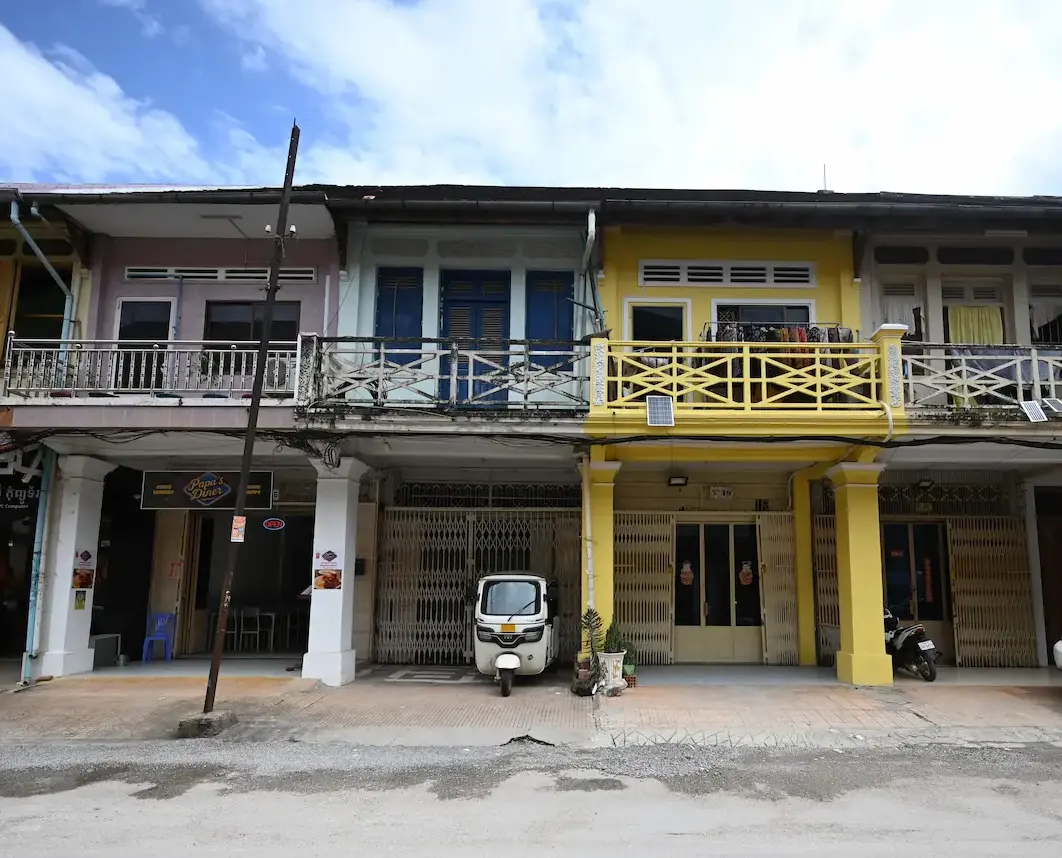
If you’re interested in architecture, there’s lots to see in the streets surrounding the market. Take a walk along Streets 1, 1.5, 2 and 2.5 (yes, the simple street names are great for getting around!) and you’ll see rows of narrow, two-storey shophouses with shuttered windows. Some of these now house cafes, restaurants and other businesses, but don’t forget to look up at the old buildings above the shopfronts. And, of course, stop for a coffee or something to eat along the way.
There are a few buildings worth walking past, including the old Post Office and the Governor’s Residence, both interesting examples of Battambang’s historic architecture. And if you enjoy exploring old buildings, head to Wat Kor Village to visit a traditional Khmer wooden house.
On a Saturday, Skual Tours does a free walking tour that covers much of this. Check their facebook for details but it is well worth doing. They have excellent tours.
Ride the Bamboo Train
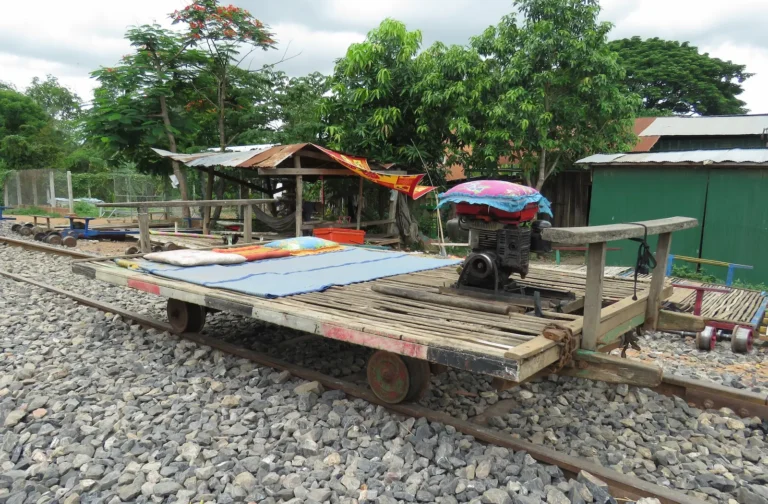
It’s loud, fast, bumpy and a whole lot of fun! Sitting on a bamboo platform with little more than a mat, a few cushions and a handrail to hold onto, you’ll race along the railway tracks through the Cambodian countryside. We’ve clocked speeds of around 55 km/h, so it’s certainly not for the faint-hearted.
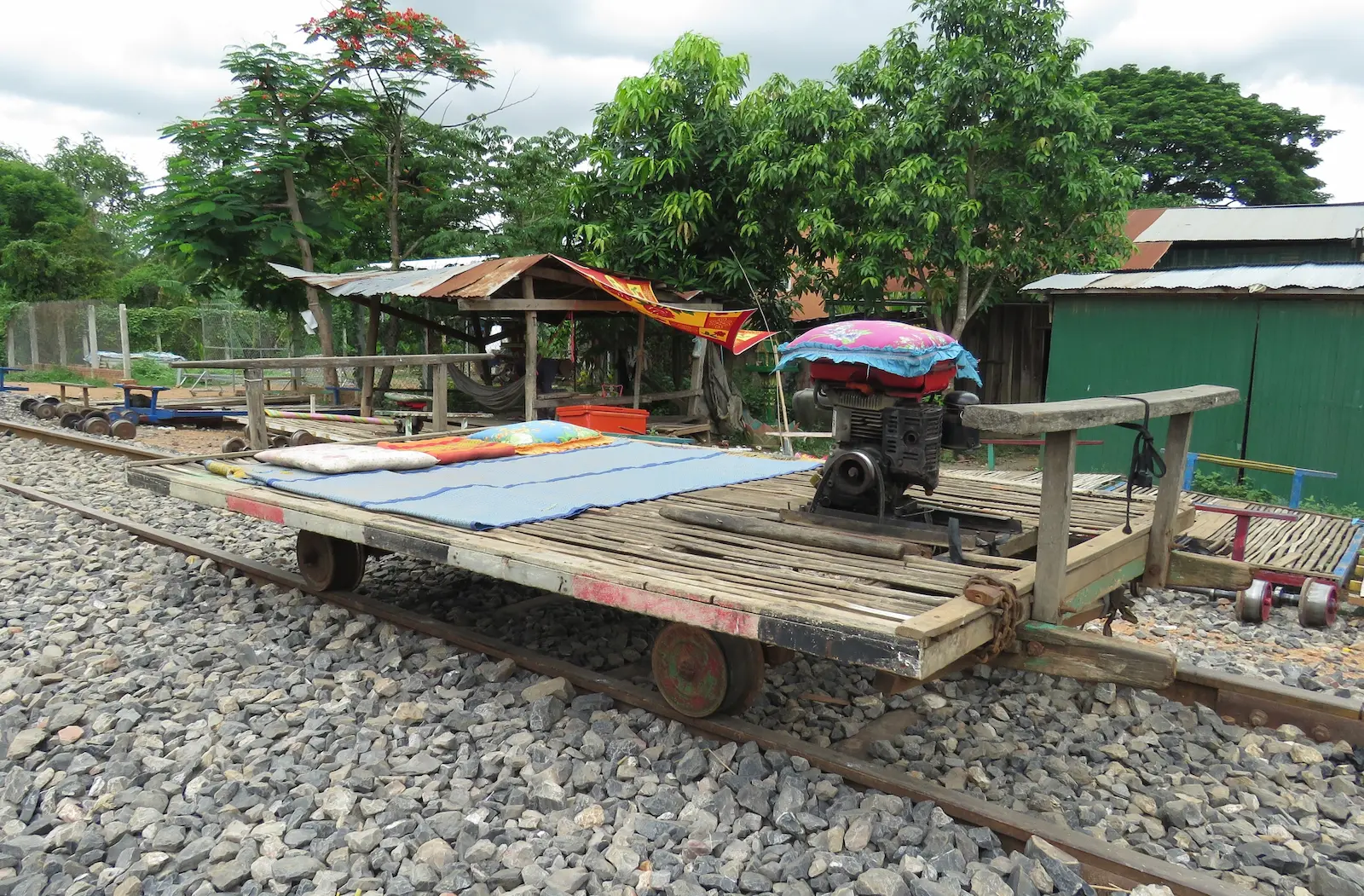
Known locally as a norry, the Bamboo Train was originally used to transport people and goods when regular train services were unreliable. Today, it’s really just there as a tourist attraction and a very popular one at that. If you’re lucky enough to meet another bamboo train coming in the opposite direction, you’ll get to watch one being dismantled and lifted off the tracks to let the other pass.
There is also a newer Bamboo Train near Phnom Banan, which offers a very different experience. We’ve tried both and enjoyed them for different reasons but you can read our guide to compare the two.
Visit Phnom Sampov and the Bat Caves
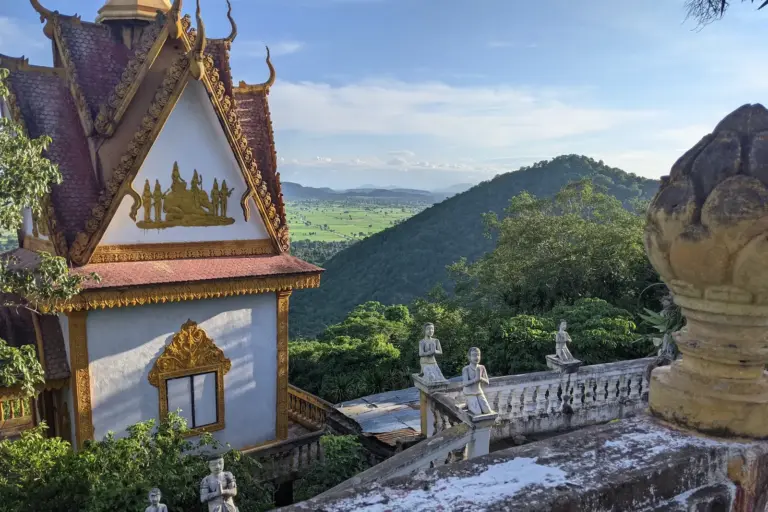
About 15 km outside Battambang is Phnom Sampov, a limestone hill famous for millions of bats streaming out of the cave at sunset. It’s one of our favourite things to do in Battambang, and no matter how many times we’ve seen it, we’re still amazed by the sheer number of bats filling the sky.
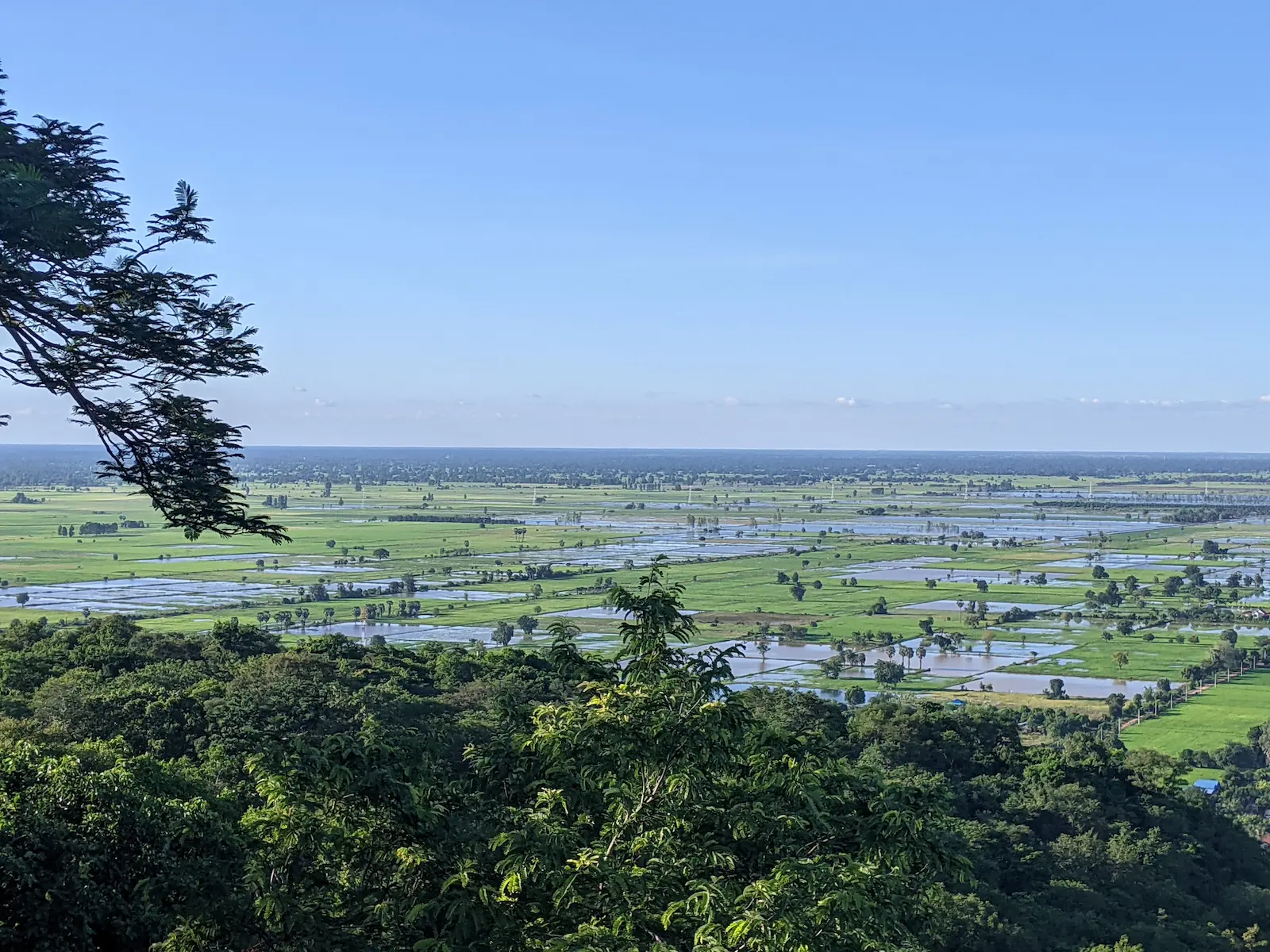
But there’s much more to Phnom Sampov than the bats. You can climb the hill to see the pagoda, caves and amazing views across the Battambang plains. But be warned, it is quite a climb so bring some good walking shoes.
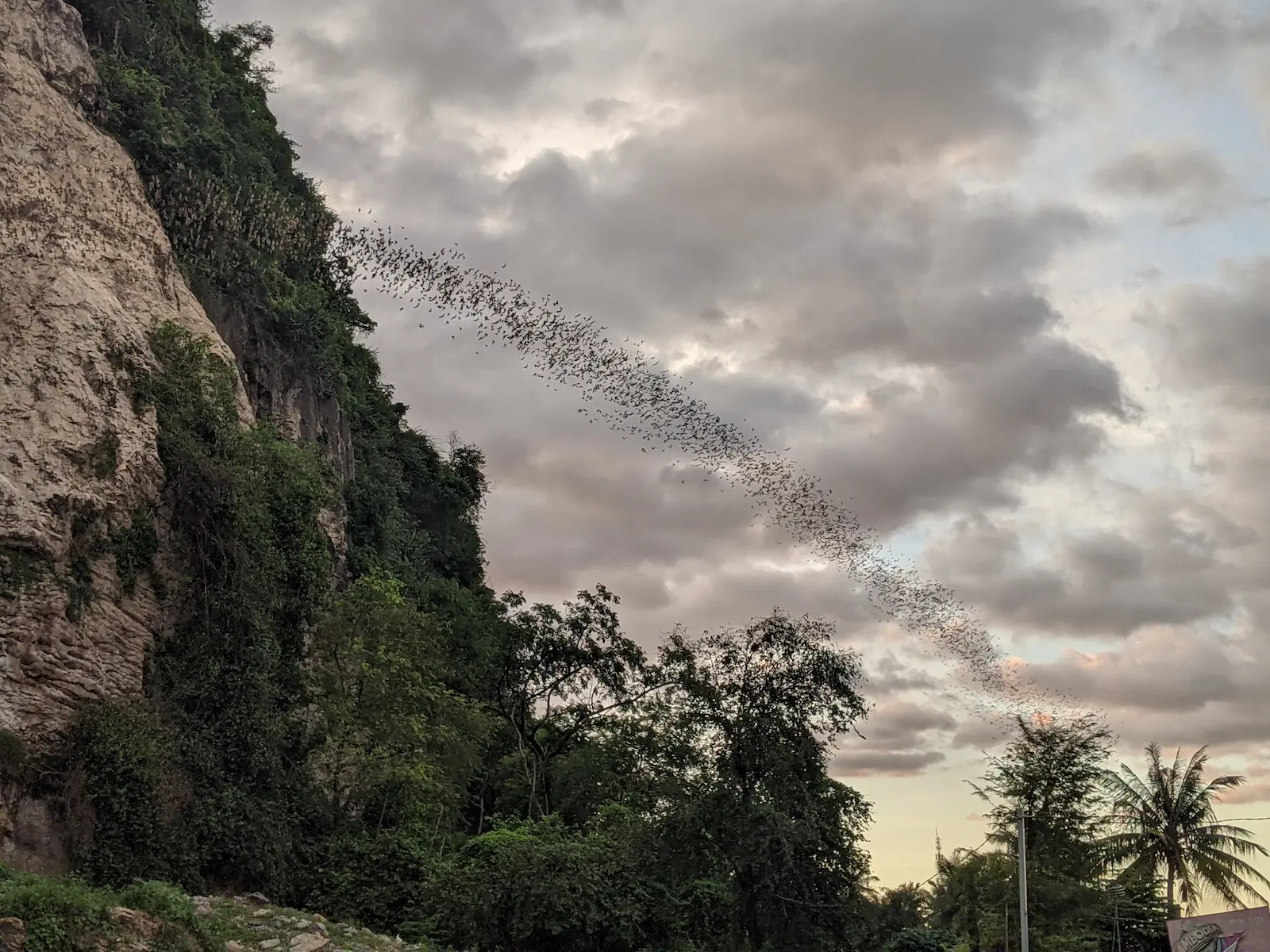
We like to head out in the afternoon to explore the mountain before making our way back down to watch the bats emerge at sunset. You can easily spend a few hours here looking at the pagoda buildings and visiting the caves. The Killing Caves serve as a memorial to those who died here during the Khmer Rouge period.
Read our complete guide to Phnom Sampov and the Bat Caves for our favourite walking route, including the lesser-known caves, temples and viewpoints, along with practical advice for planning your visit.
See a Circus Performance at Phare Ponleu Selpak
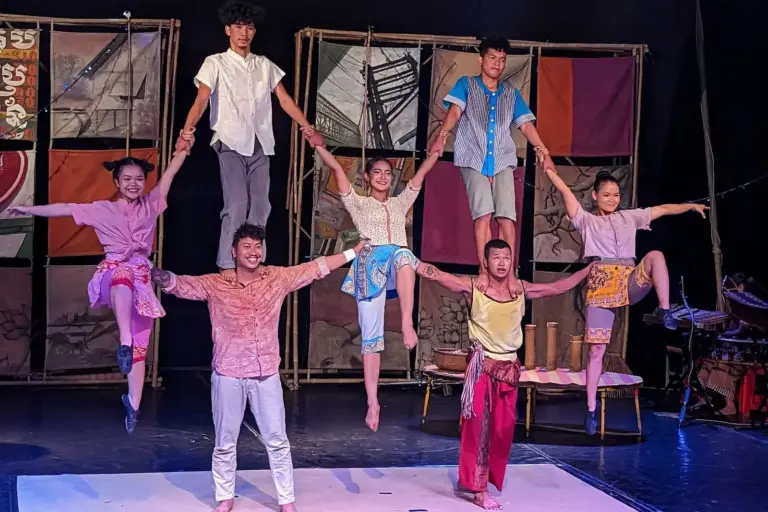
The circus at Phare Ponleu Selpak is a high-energy, high-skill performance and an edge-of-your-seat experience we think everyone should see.
Under the big top, you’ll see juggling, acrobatics, diabolo, balancing, fire sticks and aerial performances, all set to energetic Cambodian music. Think Cambodia’s version of Cirque du Soleil, with performers tossing people high into the air, completing twists and turns that will have you holding your breath.
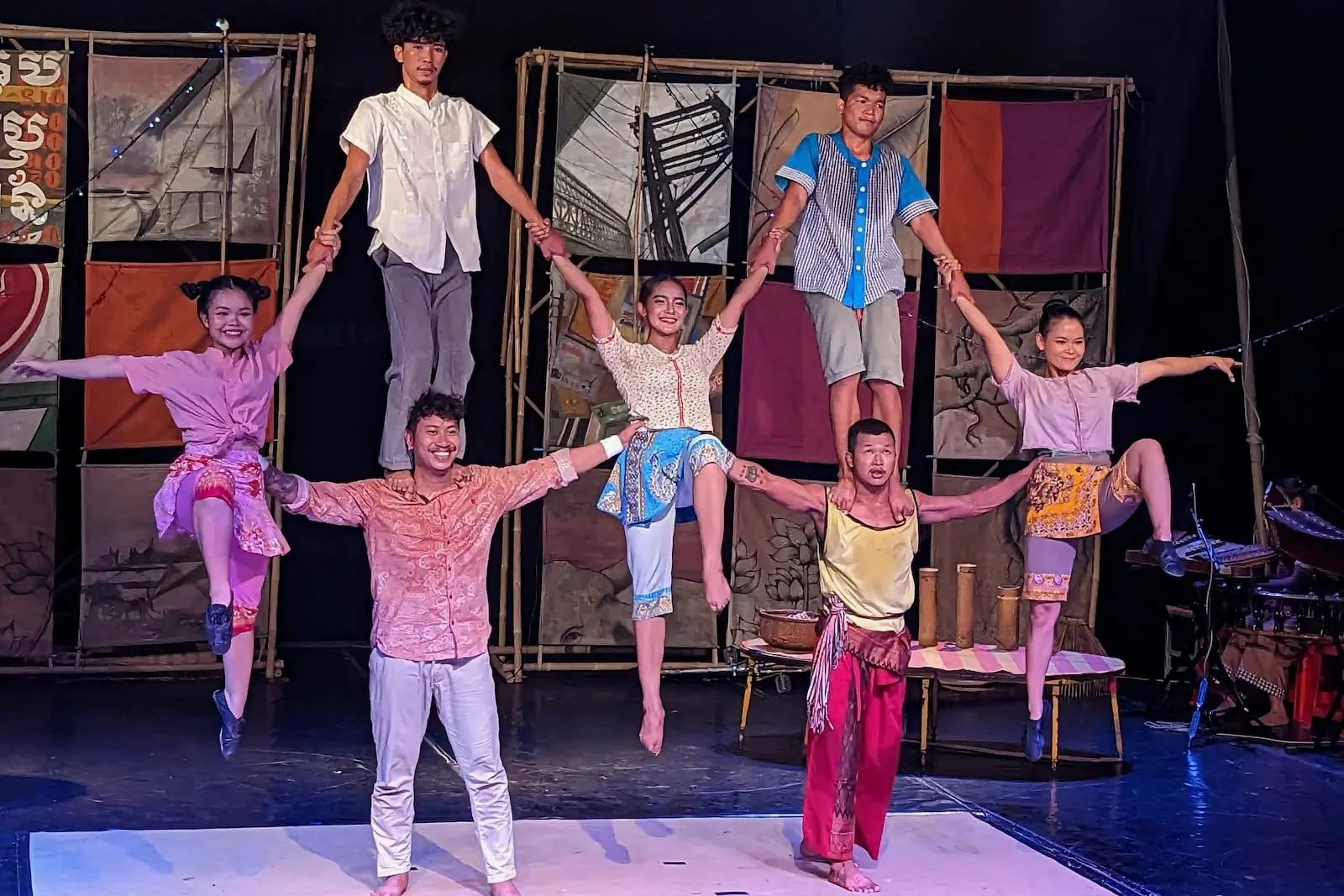
What we particularly love about the Battambang circus is that it’s a training ground for young performers. Sometimes a trick doesn’t quite work the first time, but the performers try again, with the audience clapping and cheering them on. It makes for a wonderful atmosphere.
Wander Battambang’s Art Galleries and Street Art
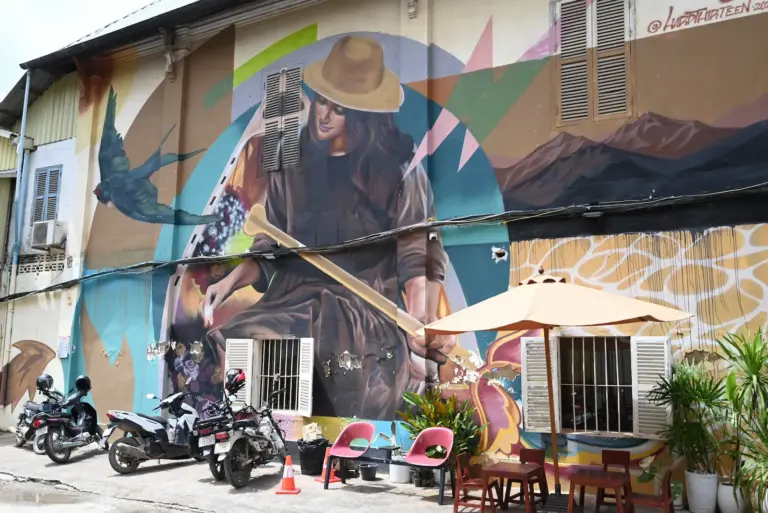
Battambang has a thriving arts community, from contemporary art galleries to colourful murals tucked away in the streets and alleyways.
Much of the street art comes from the S’Art Festival, which brings Cambodian and international artists together to paint murals around the city. You’ll naturally come across artwork as you wander around the centre of town, but look down the alleyways for more. Or have a coffee at Kinyei and admire the street art from the seats at the front.
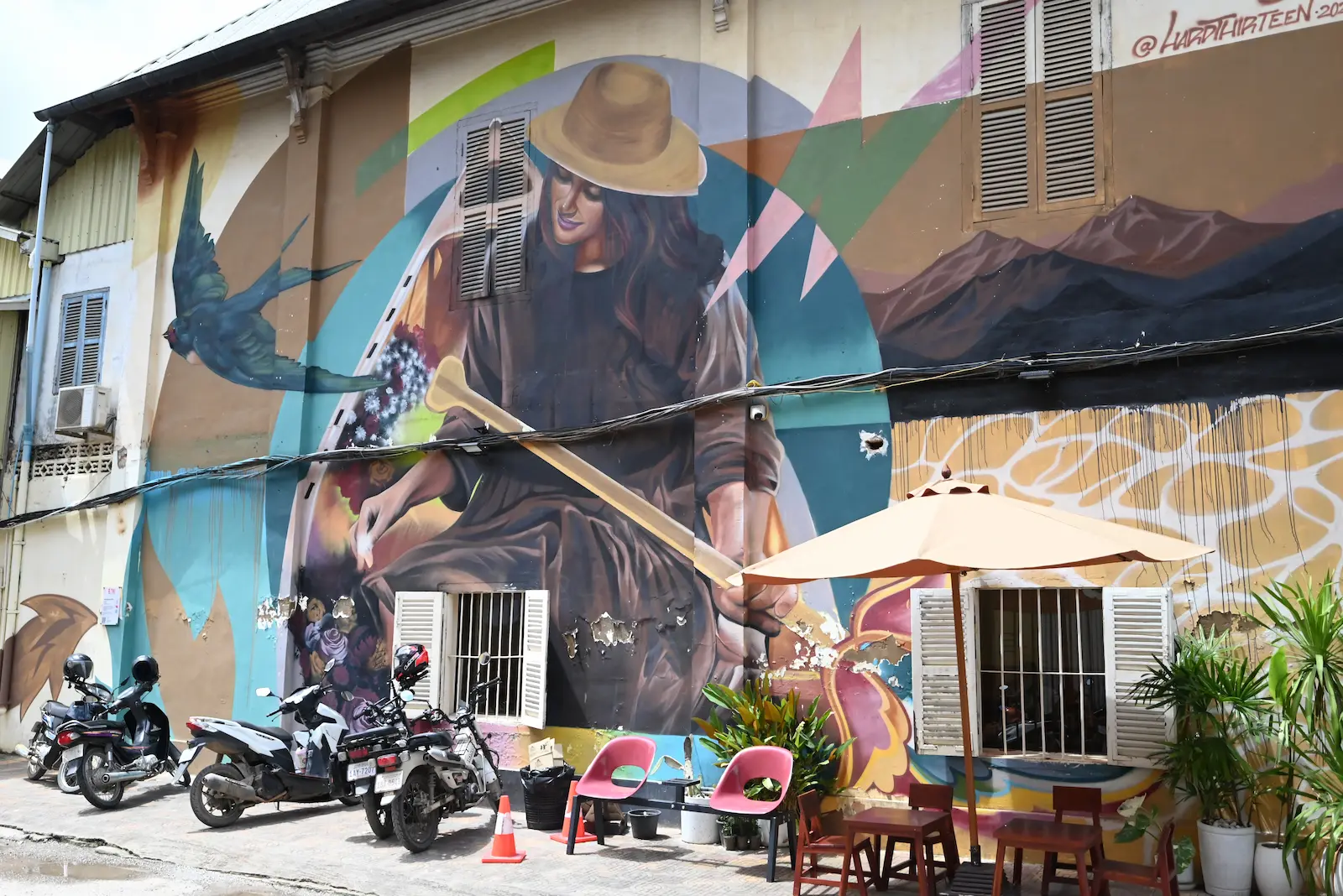
There are also some excellent art galleries to visit. Romcheik 5 Artspace has an impressive collection of Cambodian contemporary art, while smaller spaces such as Bossbha’s House showcase exhibitions and the work of local artists.
You can easily spend an afternoon exploring the galleries and murals, stopping for a coffee or lunch along the way. Read our guide to Battambang’s street art for a walking tour of our favourite places to visit and where to find the murals.
Explore Battambang’s Angkorian Temples
You might be a little templed out if you’re coming from Siem Reap, but Battambang has some wonderful Angkorian temples of its own. They might not be as grand as Angkor Wat, but they’re well worth exploring, especially as you may have the ruins almost entirely to yourself.
At Banan, you climb 358 steps up a beautiful naga-lined staircase to reach the temple. There are five ancient towers on top of the hill, with wonderful views across the countryside.
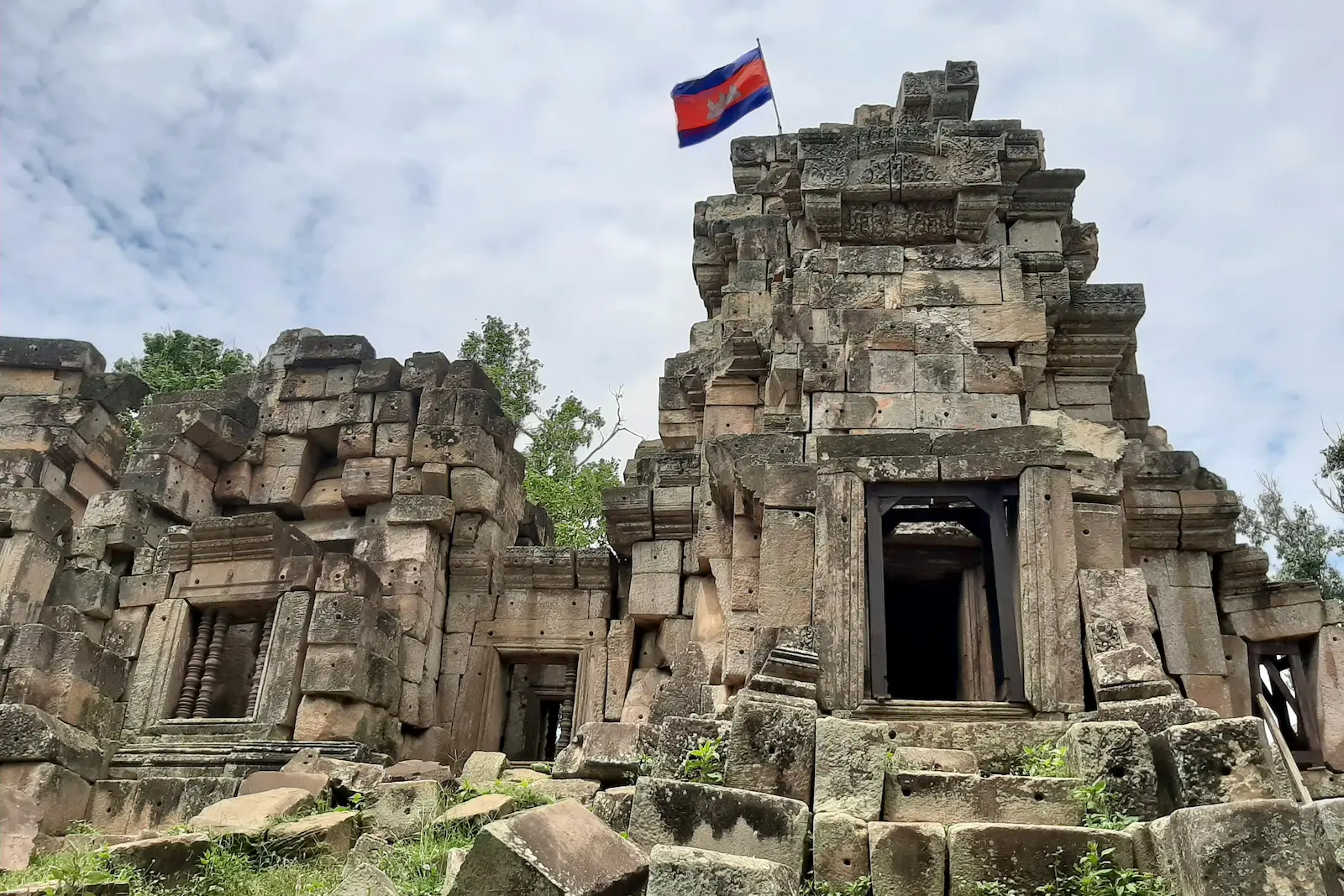
Ek Phnom Temple is probably our favourite (although we like all of them for different reasons), mainly for the contrast of old and new. You scramble over fallen sandstone blocks and look through an ancient stone window that perfectly frames the colourful modern pagoda.
Prasat Baset is an 11th-century sandstone temple built during the reign of King Suryavarman I and has recently undergone extensive restoration. It’s only a small temple, but it has some beautiful carvings and looks quite amazing now that it’s been reconstructed.
Learn About Battambang’s Khmer Rouge History
Battambang played an important role during the Khmer Rouge period. Its fertile rice-growing plains were important to the regime’s agricultural ambitions, so hundreds of thousands of people were relocated to the area to work in labour camps. Today, there are several places around Battambang where you can learn about this difficult history but they are sobering places to visit, so not everyone will want to include them in their trip.
At Wat Samrong Knong, the Well of Shadows memorial remembers those who died here and has some information about the local area during this time. The old pagoda, dating from the early 19th century, was used as a prison, and the site became a centre for interrogation and torture.
At Phnom Sampov, the Killing Caves are another important memorial. Prisoners were interrogated and killed at the nearby pagoda and then thrown into the limestone caves. There’s a small shrine containing human remains alongside Buddhist statues in remembrance of those who died. Most people visit the killing caves as part of their tour of Mount Sampov.
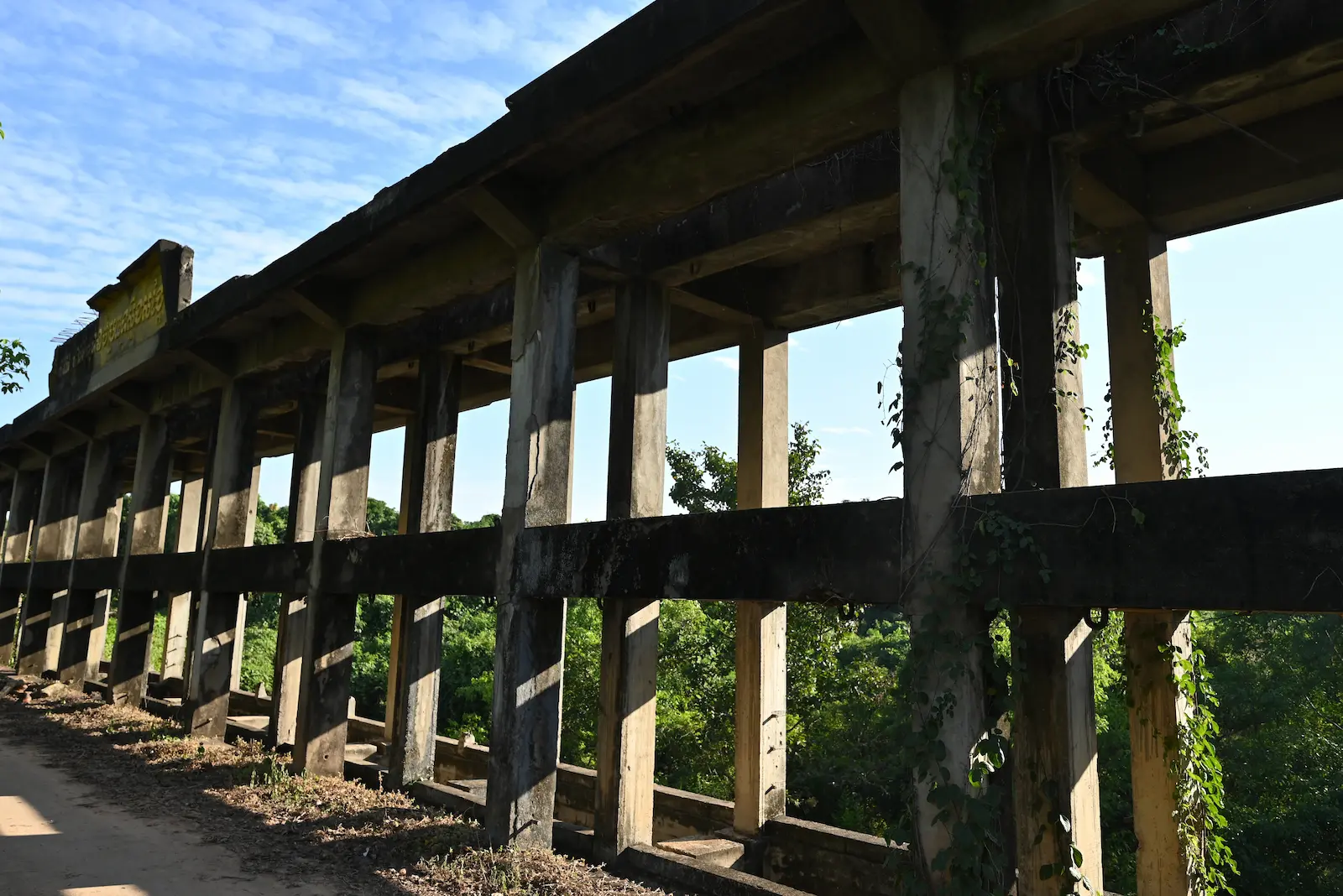
Further from town, Kamping Puoy Reservoir and Kanghot Dam are examples of the Khmer Rouge’s irrigation projects. You won’t necessarily find Kamping Puoy or Kanghot Dam on the usual tuk tuk tour itineraries, but you can arrange to visit them with a local driver. Kanghot Dam is even less well known, so it’s worth showing your driver the location on a map before heading off. Kamping Puoy is popular as a sunset spot and you can organise a boat trip.
Look through Battambang’s Museums
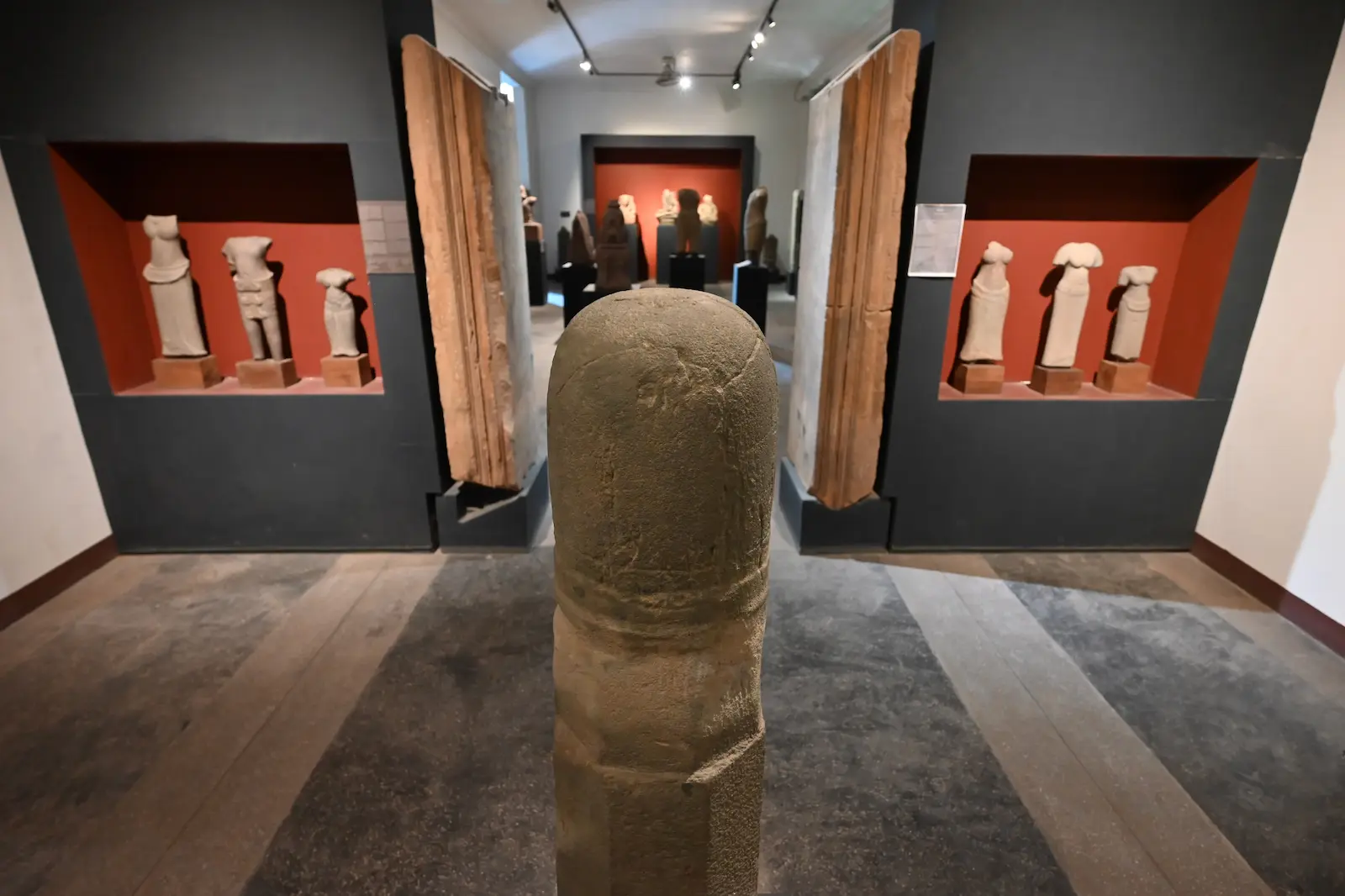
We only recently visited the Battambang Museum for the first time and really enjoyed it. It’s only small but has quite a lot of artefacts recovered from the Angkorian temples around Battambang.
There’s also a section on Laang Spean, the cave where they have uncovered prehistoric artefacts. It’s definitely worth visiting the museum if you’re also planning to visit Laang Spean.
For something a little different, upstairs at KC’s Burger, one of the owners has put together an eclectic collection of historical photographs, ephemera, old coins, books and other objects documenting Battambang’s past. It’s free to visit. Just ask at the restaurant.
Outside of town, the Cambodia Peace Gallery has exhibits about Cambodian peace builders, the United Nations peacekeeping mission, landmines and Cambodia’s own contributions to international peacekeeping. It’s worth checking their Facebook page or giving them a call before heading out, as their opening hours can vary.
Battambang is also expecting a branch of the SOSORO Museum of Economy and Money, scheduled to open in late 2026. We are looking forward to visiting this when it opens.
Explore the Pagodas Around Town
Battambang has some beautiful old pagodas, many of which are within easy walking or cycling distance of the town centre. One of the most interesting is Wat Damrei Sor, the White Elephant Pagoda. Built in the early 1900s by Battambang’s last Siamese governor, it has some beautiful paintings of daily life on its exterior walls. Make sure you walk around to the back to see the relief of Lord Rama fighting Ravana.
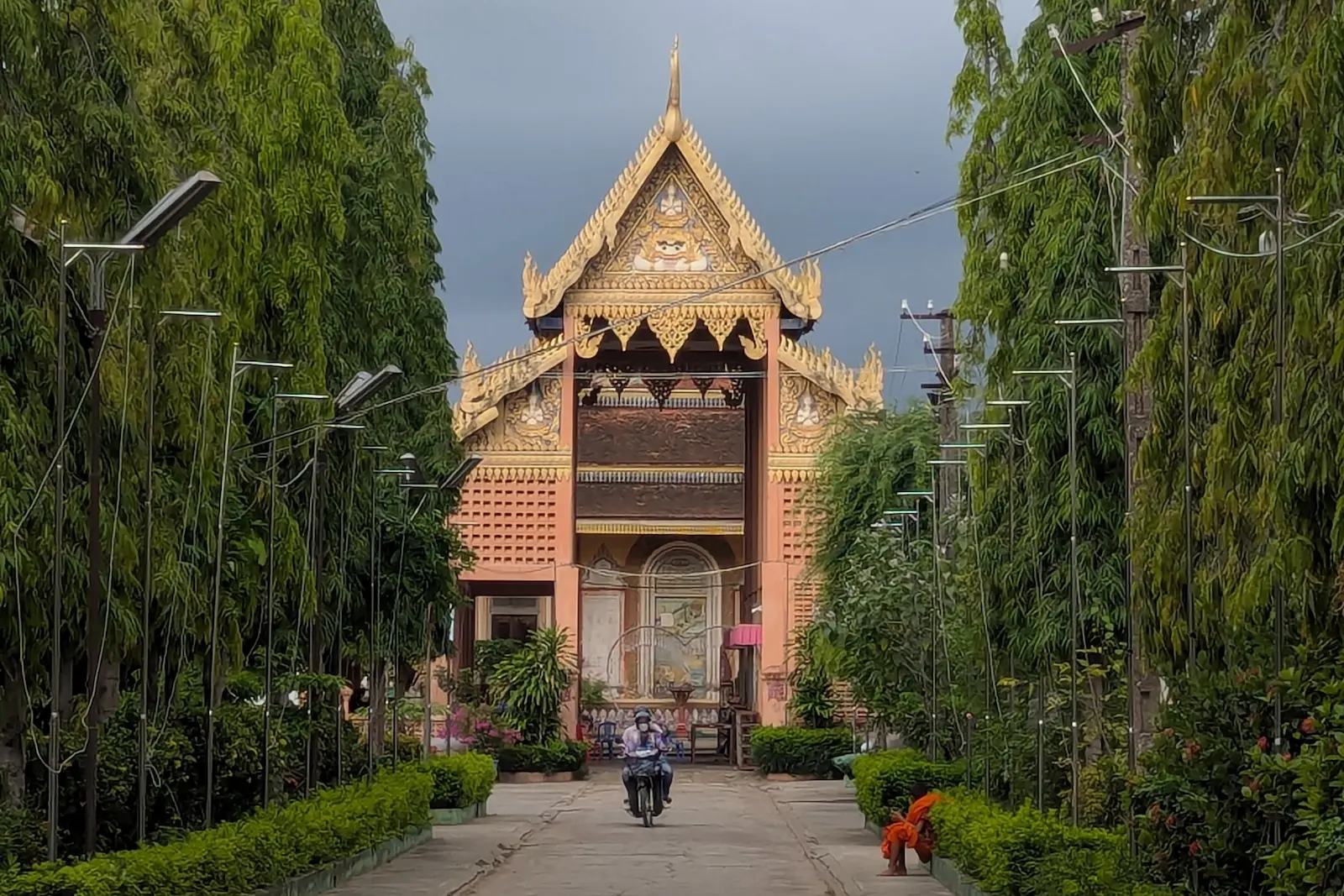
Across the Sangke River, Wat Kandal is one of our favourites. It has a tall entrance gateway with terracotta-coloured walls, latticework and decorated gables, which looks particularly beautiful at golden hour. Nearby are Wat Bo and Wat Sangke, which has Bayon-style faces at the entrance.
There’s a Chinese temple on Road 1 that’s rather interesting, and very different to the Khmer pagodas you might be used to seeing in Cambodia. Look for the red temple near the new SOSORO museum. And if you are heading out of town for the bamboo train, there is also a Bahá’í House of Worship, open to all faiths, in Battambang. It is worth stopping in to see the interesting nine-sided design.
Visit the Markets and Try a Cooking Class
One of the best ways to learn more about Cambodian food is to take a cooking class, and Nary’s Kitchen runs one with Toot, who is a real character. The classes start with a walk through the market, where you’ll learn about the different ingredients used in Cambodian cooking, before heading back to the nearby restaurant to make dishes such as fresh spring rolls, fish amok and lok lak. And, of course, you get to sit down and enjoy everything you’ve made afterwards.
If Nary’s Kitchen is fully booked, Coconut Lyly, just next door, offers a similar cooking experience.
Even if you don’t have time for a cooking class, Battambang’s markets are worth exploring. Boeung Chhouk Market has a large fresh food section, with stalls selling all sorts of fruit, vegetables, meat and other ingredients. Upstairs, you’ll find fabric sellers and tailors.
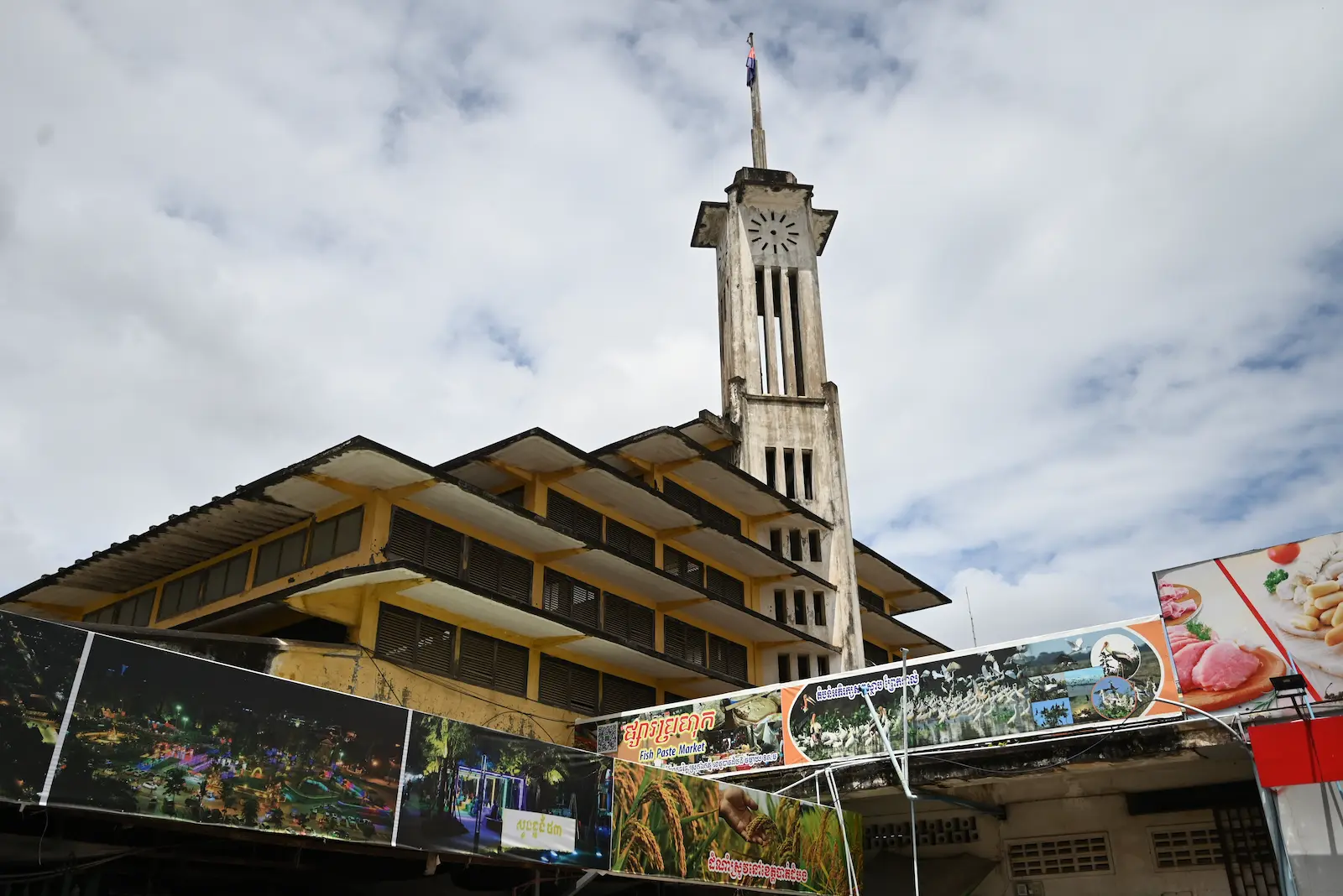
Phsar Nat, the central market, is also worth a wander inside, as well as admiring the art deco building from the outside. You’ll find stalls selling everything from gold jewellery and household goods to clothing, with hairdressers and hair-washing services tucked in amongst them.
Go Shopping in Battambang
If you’re looking for souvenirs or locally made handicrafts, there are some lovely little shops scattered around Battambang, with quite a few along Street 2.5.
The Lonely Tree has a great selection of Cambodian handicrafts, clothing, scarves, jewellery and gifts. It’s also a social enterprise supporting people with disabilities and those at risk of social exclusion, with profits helping to fund community projects.
Bossbha’s Shop, a recent addition to Battambang’s shopping scene, has a lovely selection of scarves and local handicrafts. There’s also Making Memories opposite Pomme on Street 2.5, where you can browse souvenirs and book local tours. Visamak on Street 1.5 also has a selection of souvenirs as well as the visa services they offer.
And keep an eye out when visiting some of Battambang’s hotels and restaurants. Places such as Bambu Hotel, The Gecko and La Pizza also have small selections of souvenirs and handicrafts, so it’s worth having a look while you’re there.
Shopping isn’t going to fill a whole day like it can in Phnom Penh or Siem Reap but these places are well worth popping into. After an hour of shopping, stop in at Lemongrass Spa on 2.5. It’ is our favourite’s the best spa in town, set in a beautiful colonial-era shophouse. They offer a range of treatments but the 4 hands massage is amazing. You might need to book on busier days.
Do What the Locals Do
One of our favourite things to do in Battambang is to head out around 5pm, when the heat begins to ease and the city’s public spaces fill with people exercising, catching up with friends and enjoying the evening.
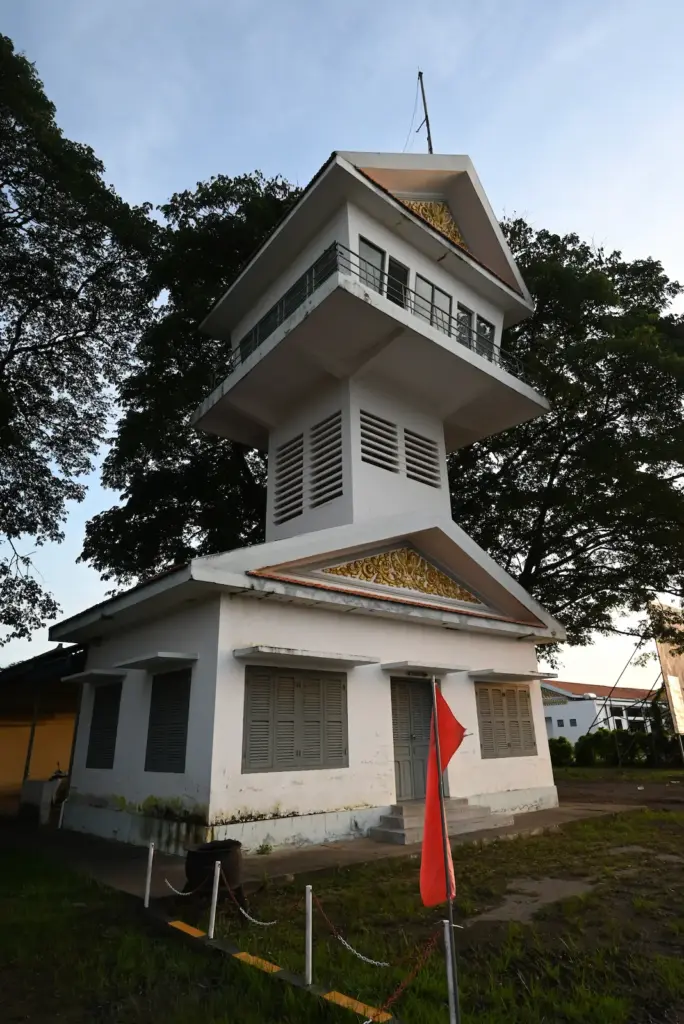
The parks along the Sangke River have recently been redeveloped, with much of the green space unfortunately replaced by concrete. But they’re still a favourite gathering place for locals. You’ll find people walking, running, playing badminton and kicking shuttlecocks, while groups in matching shirts follow aerobics instructors to loud music at Sar Kheng Park. You can even join in! In the evening food carts arrive selling everything from fried crickets to noodles and ice cream.
Another favourite is Battambang Airport, about 3 km from the city centre. Although it’s no longer used for scheduled passenger flights, the runway becomes a popular recreation space in the evenings. People walk, run and cycle while families spread out mats, share food and watch the sunset.
Head Out into the Battambang Countryside
One of the wonderful things about Battambang is how easily you can get out into the countryside. Just a short ride from town, whether you choose a bicycle, moto or tuk tuk, there are plenty of interesting places to explore.
One of our favourite cycling trips is the 25 km loop out to Ek Phnom, stopping at the ancient temple and the Well of Shadows memorial along the way. You can also stop in the villages to see rice paper being made or watch the production of prahok, the fermented fish paste used in many Cambodian dishes. It’s a fairly smelly experience, but really interesting to watch. Soksabike do a great cycle trip to visit all of these.
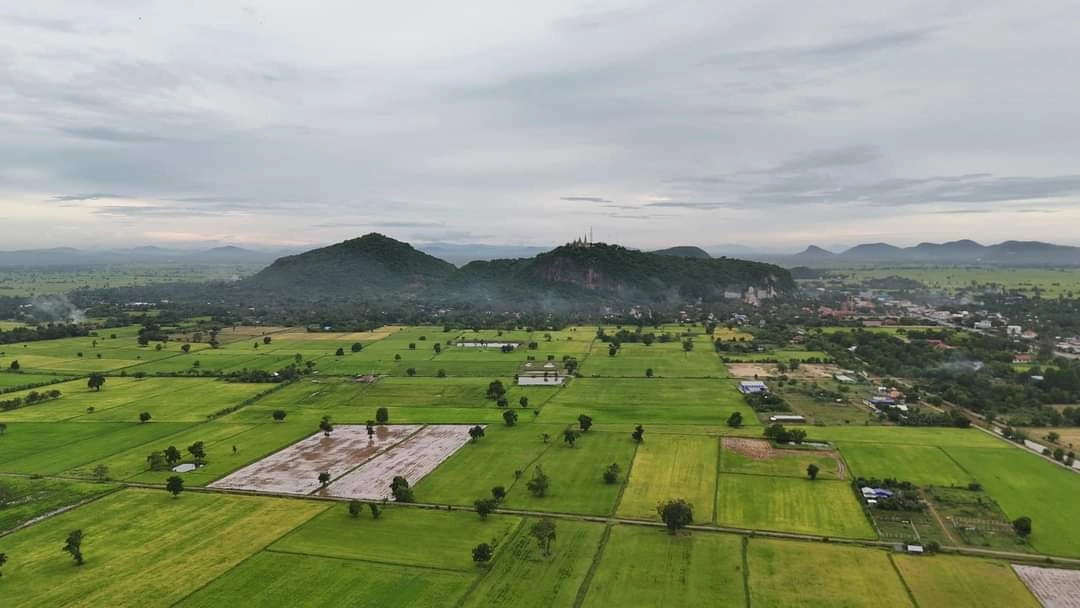
If cycling isn’t your thing, most drivers with the larger remorque-style tuk tuks offer countryside tours, or you can arrange your own route with a driver. Expect to pay around $15–20 for a half-day tour or $30–40 for a full day, depending on the distance and number of stops.
One of the popular routes takes you past the suspension bridge and mushroom and chilli farms on the way to the Bamboo Train. Or you can go past the Bahá’í temple and fruit bat colony on the way to Banan.
Where to Stay in Battambang
Battambang has a good range of accommodation, from small guesthouses and hostels in the town centre to boutique hotels and resorts a little further out. We’ve stayed in quite a few places over the years, and there are plenty of other options depending on your budget and whether you’d prefer to stay in town or somewhere a little quieter.
Bambu Hotel is our favourite place to stay in Battambang. The staff are wonderful, and the hotel is beautifully designed, combining traditional Khmer and French colonial architectural styles. The rooms are set around a lovely garden and swimming pool. Inside, you’ll find beautiful reclaimed floor tiles and wooden furniture.
A little further out of town is Battambang Resort, whose bungalows overlook a small lake. It’s a very peaceful place to stay, although the trade-off is that you’re a little further from the town centre. You can easily get a PassApp and Grab though, for around $2.50 for the trip into town.
For something with more of a village feel, we’ve enjoyed staying at Bon Riverside Homestay in Wat Kor village, along the Sangke River. Or just down the road is Maisons Wat Kor, made famous for hosting Angelina Jolie and Brad Pitt in 2016, during the filming of First They Killed My Father, but it does have a much higher price tag.
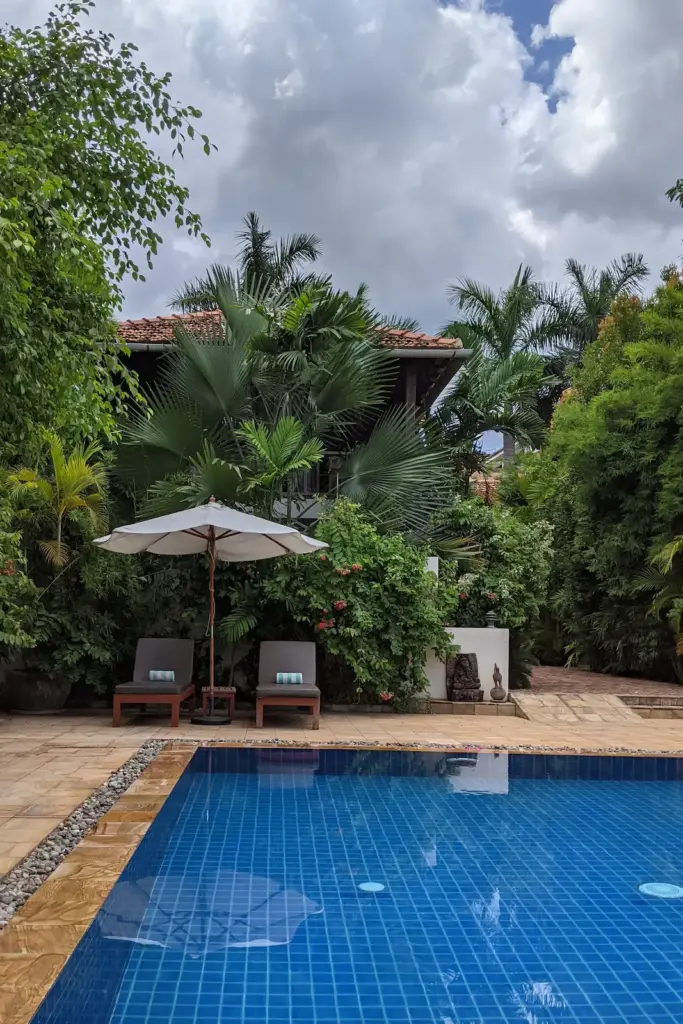
If you’re looking for something more budget-friendly, Pomme is a great option in the centre of town. It has a bit of a hostel atmosphere but offers private rooms, and the location on Street 2.5 is excellent for exploring Battambang on foot.
Another popular budget option is The Place Hostel, on the other side of Phsar Nat, while Muni Residence and Cambana La Rivière Hotel are good mid-range options.
Eating and Drinking in Battambang
There are plenty of great places to eat in Battambang, and it’s hard to fit all our favourites into one guide. From local Khmer restaurants and street food stalls to international restaurants, cafes and bakeries, there’s no shortage of options around town.
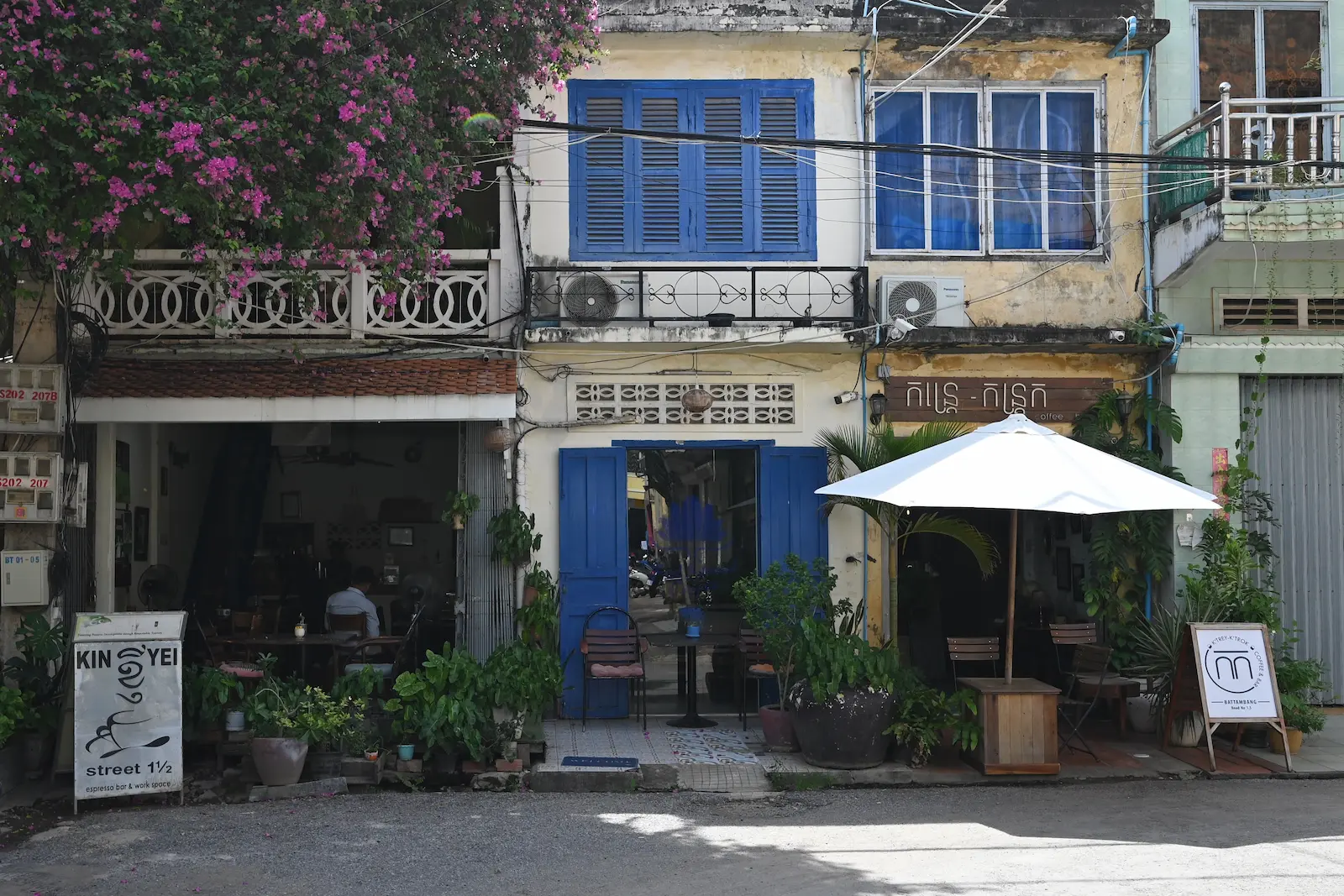
For coffee, Kinyei is our favourite. Look for the beautiful pink bougainvillea flowers out the front of street 1.5 and join the locals and expats for what we think is the best coffee in town. K’trey K’trok, just next door, is also a popular spot, particularly for its cute, instagrammable interior.
You really shouldn’t visit Battambang without eating at Jaan Bai, or our new favourite, its sister restaurant Lok Ov Pok. Jaan Bai has been around for years and is well known for its Khmer food with a more contemporary presentation. We particularly love the pork and cucumber salad and the calamari, and it’s a great place to order a few plates to share. Lok Ov Pok has a more traditional Khmer menu, and the food is so good.
Of course, there are plenty of local Khmer places to eat too. We like to head to the corner of Street 2.5 and Pir Thnu for pork and rice or mi kola. In the afternoons, the area around White Rose and the Chinese school comes alive with food stalls selling everything from snail porridge, spring onion bread and fried meatballs. And look for the coconut ice cream seller if he is there. It’s so good.
The ‘Dumpling Man’ is something of an institution in Battambang. You’ll see him out the front rolling dough and pulling noodles. Inside, there are just a few chrome tables and red chairs, but the food is excellent. The menu is small, the dumplings are superb and the noodles are so soft.
If you’re looking for international food, there’s a good selection too. For pizza, we love La Pizza, set in a beautiful villa-style building where you can enjoy your meal in the garden. The Italian is another favourite, with a good range of Italian dishes and a solid weekly specials board. For Indian food, Masala House on Street 2 is excellent.
Vegetarians and vegans are also well catered for. Monorom Garden has some unbelievable Khmer-style vegetarian food and The Fringe is a good option for its range of salads.
Enjoy the Battambang Nightlife
We’ll be honest here, Battambang is not known for its nightlife. It is generally a quiet town, and by about 9pm many of the streets in the centre have started to wind down. But there are still some great places to enjoy a drink, or a night out.
Street 2.5 is where you’ll find a cluster of bars. Pomme has a laid-back atmosphere, Vintage is a great spot to share a cheese board over a glass of wine, and KC’s Burger is good for a burger and a beer. And new places are popping up along here all the time.
There are also some lovely hotel bars around town, many offering happy hours. Our favourite is Bambu Hotel, with its excellent selection of cocktails and beautiful setting. Happy hour is 5pm to 7pm.
For a later night, head to Balcony, upstairs in a beautiful old wooden house overlooking the Sangke River. It’s a relaxed place for drinks and music, with occasional DJs and live bands. You’ll also find beer garden-style restaurants along the river that stay open later, along with a few places serving food well into the night.
Getting Around Battambang
Getting around Battambang is pretty easy. The city centre is quite compact, and you can walk to most of the attractions, restaurants and shops around town. Unfortunately, there isn’t a lot of shade along the streets, so it can get hot pretty quickly, particularly in the middle of the day.
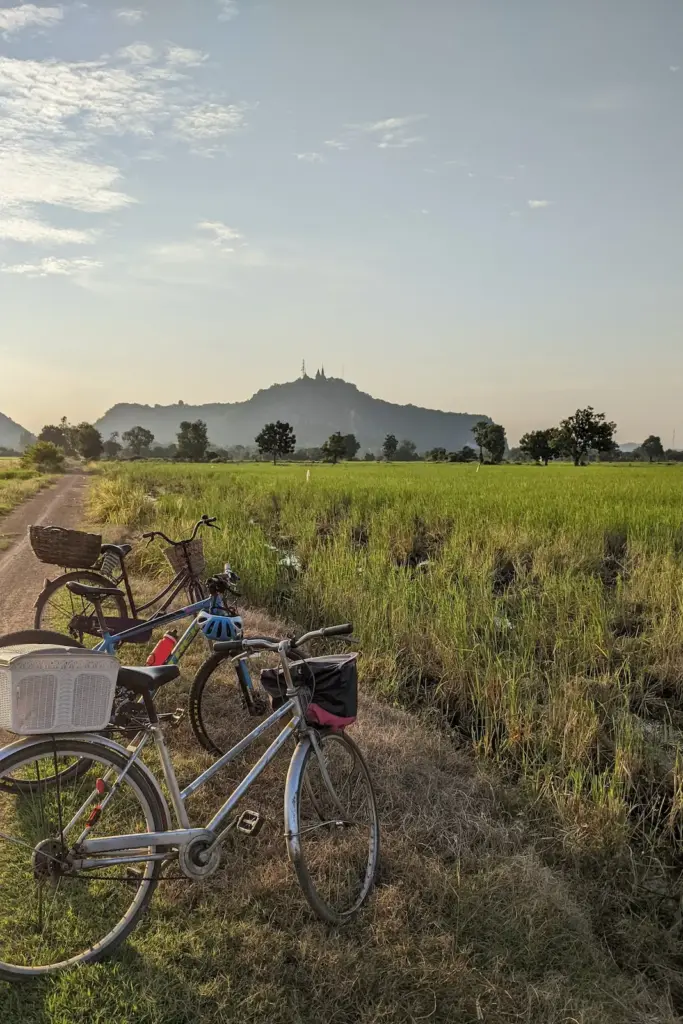
Cycling is a great way to explore Battambang, particularly if you want to head out into the surrounding countryside. You can rent a bicycle from Soksabike for around $5 a day, while Visamak also rents bicycles and motos. Many hotels and guesthouses can organise rentals for you too.
For longer trips, there are plenty of remorque-style tuk tuks around town. Your guesthouse can usually organise a driver, or you can find one on the street and arrange your own tour. Local drivers such as Kim and Andy know the area well, and even if they’re busy, they can often put you in touch with someone else.
Both Grab and PassApp operate in Battambang, making it easy to arrange shorter trips around town. We’ve found there are generally more PassApp drivers available, so it’s often quicker to get a ride through PassApp than Grab.
If you’d prefer to explore by car, particularly for longer trips outside Battambang, ask your hotel or guesthouse to arrange a driver.
How Long to Spend in Battambang
How long to spend in Battambang is a question we’re often asked. And, of course, it depends. If your main focus is to just see the bats at Phnom Sampov and ride the Bamboo Train, one night is sufficient. If you’d also like to see a performance at Phare, you’ll definitely need two nights.
For us, we’d say three nights is a good balance. You’ll have time to see most of the main attractions, as well as sit in a cafe, wander the streets or relax by a pool. But if you find yourself in Battambang for a week, there’s certainly enough to fill your days, and you’ll be able to do it at a much more relaxed Battambang pace.
How to Get to Battambang
Gone are the days when there were only one or two buses into Battambang. The city is now well served by several of Cambodia’s larger bus companies, including Virak Buntham, Larryta and Giant Ibis, with services connecting Battambang to Siem Reap and Phnom Penh.
Virak Buntham also operates its Air Bus service, which is how we usually travel. There are overnight buses available, but we don’t recommend travelling at night in Cambodia. And when travelling to Battambang from Siem Reap or Phnom Penh, the journey really isn’t long enough to warrant an overnight bus, particularly if it means arriving at a bus station at 3am.
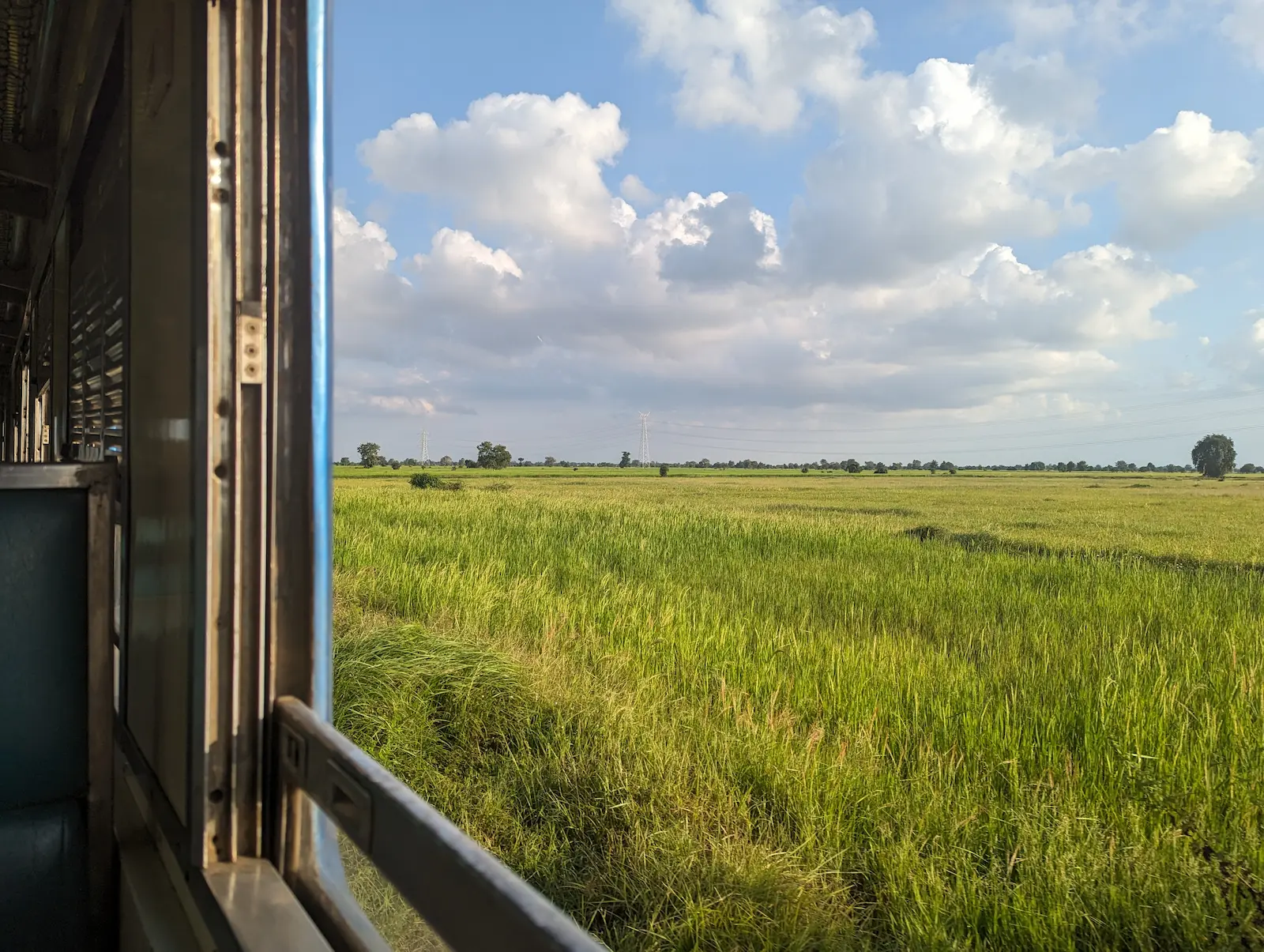
If you have a little more time, one of our favourite ways to travel is by train from Phnom Penh. The train takes you through some glorious rice field countryside, with the Cardamom Mountains visible to the west. It’s a beautiful journey and a relaxing way to travel.
The train takes around six hours, so it’s a little slower than travelling by road, but we think it’s well worth the extra time. We’d recommend travelling from Phnom Penh to Battambang because the train leaves at 6.40am so you can enjoy the countryside along the way. The train returns to Phnom Penh at 3pm, meaning some of the trip is in the dark.
If you’re coming from Siem Reap, there’s also the option of travelling by boat across the Tonle Sap and along the Sangke River. We haven’t done the full journey yet, but it’s definitely on our list when we have the time.
There are also plenty of private taxis travelling between Siem Reap, Phnom Penh and Battambang. You can find drivers through your hotel or guesthouse, or through local Facebook groups. We like to travel with Vuthy Taxi when going to and from Battambang.
Where to After Battambang?
Battambang is in a great position for exploring more of northwest Cambodia. Most visitors arrive from Siem Reap or Phnom Penh, but there are plenty of other places worth visiting if you have a little more time.
To the north, you can head towards Banteay Chhmar, with its impressive Angkorian temple ruins, or continue into Oddar Meanchey province. However, much of this area is currently classified as ‘Do Not Travel’ by several countries, so it’s important to check your government’s latest travel advice before heading north. Poipet, on the border with Thailand, was a border crossing but this is now closed and there is no way to travel to Thailand by land.
To the west are Pailin and Samlot, both lovely areas to explore if you enjoy getting out into the countryside. There are waterfalls, mountains and places to stay overnight, including some lovely glamping options.
One of the more interesting road trips from Battambang is the route south through Samlot and the Cardamom Mountains towards Koh Kong. The road has recently been upgraded and the road trip is stunning.
If you’re wondering where Battambang might fit into your Cambodia itinerary, we think it’s the perfect stop between Siem Reap and Phnom Penh. It’s around 2.5 to 3 hours from Siem Reap and 4–5 hours from Phnom Penh, depending on traffic and transport.
Is Battambang worth visiting?
Absolutely. We think it’s a gem of a place, with a little bit of everything for everyone. It’s also a great place to slow down and get to know Cambodia. It is quieter than other places most people visit but we think that is what gives it is’s charm.
We visit Battambang often. This guide was last updated in November 2026
Related Posts