BATTAMBANG
Visiting Ek Phnom Temple in Battambang
A trip to Ek Phnom Temple, just north of Battambang, is often on our list when friends and family come to visit. We usually include it as part of a longer trip around the district, but it’s an easy place to visit on its own too.
Our favourite part of Ek Phnom Temple is the contrast of old and new. The modern pagoda stands in front of the temple ruins and there’s a particular spot inside the old temple where you can look through a stone doorway that perfectly frames the colourful new pagoda.
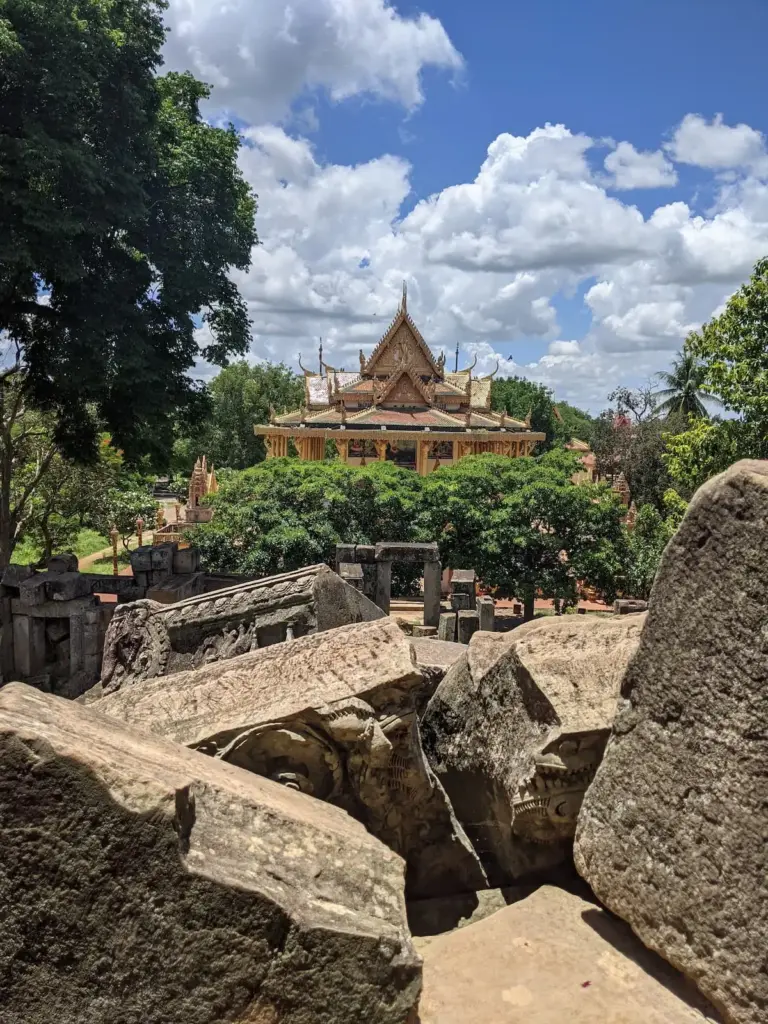
Ek Phnom is only about 9 km north of Battambang and is easy to reach by tuk tuk, car or moto. We usually pair it with the Well of Shadows, villages where rice paper is made and the prahok factory as part of a 25 km circular cycling route.
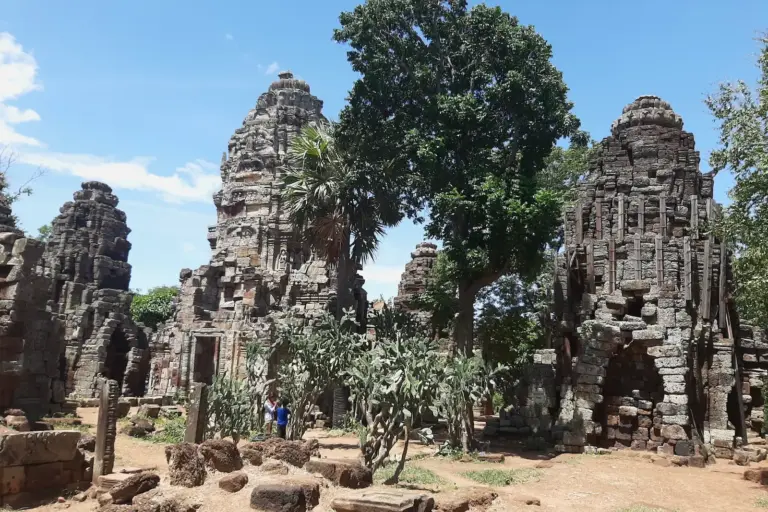
Built in the 11th century during the reign of King Suryavarman I, this Angkorian temple was built from sandstone and dedicated to the Hindu god Shiva. The temple itself is pretty much in ruins, and you can climb over the fallen sandstone blocks to reach the top. It’s a little like being in an Indiana Jones movie, scrambling over the ruins, and it’s great for photos. Unlike many of the temples in Siem Reap, you’ll probably have this one to yourself.
Visiting Ek Phnom Temple
There is quite a bit to see at this temple and you can easily spend an hour wandering around. If you are cycling out or on a moto, park near the tourist office on the right-hand side as you enter the pagoda complex and they will look after your bikes while you take a walk around the grounds.
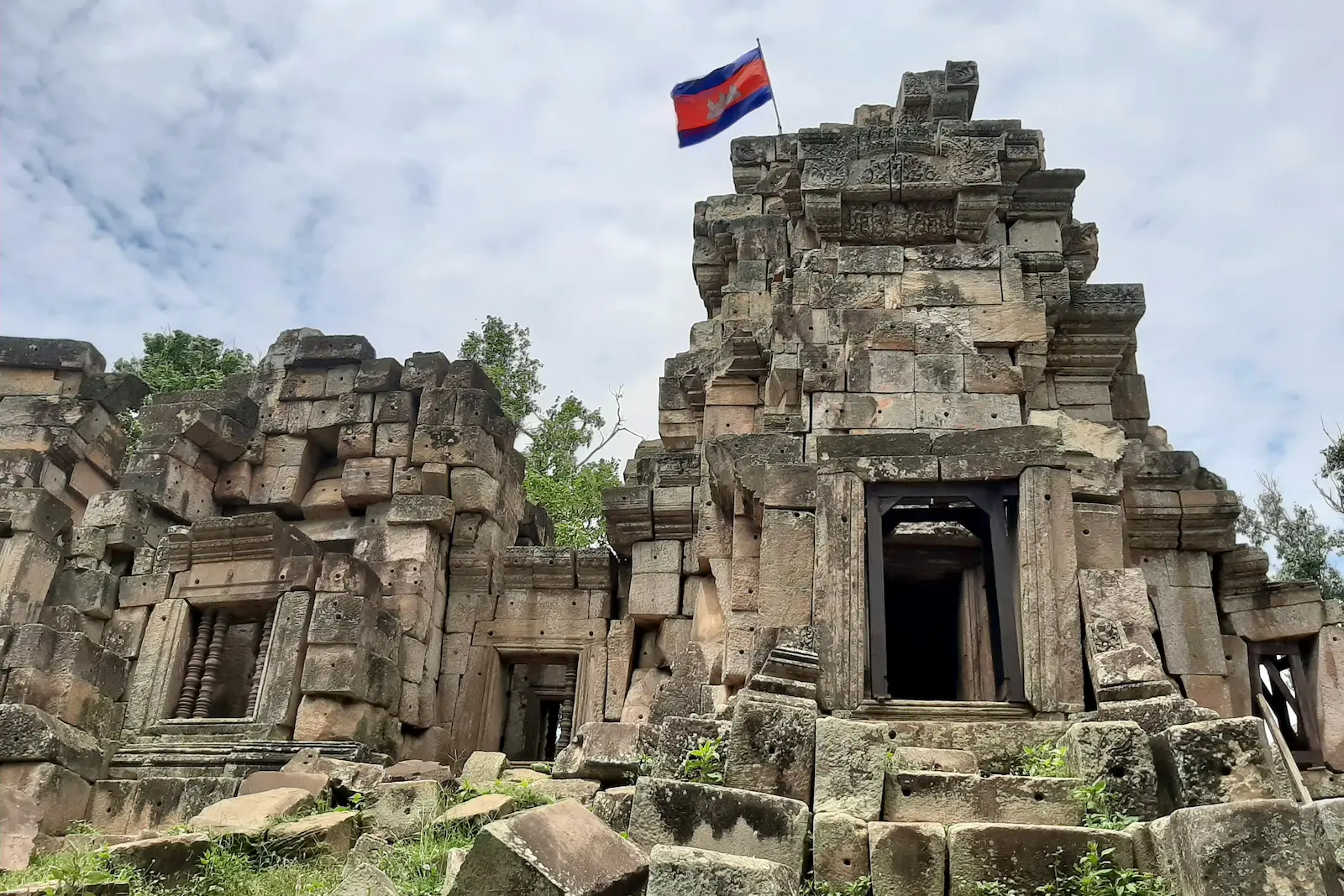
It costs 4,000៛ ($1) to enter, paid to the person in the tourist office who will usually pop their head out when you arrive. We like to start at the old temple at the back so make your way past the right-hand side of the new pagoda to the stairs leading you up to the ruins. Make sure you stop to admire the huge cannonball tree near the stairs leading to the gate. But watch out, it gets its name from the giant cannonball-shaped fruit it sometimes drops.
Parts of the main towers are still standing, with stairs leading up to the central sanctuary. Climb these to look at the bas-reliefs and lintels which depict scenes from Hindu mythology, including Krishna fighting two horse-like creatures, Kala eating an elephant and the Churning of the Ocean of Milk.
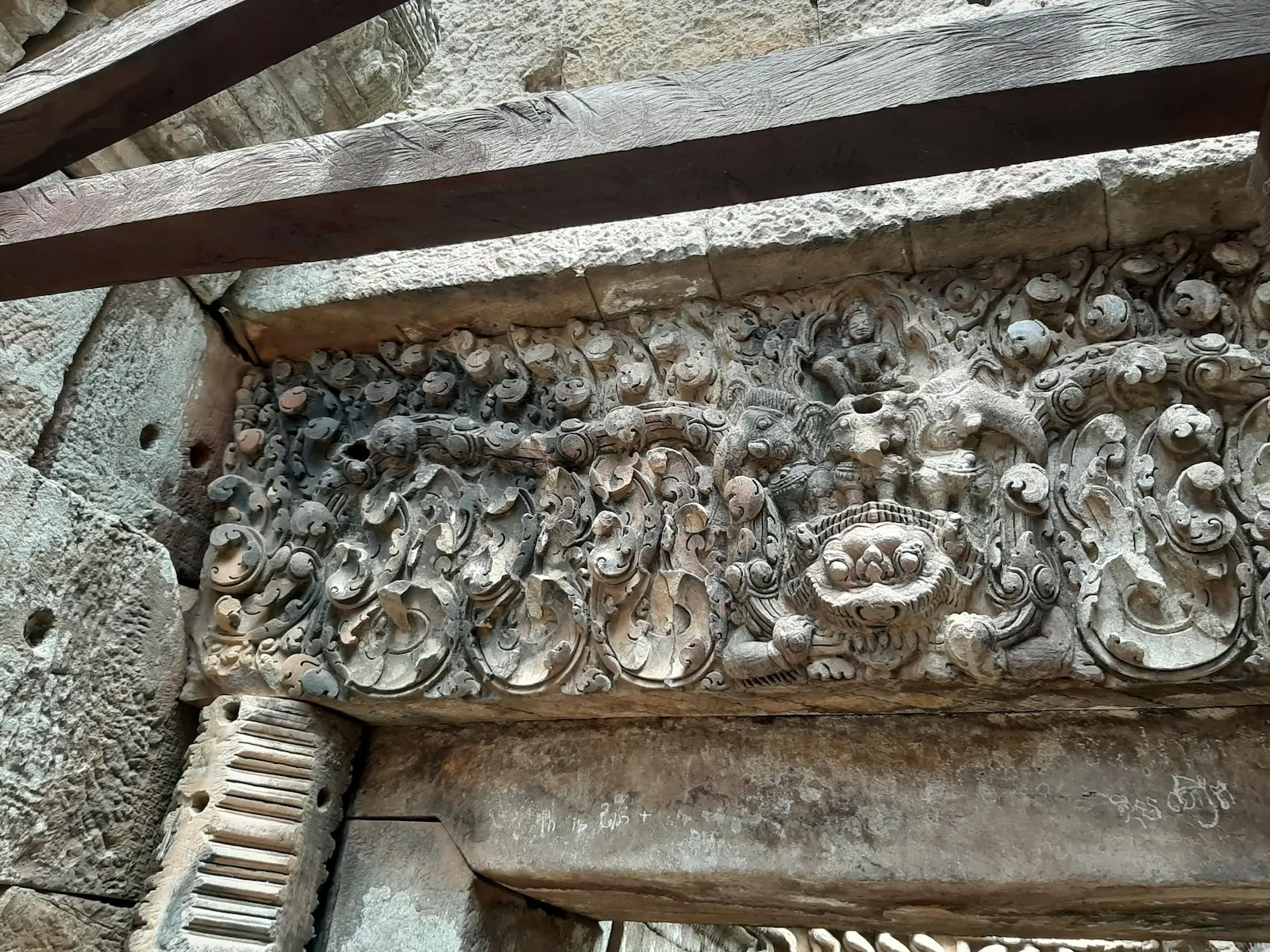
The inner walls are also now covered with more modern graffiti and messages of love, a sign that the temple is also popular with the local youth.
Although the ruins are rather small, only 85 metres long, you can spend quite a bit of time exploring them. Or climbing over them. There is also a path around the outside if you’d rather stay on flat ground.
The Modern Pagoda at Ek Phnom
There are two entrances to the temple, although most people arrive at the north entrance where the new pagoda is. We like to walk all the way through to the south entrance and buy a coconut before making our way back through the temple to the new pagoda, which is also well worth a visit.
The pagoda is surrounded by 18 Bodhi trees, the same type of tree under which Buddha is said to have attained enlightenment. If the pagoda is open, you can walk inside to see the paintings on the walls, but don’t be surprised if it’s locked during the day. If it is, you can still admire some of the paintings on the outside.
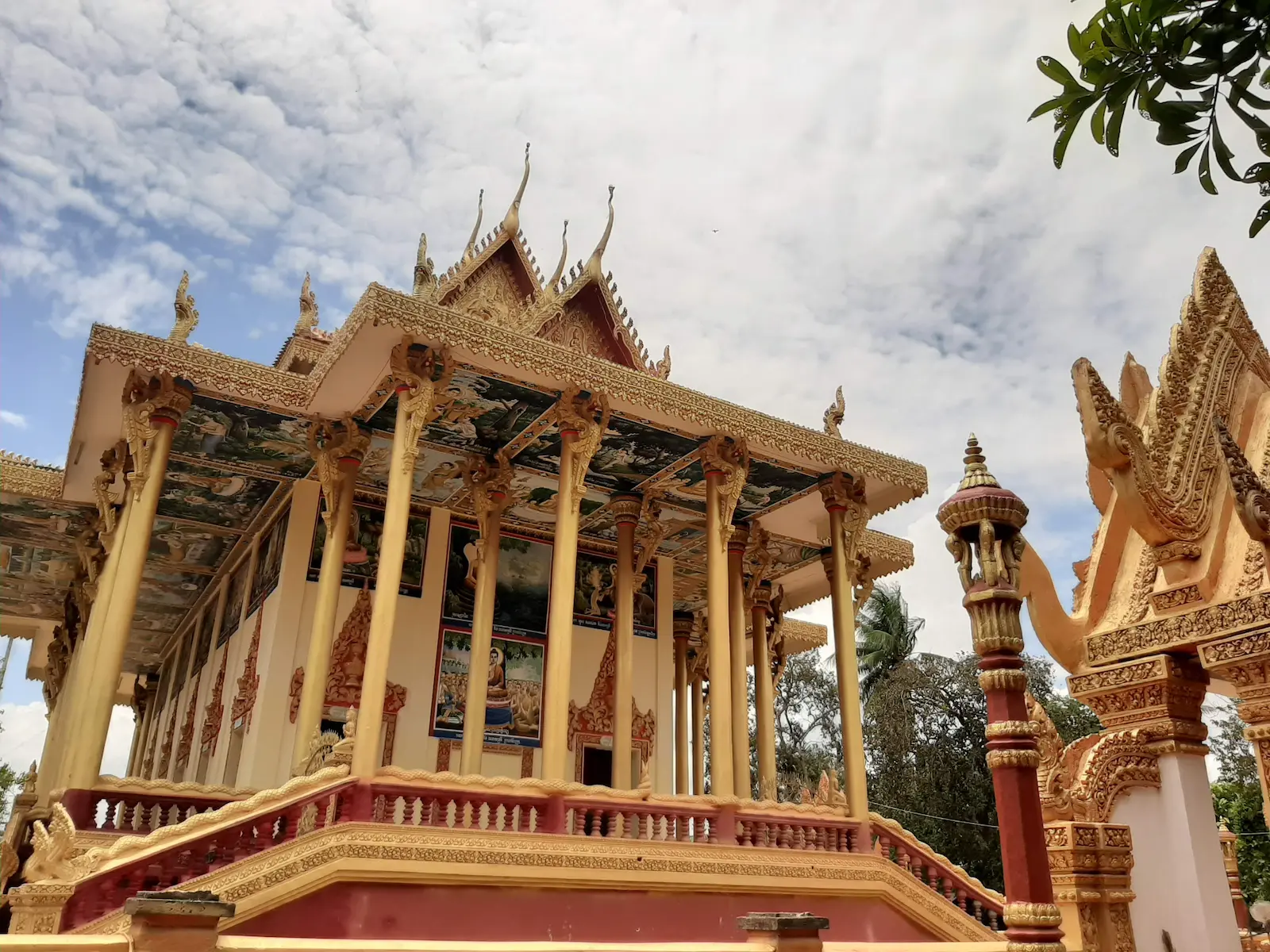
The eastern side of the moat is often filled with lotus flowers and is quite beautiful. And the design of the moat is interesting as it has been likened to that of Angkor Wat, although Ek Phnom was built roughly a century earlier.
You’ll also find a few temple buildings just past here, and often some art installations, particularly around Buddhist holidays. There are public squat toilets at the back of these buildings too.
The Giant Buddha Statue
Before leaving, make sure you stop by the giant Buddha statue, which you might have seen from the road. You can walk underneath the structure to see lines of more Buddhas inside and it is flanked by statues of monks standing in the temple moat.
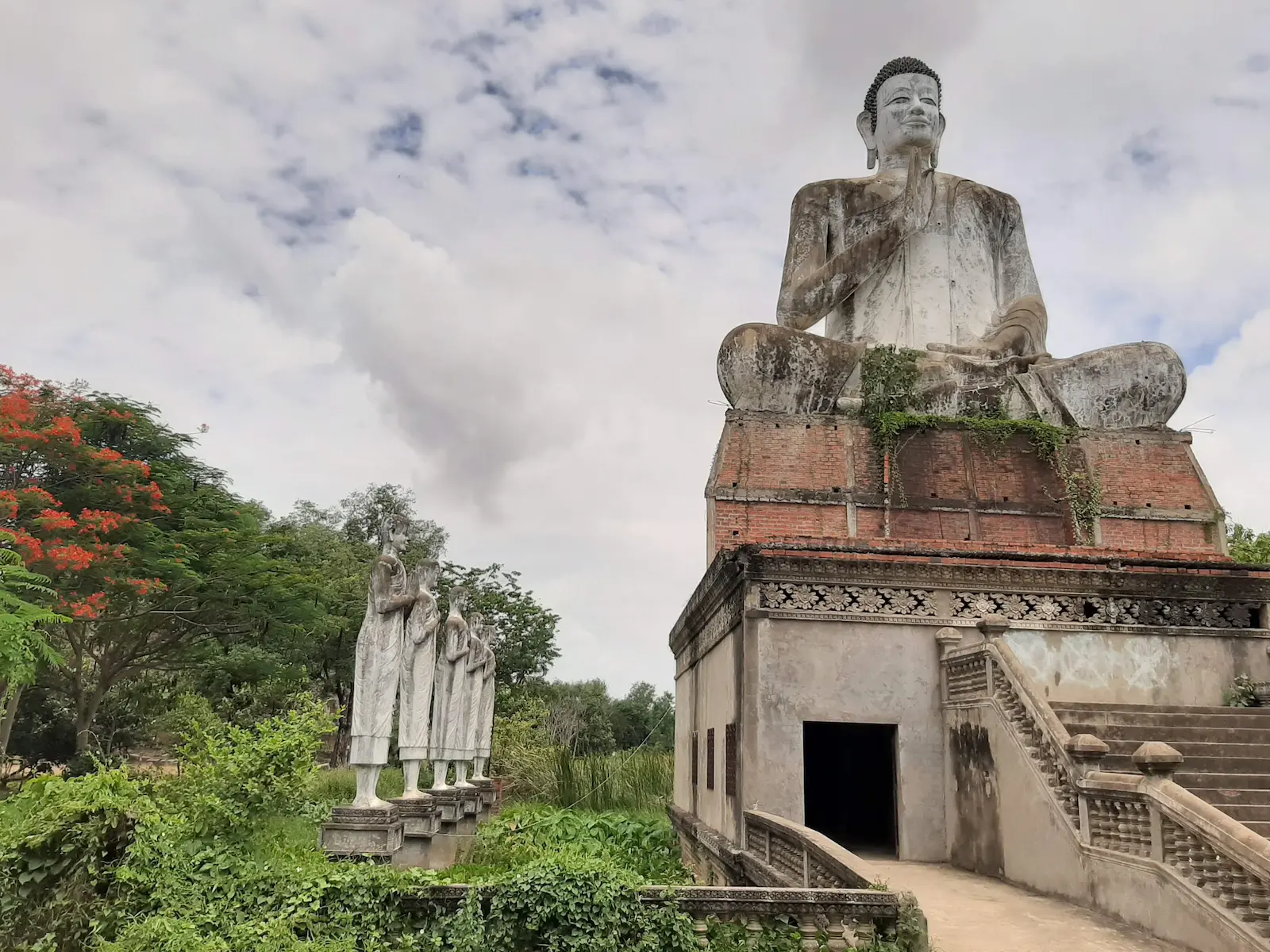
Some locals told us that the construction of this giant Buddha statue was never completed because it was built higher than the original Angkorian temple. The government reportedly stopped work over concerns that the statue would detract from the historic site. But unfinished or not, it certainly gets plenty of photos.
Is Ek Phnom Temple Worth Visiting?
If you’ve already spent several days exploring the temples around Siem Reap, you might be a little templed out by the time you reach Battambang. But if you haven’t visited Angkor yet, Ek Phnom is a good introduction to Cambodia’s Angkorian temples, giving you the chance to explore an earlier temple before visiting Angkor Wat.
We’ve visited Ek Phnom more times than we can count on both hands, but we still enjoy coming back. Wandering around the old ruins and looking through the stones towards the new pagoda never gets old for us.
We visit Ek Phnom temple regularly, usually a couple of times a year.
Related Posts