
PHNOM PENH
Visiting Tuol Sleng Genocide Museum (S-21)
This article discusses some extremely difficult parts of Cambodia’s history, including imprisonment, torture and execution. Tuol Sleng also contains photographs, accounts and exhibits that some people may find confronting. Please keep this in mind before continuing with this article or deciding to visit.
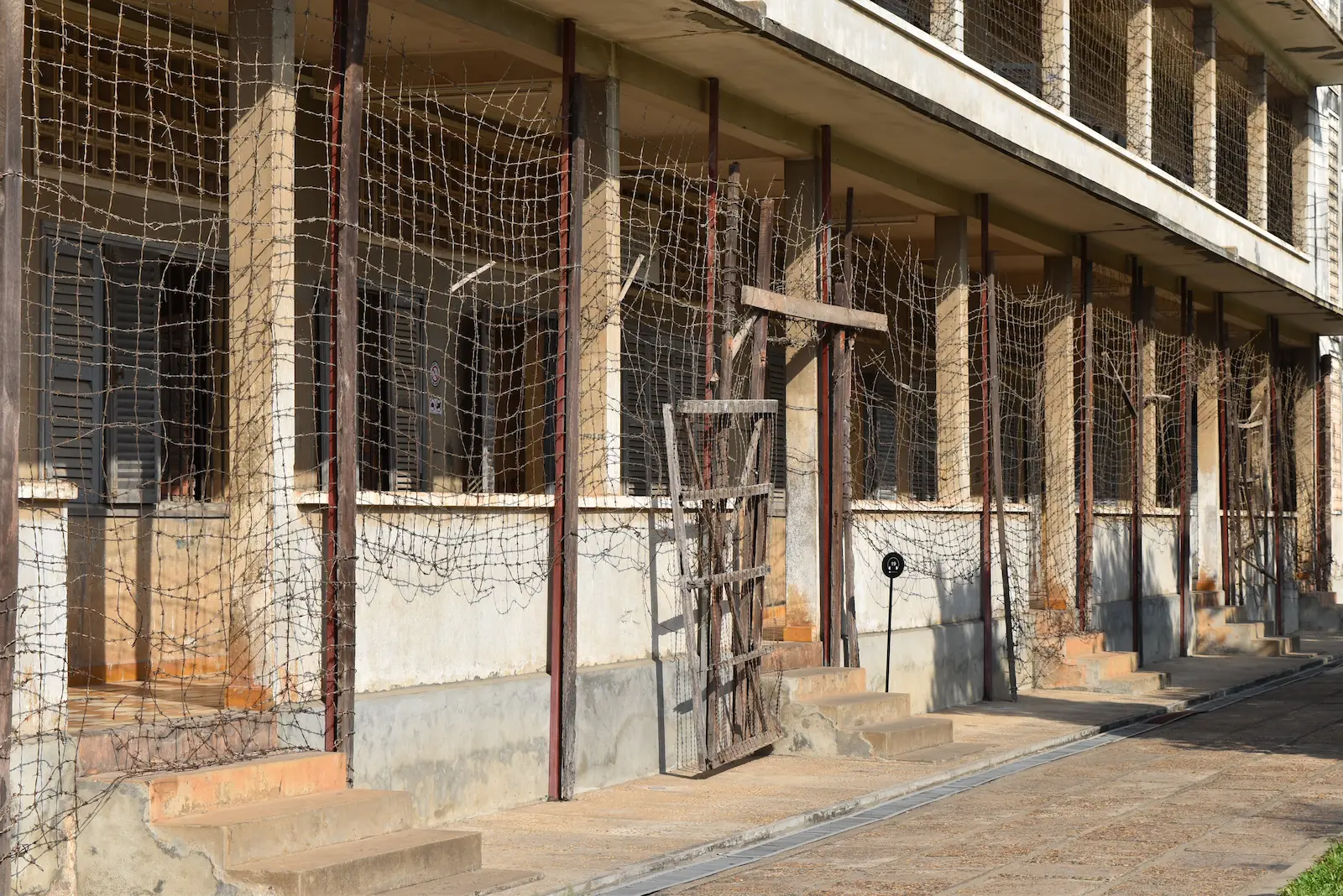
Tuol Sleng S-21 prison isn’t an easy place to visit, but it is an important one. It tells the story of what happened during the Khmer Rouge regime and honours the thousands of people who were imprisoned and suffered here
Before visiting, it’s worth remembering that S-21 is a place of memory for Cambodians first and a tourist site second. It is a place where one of the most difficult periods of Cambodia’s history is documented and remembered, and many Cambodian visitors have family histories directly connected to the site, or ones like it.
History of Tuol Sleng and S-21
On 17 April 1975, the Khmer Rouge captured Phnom Penh, beginning one of the darkest chapters in Cambodian history.
The entire city was emptied as millions of people were forced into the countryside to work as slave labour. Money, religion, education, private property and basic freedoms were abolished as the regime attempted to create a radical agrarian society.
The S in S-21 stands for Santebal, a name formed from the Khmer words for security (santesok) and police (norkorbal), and the name for the Khmer Rouge security organisation. One of around 200 security centres in Cambodia, S-21 was particularly important because it was connected directly to the Khmer Rouge leadership and used to detain and interrogate people considered enemies of the Party.
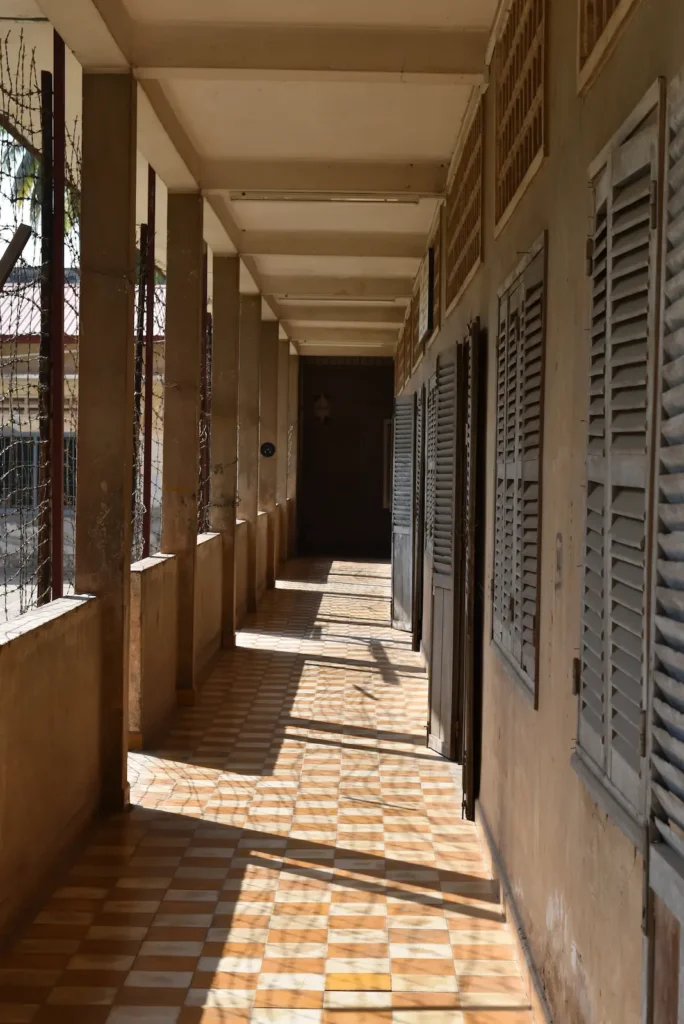
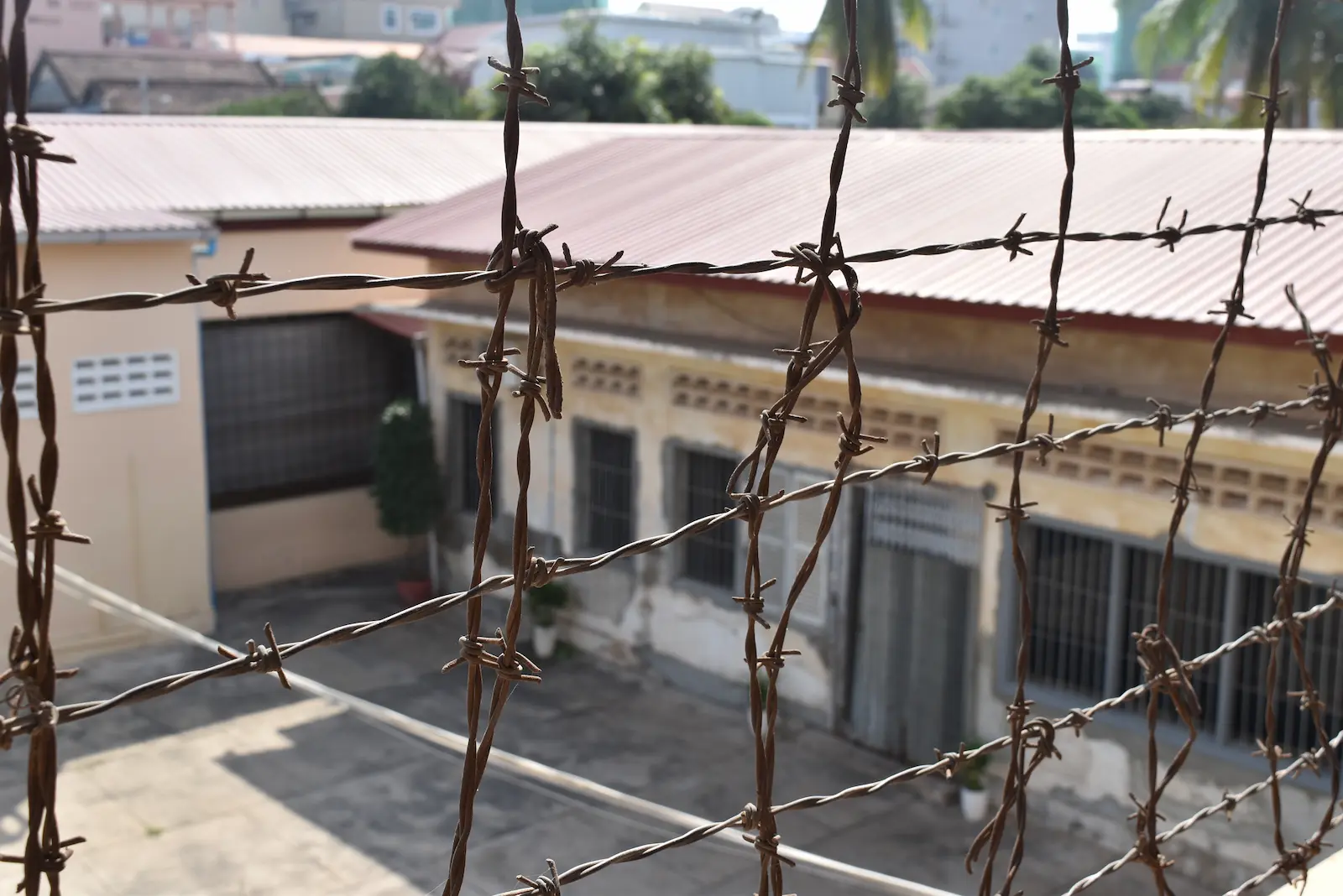
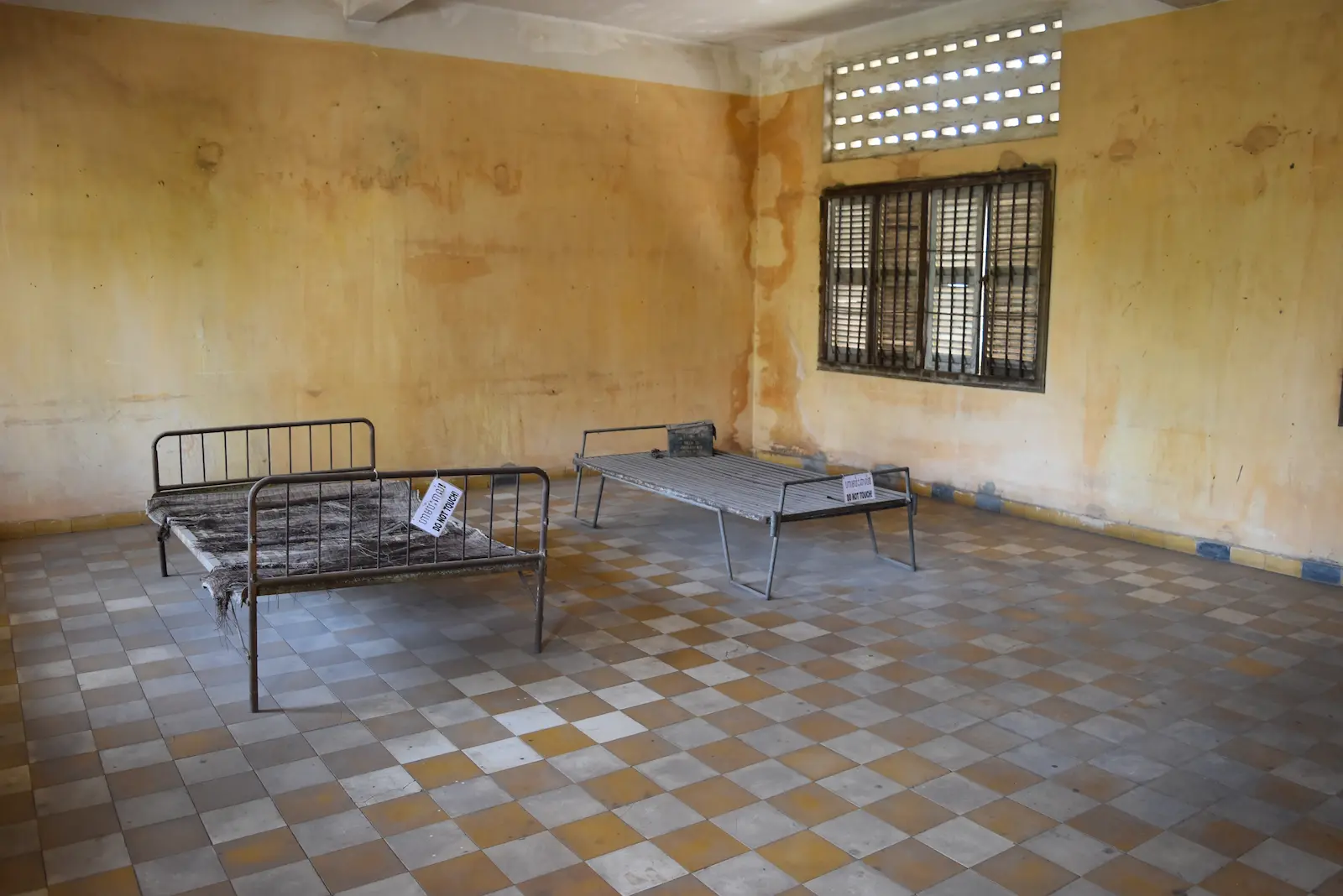
The former Tuol Svay Prey High School was transformed into Security Prison 21 (S-21) in 1976. Classrooms became prison cells and interrogation rooms. Barbed wire was installed across balconies to prevent prisoners from jumping to their deaths.
Those imprisoned included teachers, doctors, monks, intellectuals, and suspected political enemies. At S-21, prisoners were tortured into signing false confessions before being transported to Choeung Ek, where they were executed.
The Khmer Rouge documented everything. Nearly every prisoner was photographed upon arrival, creating the haunting collection of portraits displayed throughout the museum today.
If you want to learn more before or after your visit, the ECCC has excellent resources on the history of the Khmer Rouge as well as the Tuol Sleng Genocide Museum website.
If you’re planning to visit both Tuol Sleng S-21 Genocide Museum and Choeung Ek Genocidal Center, we’d visit Tuol Sleng first. Understanding what happened inside S-21 gives you much more context before visiting Choeung Ek.
Visiting Tuol Sleng S-21 Genocide Centre
Tour guides are available outside, or you can purchase an audio guide. There is also plenty of written material and explanations inside if you wish to visit without either.
I’ve visited with a guide, with the audio guide and without either, and each offers a slightly different experience. The audio guide is excellent and well worth the extra cost. It takes you through the site in order and adds considerably more context than the written displays alone. A guide gives you the chance to ask questions, and some also share their own experiences and family histories.
Tour guides work by contribution, which you can agree on with your guide.The audio guide is 20,000៛ ($5) for foreign visitors and 4,000៛ ($1) for Cambodian visitors and is available in a number of languages.
Visitors are asked to dress respectfully, with shoulders and knees covered. A scarf over bare shoulders is fine. Photography is permitted, but use common sense and avoid selfies or inappropriate photos.
The museum is open every day between 8am – 5pm. Although much of the site is shaded, the rooms do heat up and there is no air conditioning so it is best to visit early. We’d allow around two hours to visit Tuol Sleng, especially if you’re using the audio guide. You can visit more quickly, but it’s not somewhere we’d recommend rushing through. If you choose to spend time in the reading room, the white lotus room or watch one of the documentaries, it may take longer.
What You’ll See at Tuol Sleng S-21
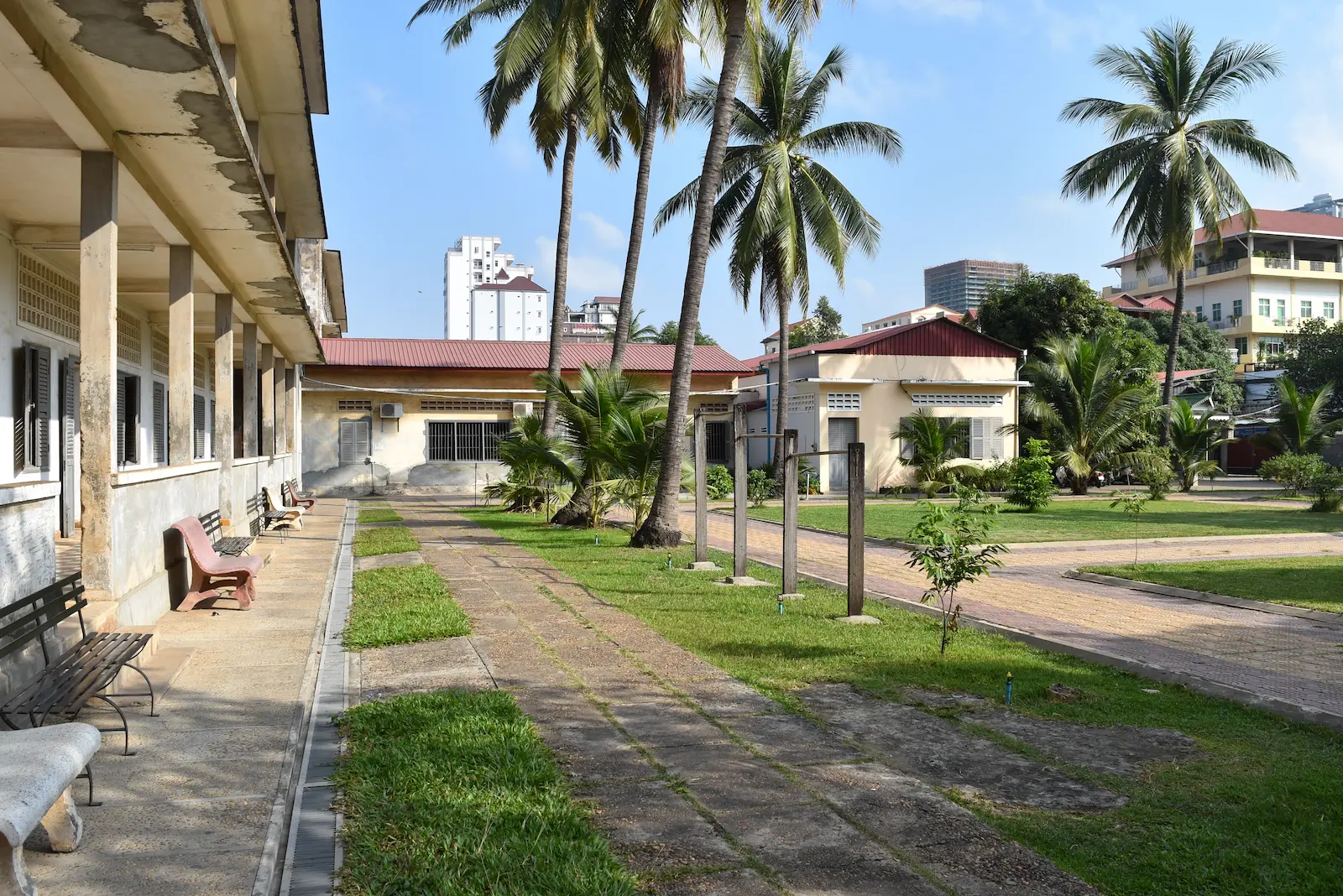
Once inside, it is well set out and there is a clear direction to follow. The main buildings, labelled A, B, C, D and E, sit around a large courtyard, where there are also plenty of seats and places to stop for reflection. In the courtyard you will also see the large gallows and some memorials to victims of the Khmer Rouge.
The route starts on the left in Building A, which contains some of the former classrooms of Tuol Svay Prey High School. There’s no gentle introduction, as the first rooms describe the torture that took place here. Building B contains thousands of prisoner photographs, preserved cells, torture equipment and survivor stories.
There is also a public reading room, open weekdays, on the first floor of Building B, with books and research material on Cambodian history and the Khmer Rouge period.
In Building C you will see how the classrooms were divided into cells, while Building D finishes with stories of survival. On the ground floor of Building D, visitors can also leave a prayer or message to victims using the museum’s digital Wishing Card.
Building E houses the museum’s special programmes and temporary exhibitions. On weekdays, two short documentaries are screened: The Spirit of Photos and Forced Confessions at 10am and The Power of Big Water and New Seeds on Old Soil at 3pm. Both run for around 15 minutes.
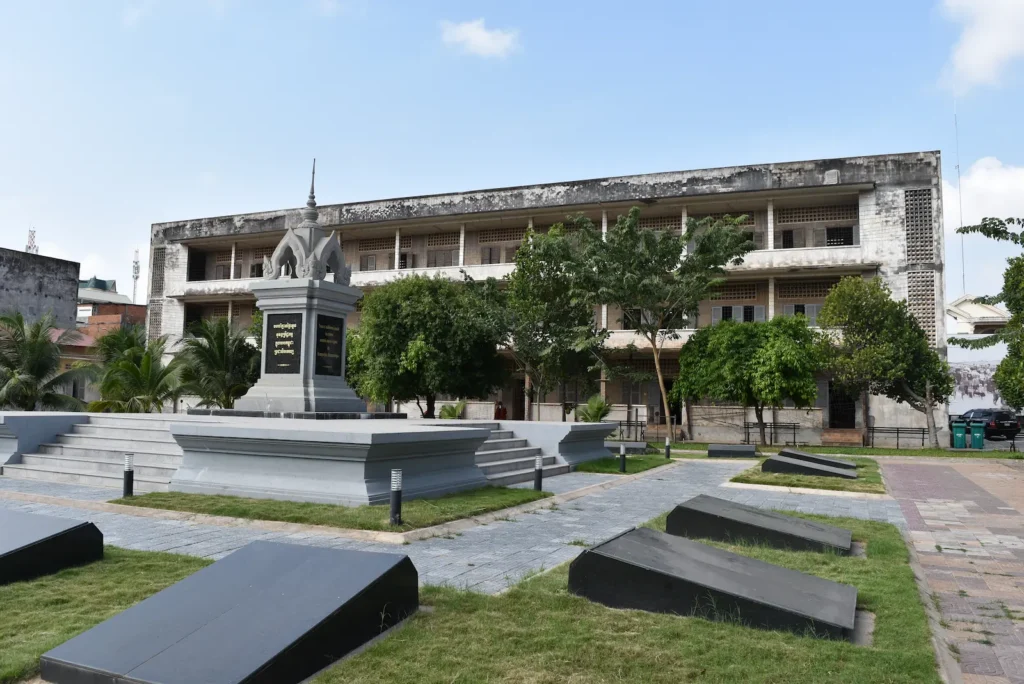
Childhood Without Color, which tells the stories of children during the Khmer Rouge era and child survivors of S-21, is presented at 2.30pm on Mondays, Wednesdays and Fridays, except national holidays. There are also temporary exhibitions, which you can check on the museum website before visiting. You then finish back in the courtyard.
Take Some Time
It’s worth taking the time to read some of the individual stories rather than moving quickly through the photographs. Bophana’s story is one that has particularly stayed with me.
We’d also recommend spending some time in the courtyard. The concrete fences topped with barbed wire are quite a contrast to the busy, modern city just beyond them.
Throughout your visit, remember that this is deeply personal history for many Cambodian families. Give other visitors space and privacy, particularly around the more difficult exhibits. And it’s fine to step outside or sit quietly in the courtyard if you need a moment. There are lots of places to take a seat and reflect and you will see people doing so. There is also a White Lotus Room on the second floor of Building D, set aside as a quiet place to sit, meditate or simply take some time after visiting the museum.
Is Tuol Sleng S-21 Worth Visiting?
We certainly won’t pretend it’s an easy visit, and not everyone will want to visit. I have been a few times now and it still impacts me every time. As a teacher, standing in what were once classrooms filled with children learning, while reading about the atrocities that later took place there, is particularly emotional for me.
Whether you visit Tuol Sleng, Choeung Ek, both, or neither is a personal decision. Some people visit the two on the same day, while others find that too much and choose to separate them. We do think Tuol Sleng provides a respectful and important way to learn about this period of Cambodia’s history.