
EXPERIENCE
Pchum Ben in Cambodia: What Happens During Cambodia’s Ancestor Festival
So you’ve found yourself in Cambodia during Pchum Ben, or you just noticed that your plans fall over the Pchum Ben holidays. This guide will help you understand what Pchum Ben is, what to expect, what you might see and, importantly, what will be open and what will be closed.
What is Pchum Ben?
Pchum Ben is actually a 15-day festival, although as a tourist, you’ll probably notice it most over the final three days. The first fourteen days are known as Kan Ben, leading up to the fifteenth and most important day, Pchum Ben.
During these fifteen days, people believe the gates between the living and the dead briefly open and spirits are able to search for their living relatives and receive offerings. Families take food to the pagoda and make offerings to transfer merit to their ancestors, hoping to ease any suffering in the afterlife.
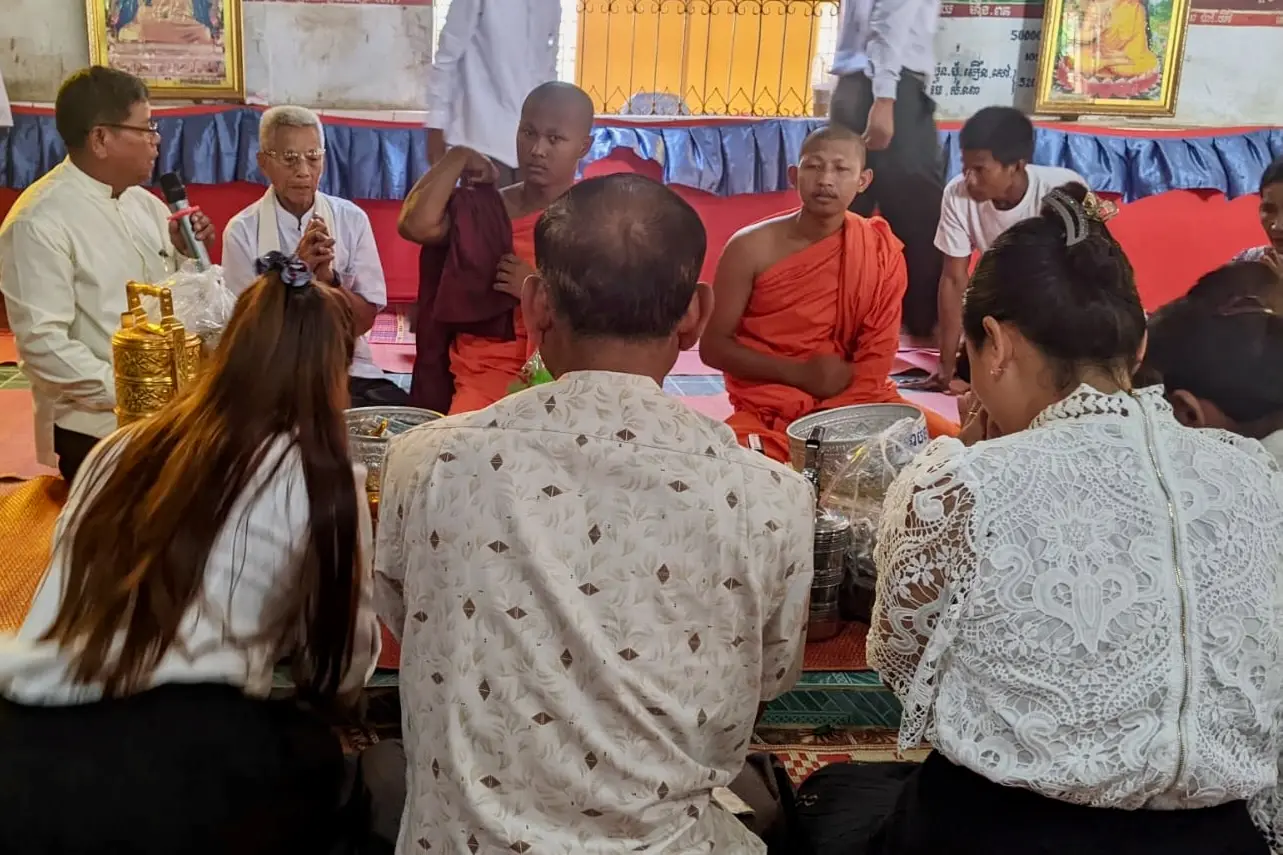
You might also hear people talk about “hungry ghosts”. These are spirits believed to be suffering because of bad karma from a previous life, and some of the food offered during Pchum Ben is intended for them.
Making merit is an important part of Cambodian Buddhism. Good acts, such as giving food or making offerings to monks, create merit that can be dedicated to family members who have died.
Traditionally, families try to visit seven different pagodas over the fifteen days, helping to make sure their offerings reach their ancestors, who may be searching for them at different pagodas. In reality, most families don’t make it to seven.
Each year we head back to Nehru’s family and celebrate with them. We generally only make two pagodas, the one closest to his Mum’s house and his grandmother’s house.
When is Pchum Ben in 2026?
Each year the dates change as the festival follows the lunar calendar, although it always falls in September or October. In 2026, the first Ben day is 27 September, with Pchum Ben day falling on 11 October. The public holidays run from 10 to 12 October, giving people time to travel home for the festival.
Because it falls mainly over a weekend this year, you might find some shops and restaurants closed for longer than the three days, especially as Thursday 15 October is also a public holiday for the Commemoration Day of the King’s Father.
Visiting the pagoda
Tourists are usually welcome to visit a pagoda during Pchum Ben and Cambodian people are generally very welcoming. It’s worth remembering though that this is an important family and religious tradition, so be considerate of how you observe the rituals.
During Kan Ben, the local community takes turns being responsible for the offerings at the pagoda, with different families or groups taking responsibility for one of the fourteen days. Families will often invite relatives and friends to join them on their Kan Ben day.
Pchum Ben day is much busier, with most people attending a pagoda. If you are interested in seeing what happens, we’d suggest arriving early in the morning. Most of the offerings are finished by mid-morning.
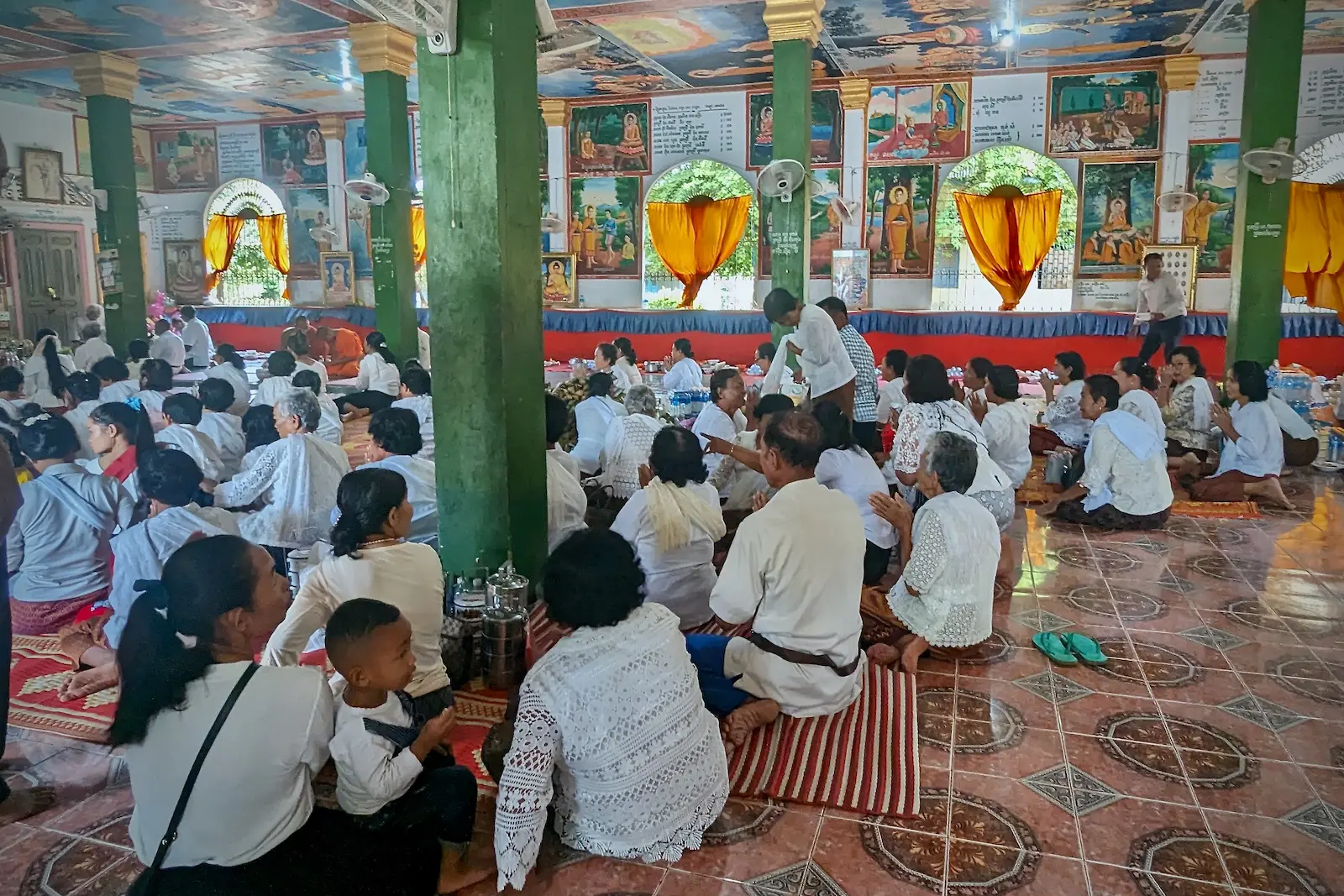
Most Cambodians will wear a white top to the pagoda during Pchum Ben, with many women wearing a traditional skirt and men wearing trousers. If you are invited to join a family at the pagoda, wear a white or light-coloured top if possible. If you are just walking through the pagoda grounds, you don’t need to wear white, but as with any pagoda visit, make sure your clothing is modest.
There is usually plenty happening around the pagoda grounds, as families arrive with food, share rice and make offerings. You can get a good sense of the Pchum Ben celebrations just by spending some time walking around the grounds and seeing what is happening.
If you do go inside, or are invited in, take off your shoes and hat, sit towards the back and keep your feet tucked away rather than pointing them towards monks or Buddha images. Don’t take photos of people taking part in ceremonies without asking.
What happens at the pagoda during Pchum Ben?

Families will usually prepare food early in the morning before going to the pagoda. Once it is cooked, the food is placed in small dishes or a chan srak (ចានស្រាក់), a stacked food carrier similar to a tiffin.
Most families will travel to the pagoda closest to their home. Each year at Nehru’s Mum’s house and at his grandmother’s, we gather up the offerings and walk a few hundred metres to the pagoda.
We make sure we’re at the pagoda well before 11am, as the monks need to receive and eat their food before noon. Families arrive with their food, light incense and pray at the altar before offering their food to one of the monks. The monk offers a prayer and takes the food. The dishes we’ve supplied are then transferred into bowls so our tins are returned.
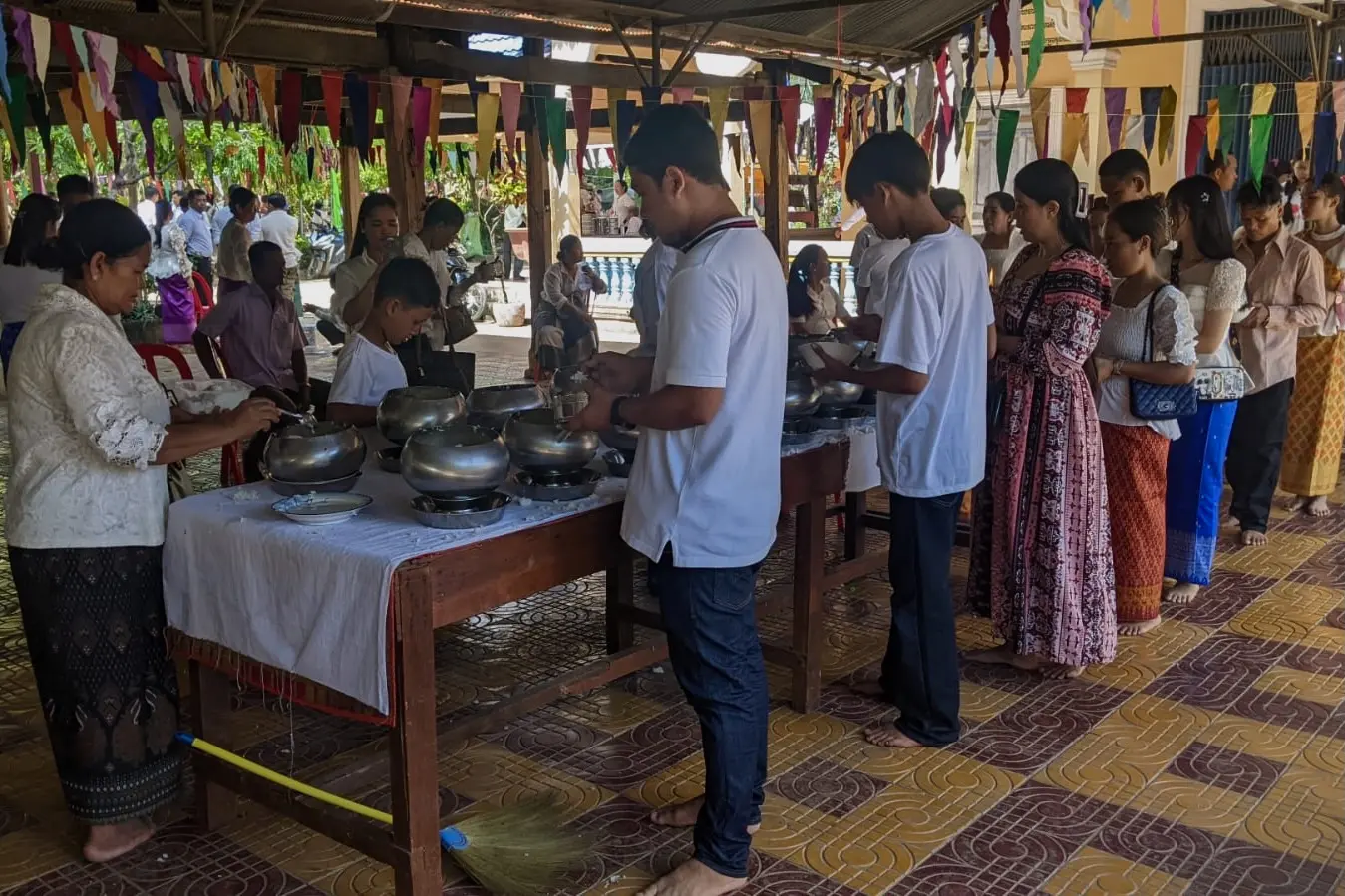
The rice is separate though. This is called dak bat, where people spoon a little cooked rice into each of a row of monks’ alms bowls. The offering is made through the monks to transfer merit to ancestors who have died.
The trick here is to make sure you still have rice in your bowl when you get to the last one, but not so much that you’re piling your final spoonful high.
Just before leaving the pagoda, many families will walk clockwise around the sand mounds outside, adding lit incense as they go. Building the sand mounds, which are shaped to represent Mount Meru, and making offerings around them is another way of making merit. You’ll also notice the long crocodile flags sticking out of the sand, which are used at pagodas and funeral ceremonies throughout Cambodia.
For us, we generally get the yearly family photo outside the pagoda and walk home to share a meal together. After the monks have eaten, excess food at many pagodas is shared with people in the community, and some pagodas also distribute it to places such as hospitals and prisons.
Which pagodas will have Pchum Ben?
You don’t need to find a particular pagoda to see Pchum Ben. Most local pagodas will have families coming and going during Kan Ben and will be particularly busy on Pchum Ben morning. If there is a pagoda close to where you are staying, you can usually walk through the grounds and quietly see what is happening.
If you aren’t sure where to go, there are some larger pagodas in the main tourist areas where you will usually see plenty happening.
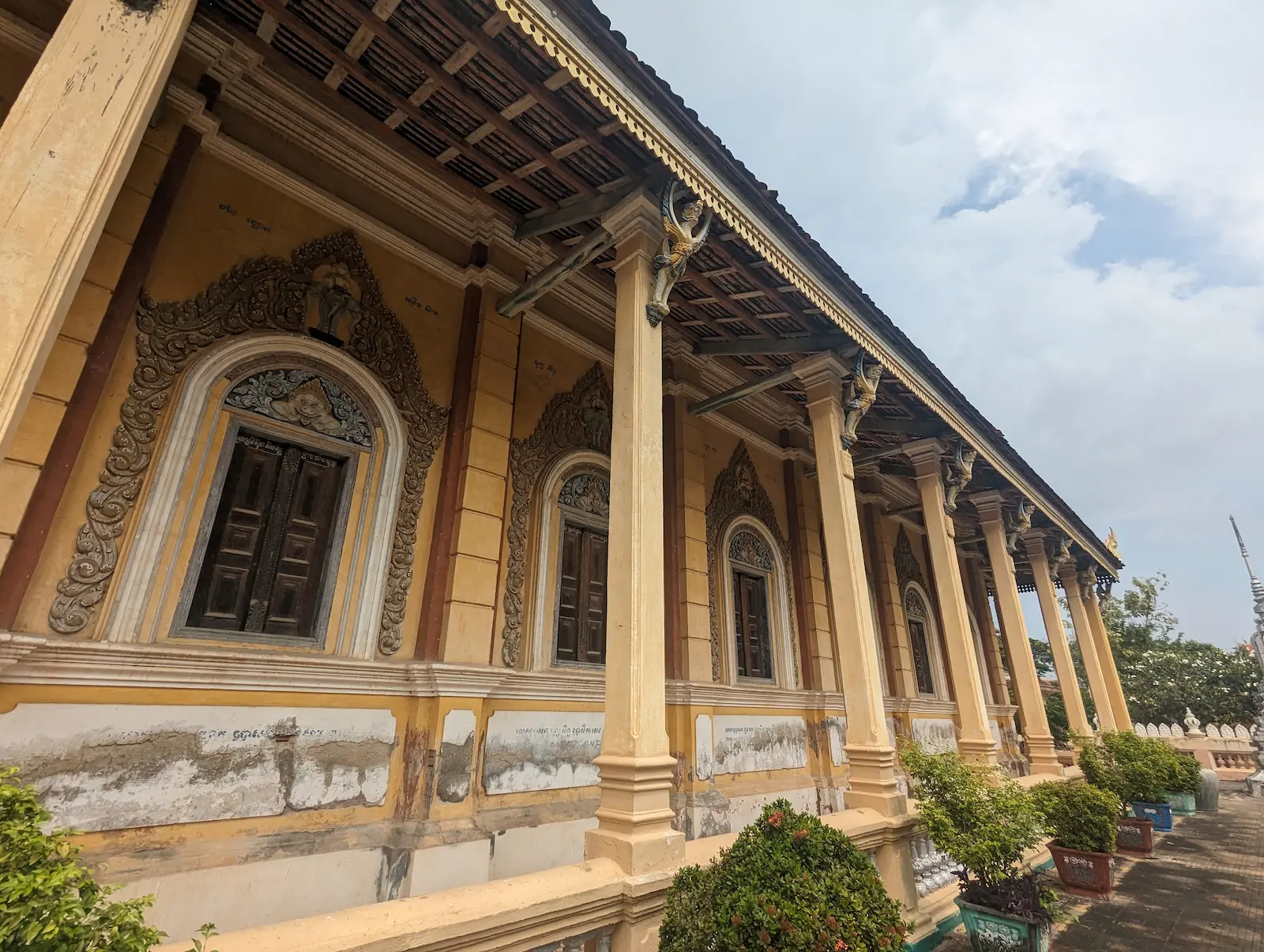
In Phnom Penh, Wat Langka and Wat Botum are both easy to visit. Wat Ounalom and Wat Phnom will also have ceremonies, although these can sometimes be more formal with officials and dignitaries attending, so don’t assume you will be able to go into everything that is happening.
In Siem Reap, Wat Bo, Wat Damnak and Wat Preah Prom Rath are all easy to reach from the centre of town and will have families visiting during Pchum Ben.
In Battambang, Wat Kandal and Wat Po Veal are both easy to get to from the centre of town and will also have plenty happening.
We’d still choose a local pagoda over seeking out the busiest one. You don’t need to travel across town to one of these pagodas if there is one just down the road from where you are staying.
Pchum Ben food
Food is a big part of Pchum Ben. Traditionally, small balls of cooked rice known as bay ben were thrown around the pagoda grounds in the early morning as offerings for spirits who couldn’t receive food through the monks. Many pagodas now discourage the practice because of the amount of food it wastes, and it is rare to see today.
There is also the belief that departed loved ones are waiting at pagodas for homemade dishes. Families put a lot of thought into what they will take to offer their ancestors, and usually include an ancestor’s favourite dish.

Pchum Ben is also a time when families prepare nom ansom, sticky rice wrapped in leaves with either banana (num ansom chek) or pork (num ansom chrouk) in the middle. In the lead up to Pchum Ben day, families will make this and share it with their neighbours and friends.
This year, Nehru’s Mum is going to make some so we are looking forward to that. I did have a chance to spend an afternoon with my colleague making it a few years ago. Apparently I was a natural, but really it was tricky to try and get everything squeezed in at the right amounts and then tied in a way that it would retain its shape while cooking it.
Once wrapped, it is impossible to tell if it is banana or pork inside, so families will have their own way of wrapping or tying each kind. The problem, of course, is that every family is different. The key is, if you are given more than one, look for differences in how the ends are folded or how they are tied, and remember which is which when you go back for another. But honestly, most people are not sure which one they are getting when they take one.
What is open and closed during Pchum Ben?
Because it is such an important Cambodian holiday, you might find some things closed for a few days or, in some cases, businesses will close for the whole week. It’s one of the two times a year when people will head back to their home province to visit the pagoda with family.
For Phnom Penh, that means the city can pretty much empty out. I remember the first time I found myself in Phnom Penh over Pchum Ben, it was like a ghost city. Walking the streets in the morning and there was no traffic at all. Kind of eerie.
While the cities can become quieter, tourist sites popular with Cambodian families can become much busier. Angkor Wat and the other temples fill up, and in the provinces places such as Phnom Sampov and the Banan Bamboo Train in Battambang can get very busy as families darleng together.
Phnom Penh
Most of the major tourist sites in Phnom Penh remain open. Tuol Sleng Genocide Museum and Choeung Ek Killing Fields are open, as is the National Museum. Tuol Sleng also holds special Buddhist ceremonies during Pchum Ben to commemorate those who died at S-21, so it’s worth checking what is happening while you are there. The Royal Palace is generally open, although it may close for a few hours. Some smaller museums, including SOSORO, close for the holiday.
Siem Reap
In Siem Reap, the Angkor temples remain open and can become extremely busy with Cambodian visitors. Angkor National Museum also remains open, although some smaller museums tend to close for Pchum Ben.
Battambang
In Battambang, the Bamboo Train continues to run and most hotels remain open. Some of the more tourist-focused restaurants and cafes tend to close though, including places such as Jaan Bai and Kinyei Cafe, so check directly with anywhere you particularly want to visit.
In general, smaller museums, restaurants, cafes and family-run attractions are the ones more likely to close over Pchum Ben. If there is somewhere you particularly want to visit, check their Facebook page or website first, or ask at your hotel or guesthouse. It’s also worth having a second option tucked away for eating out.

Transport during Pchum Ben
Buses continue to run during Pchum Ben, but they fill up quickly, particularly at the beginning and end of the holiday as people travel between Phnom Penh and their home provinces. It’s not really a problem, but don’t leave it too late to book. We usually recommend booking a week or two in advance at this time of year.
Each year the government provides free buses to help people travel between Phnom Penh and the provinces. For Pchum Ben in 2026, these are from 9 to 13 October. There are also usually free train services during the holiday.
Although the transport is free, we don’t recommend using it as a tourist. The buses are primarily provided to help Cambodian people get home to their families. They can be extremely crowded and the journey can take considerably longer. Regular buses are still running, so we’d leave the free seats for Cambodian people travelling home and book a normal bus instead.
Private taxis still run, although it can be harder to find one and you may pay a little more than usual. Tuk-tuks are also still around, but with many drivers heading home themselves, there can be fewer available, so don’t necessarily expect one to turn up as quickly as usual.
You might also want to think about when you travel. Just like Khmer New Year, the roads out of Phnom Penh can be extremely busy at the beginning of the holiday and again as everyone returns. Road accidents and drink driving are also a particular concern over the major holidays, so take extra care.
We try to travel a day or two before or after Pchum Ben rather than moving with everyone else. We don’t normally like travelling at night in Cambodia anyway, but we particularly avoid it over Pchum Ben and Khmer New Year.
Pchum Ben weather
Pchum Ben falls around the time the rainy season starts coming to an end in Cambodia. There is an old belief that once Pchum Ben is over, the rain is over too, although with the changing climate that isn’t always the case anymore.
We usually notice the weather starting to change in the lead up to Pchum Ben. The short, heavy downpours become less frequent and we start getting mornings with lighter drizzle instead. The rain isn’t as heavy, but it can hang around for an hour or two.
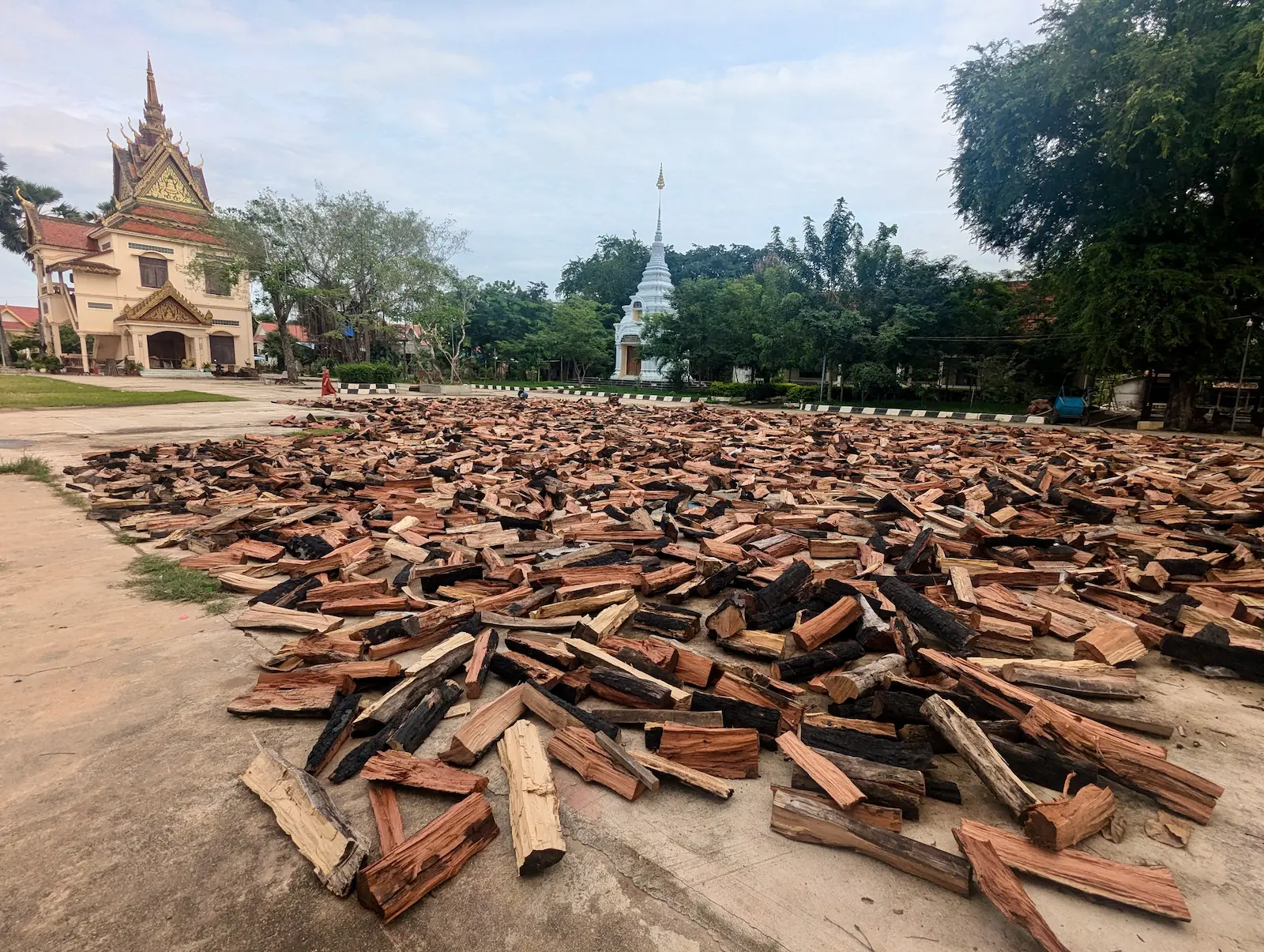
There is even a name for this lighter misty rain, rolim phsaeng krouch (រលឹមផ្សែងក្រូច), which translates roughly as “orange smoke rain”, because the fine drizzle is said to look like the misty spray that comes from the skin of an orange when you peel it.
It generally doesn’t stop us doing much. An umbrella or raincoat is useful and sometimes we need to move plans around a little, but the biggest thing to watch for is slippery roads and paths after the rain.
If you do find yourself in Cambodia over Pchum Ben, it is a really interesting time to be here. You might need to plan around a few closures and busy travel days, but you also get to see one of Cambodia’s most important traditions taking place all around you. You’ll notice Pchum Ben everywhere, from people dressed in white and carrying food in the mornings to families travelling together and, in Phnom Penh, the unusually quiet streets.