BATTAMBANG
Phnom Sampov: Our Complete Guide to Battambang’s Bat Caves, Killing Caves & Temple
Content warning: This article discusses the Khmer Rouge atrocities at the Killing Caves of Phnom Sampov and includes photographs of human bones and graphic Buddhist statues depicting torture and suffering. Some readers may find the content and images disturbing. These are also things you may encounter when visiting Phnom Sampov, so please keep this in mind when reading the article or planning your visit.
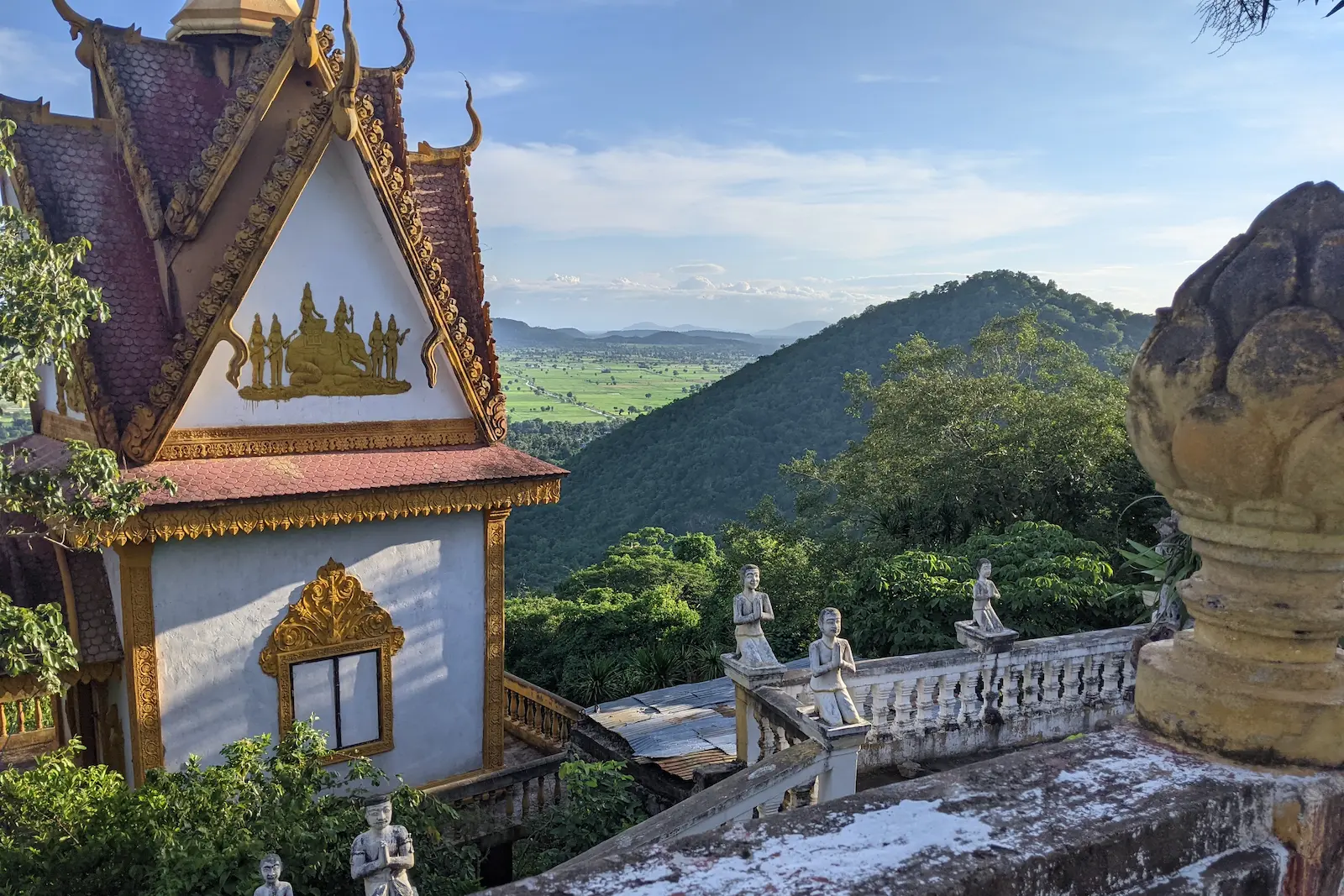
The bat caves are one of Battambang’s more well known tourist sites and for good reason. At night, around a million tiny bats swarm out of a cave at the base of a hill just outside Battambang while hundreds of tourists, both local and international, perch themselves on little red chairs to watch.
Although the bat spectacle only lasts about 30 minutes before it becomes too dark to see them, there is lots more to see than just the bats. We like to head out in the afternoon to make sure we have enough time to explore the temples and caves before returning to the bottom of the mountain to watch the bats come out at sunset. But we’ve found it can be difficult to know where to go or what there is to see once you’re there. So we’ve put together this guide to show you our favourite route around Phnom Sampov, including the smaller caves, how to get to the top and where to find the hidden stairs to make your way back down in time for the bats.
Visiting Phnom Sampov and the Bat Caves
Phnom Sampov, also known as Mount Sampov and sometimes written as Phnom Sampeau or Phnom Sampeou, is a limestone hill about 15 km from Battambang on Road 57 towards Pailin and Samlot.
It’s home to a temple complex with pagodas at both the base and on the hill, as well as a number of limestone caves. One of those caves houses around a million bats that emerge each evening, while others have a much darker history. During the Khmer Rouge period, Phnom Sampov was used as a detention and execution site, and the Killing Caves are now a memorial to those who died here.
You’ll see Phnom Sampov as you travel from town. It’s the first hill you come to, with the temple perched on top, which is quite striking in the distance so worth looking for it while you’re in the tuk tuk. As you turn into the complex, you’ll see the bat cave on your right alongside carvings of Buddha’s life.
If, like us, you arrive early, there won’t be much happening at the base of the mountain. But don’t worry, by the time you come down at dusk the street vendors will be waiting for you.
Getting to Phnom Sampov from Battambang
We often go by motorbike and take it to the top, although we wouldn’t recommend riding up the mountain on a hired motorbike or if you’re not an experienced rider. Most people arrive by tuk tuk, which is a lovely way to see the local area along the way. Expect to pay around 40,000៛ ($10) if you’re just going to watch the bats or 60,000៛ ($15) for the afternoon exploring Phnom Sampov. On the way back into town, keep an eye out for bats flying across the rice fields as the sun disappears.
We’ve also ridden our bicycles out here, and there are some nice back roads through the rice fields that let you avoid some of the busy main road. If you’re coming for sunset though, it means returning along the busy road at night, which we do not recommend. Instead look at organising a trip through Soksabike, who can help arrange transport for you and your bicycle back to town.
There are also a number of tours available, but as with other trips around Battambang and Cambodia, we recommend Skual Travel for their responsible tourism approach.
Can You Visit Phnom Sampov on a Day Trip from Siem Reap?
We wouldn’t recommend visiting Phnom Sampov as a day trip from Siem Reap. It’s around three hours each way by road, and as the bats don’t emerge until sunset, you’d be travelling back to Siem Reap in the dark, something we never recommend doing.
There’s also plenty to see and do around Battambang, so we’d suggest spending at least a couple of nights here rather than rushing through. If you’re travelling between Siem Reap and Phnom Penh, consider going via Battambang instead. It adds only about an hour of driving compared with the direct route, and gives you the chance to see another part of Cambodia along the way.
How Long to Spend at Phnom Sampov
There are three main things to see at Phnom Sampov: the pagoda complex, the caves and the bats. How long you spend really depends on which parts you want to explore.
When we want to visit the temples and caves, we usually leave Battambang in a tuk tuk around 3pm. It takes about 30 minutes to travel out there, so this gives us enough time to walk to the top, wander around and then be back at the bottom for the bats just after 5pm. If you just want to see the Killing Caves and the temple complex at the top, you’ll need an hour or so, but allow more time if you want to explore some of the other caves.
If you want to follow our full walking route, allow about two hours if you’re not spending too much time exploring, or three hours for a more relaxed look around. If you’re short on time, we’d suggest skipping Pka Sla Cave and Laang Sthani, taking the path directly to the summit after visiting the Killing Caves.
If you’re only coming to see the bats, we’d recommend arriving by 5pm. This gives you time to wander around and find somewhere to sit. Most tuk tuk drivers will know approximately when the bats are expected to emerge, as the timing changes throughout the year, so you can ask them when you book.
Getting to the Top of Phnom Sampov
There are a few different ways to make it to the top of Phnom Sampov, including by motorbike, pickup or walking. There are also several different routes. If you’re going by motorbike, you’ll need to follow the road you entered on. There’s a small hut on your left as you head up the hill, where you’ll need to pay a parking fee for your motorbike or car.
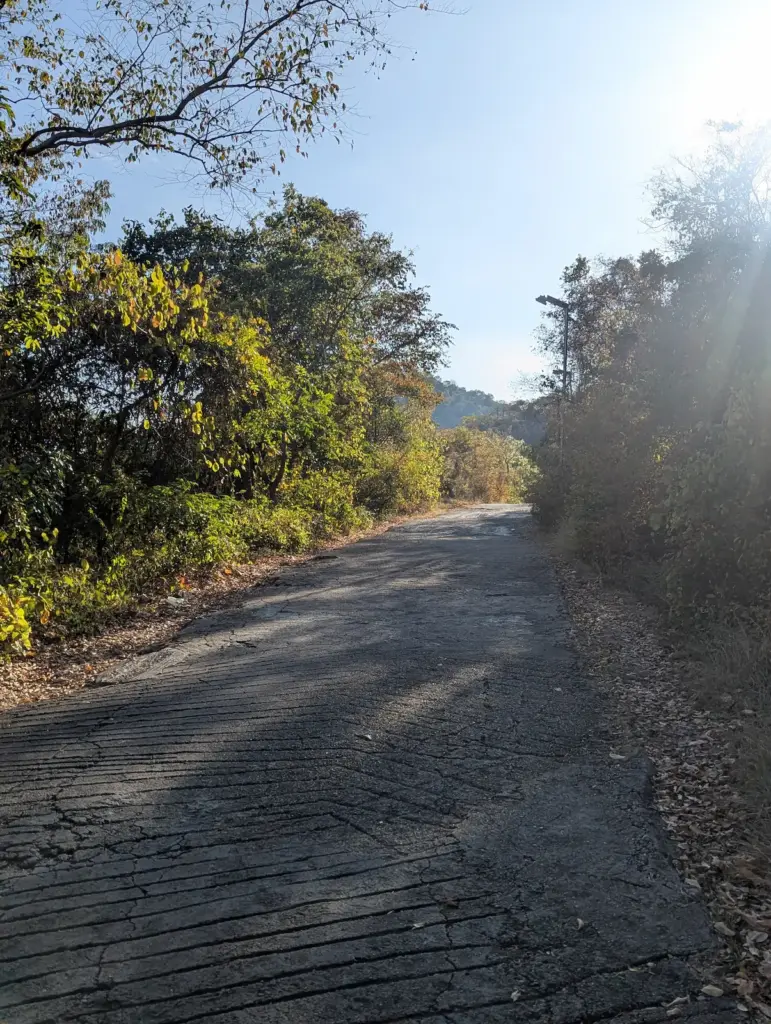
We actually don’t recommend taking your rented moto up the hill. There’s no parking right at the top, so you’ll still need to walk a fair way to reach the summit. The road also gets quite steep towards the top, which can be difficult for hired motos, especially if there are two of you.
You can get a lift to the top on a moto or in one of the pickups fitted with chairs in the back for a few dollars each. With a little negotiation, you might also be able to get them to stop at the Killing Caves or wait for you at the top, but generally they’ll just drop you off and you make your own way back.
Our favourite way to get to the top is to walk, which again is full of options. There’s a set of stairs where the tuk tuk drivers generally drop you off. About a quarter of the way up, you’ll come to a fork in the stairs.
Although both routes lead to the top, they come out at different points. Go left for the steepest climb, or right for a more leisurely route, albeit still with plenty of stairs. The monkeys like to congregate on these steps, so just be aware of them and keep your distance.
Exploring Phnom Sampov: Our Walking Route
Now that we’ve shared the different ways to get to the top, we actually go a different way! We prefer to walk along the road as it winds up the mountain. It’s not as steep as the stairs and allows us to visit the Killing Caves along the way.
You’ll need a moderate level of fitness to complete the full walking route, particularly if you plan to explore all the caves. There are some steep and uneven stairs, but you can take your time and stop for breaks along the way.
1. The Boat Gate and the Legend of Phnom Sampov
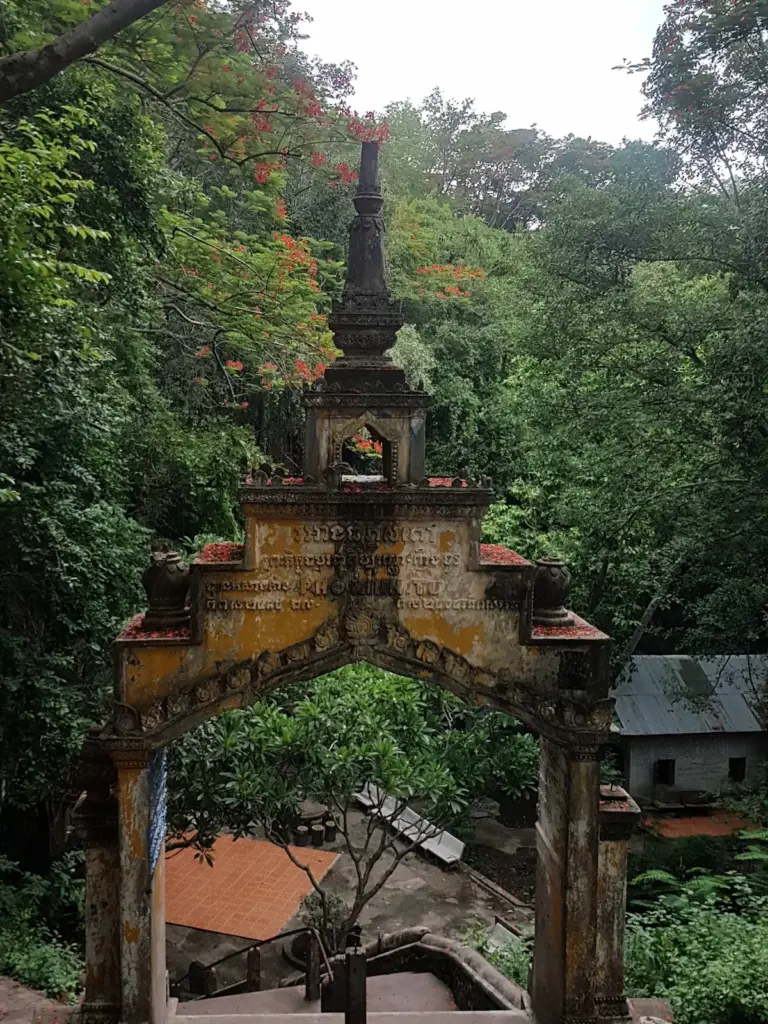
When you come to the fork in the road, take the road to the left towards the Killing Caves. This is one of the few places along the route that is signposted. Head under the boat gate, which is an important nod to the legend of Phnom Sampov.
It is said that long ago, a prince fell in love with a young woman who had a pet crocodile that was fiercely loyal to her.
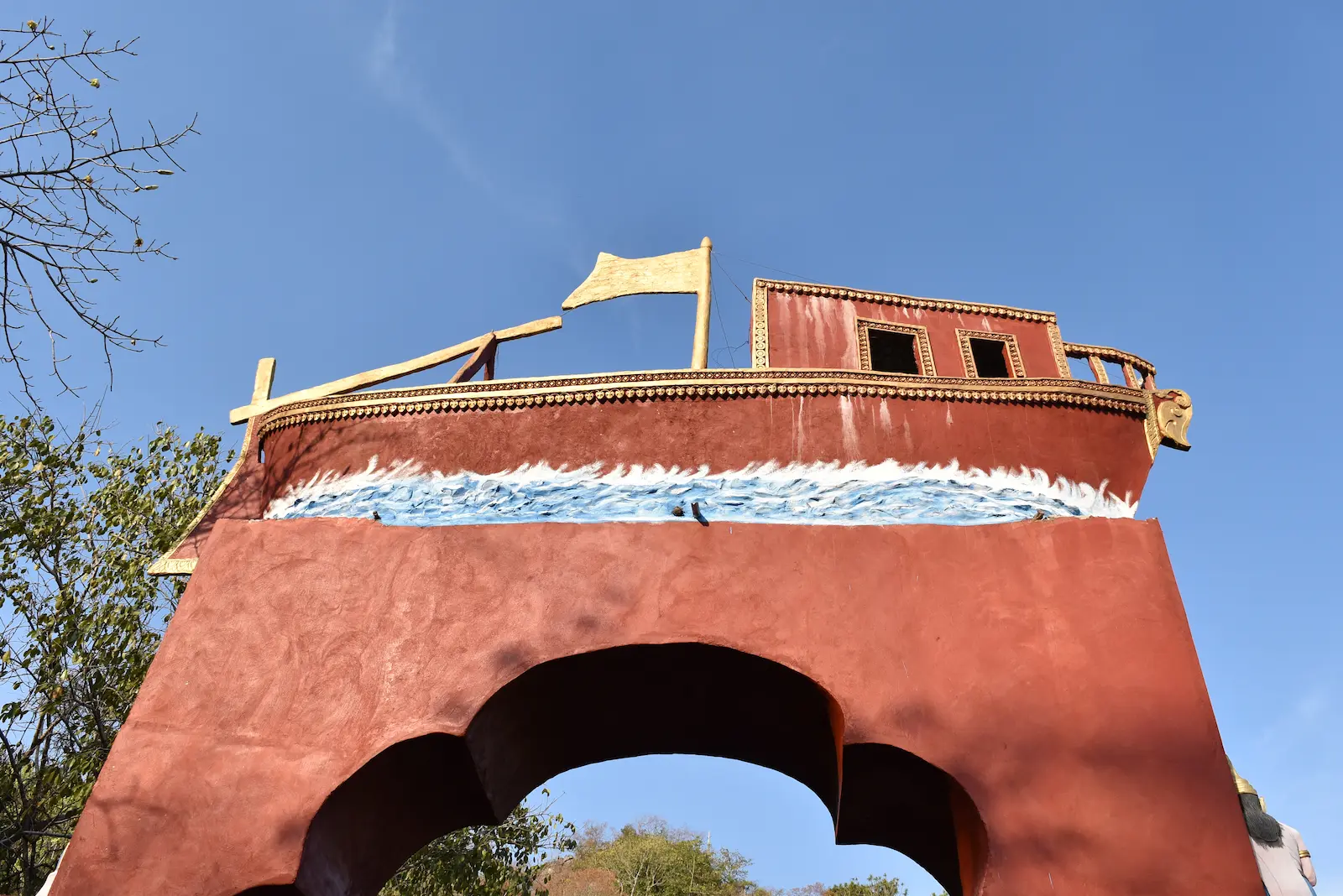
However, the prince’s parents wanted him to marry a princess famous for her beautiful, magical hair. Eventually, the prince agreed to the marriage, leaving the young woman heartbroken and angry. Determined to take revenge, she ordered her crocodile to attack the ship carrying the prince to his wedding.
The crocodile blocked the ship, threatening to kill everyone aboard so the passengers offered him chickens, ducks and turtles in exchange for letting them pass. But he refused.
Hearing the prince’s cries for help, the princess used her magical hair to save him. She lowered her hair into the sea, causing the water to disappear. With no water left, the crocodile died, and the stranded ship and animals turned into mountains.
Phnom Sampov translates as Ship Mountain, and some say the hill resembles a ship. From the top, you might also be able to spot Crocodile Mountain, Turtle Mountain and Chicken and Duck Cage Mountain, all part of the same legend.
2. Wat Kirirom Pagoda
Passing under the ship gate, you’ll first come to Wat Kirirom Pagoda. If you want to check out the views towards Phnom Banan, head over to the left. Otherwise, continue up towards the pagoda.
You can take a look inside, just remember to remove your shoes before entering. The walls are painted with scenes from Buddha’s life, and there are some rather bright neon lights illuminating the main Buddha shrine.
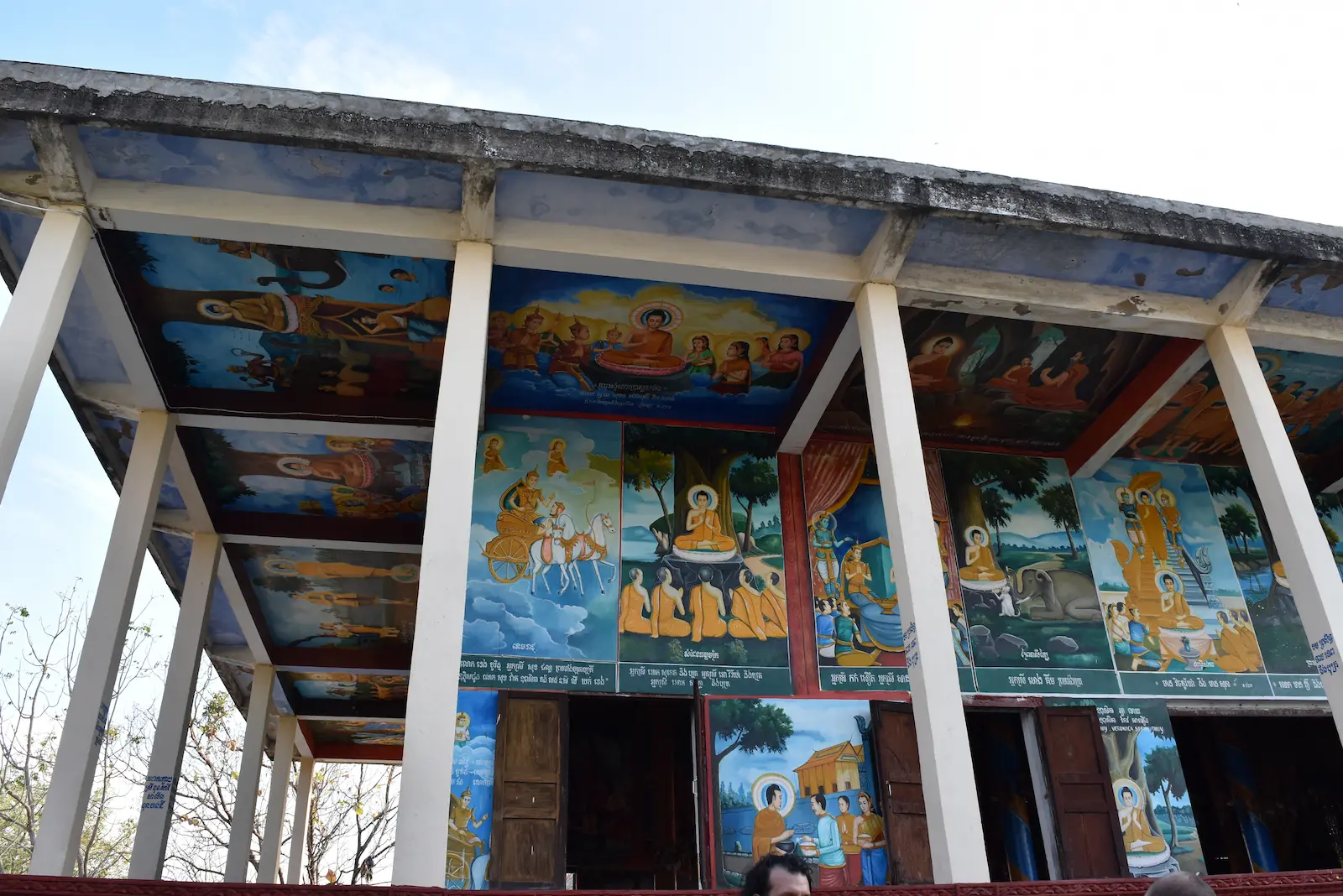
Wat Kirirom also has a darker history. During the Khmer Rouge period, the pagoda was used to detain prisoners, many of whom were later killed at Phnom Sampov.
3. The Buddhist Statues of Norok (នរក)
Walk around to the right of the monastery building and follow the small path to the Killing Caves. You’ll know you’re on the right track when you come to some pretty gory statues. These represent Norok (នរក), the realms of suffering in Buddhist beliefs, where beings may be reborn as a consequence of negative karma.
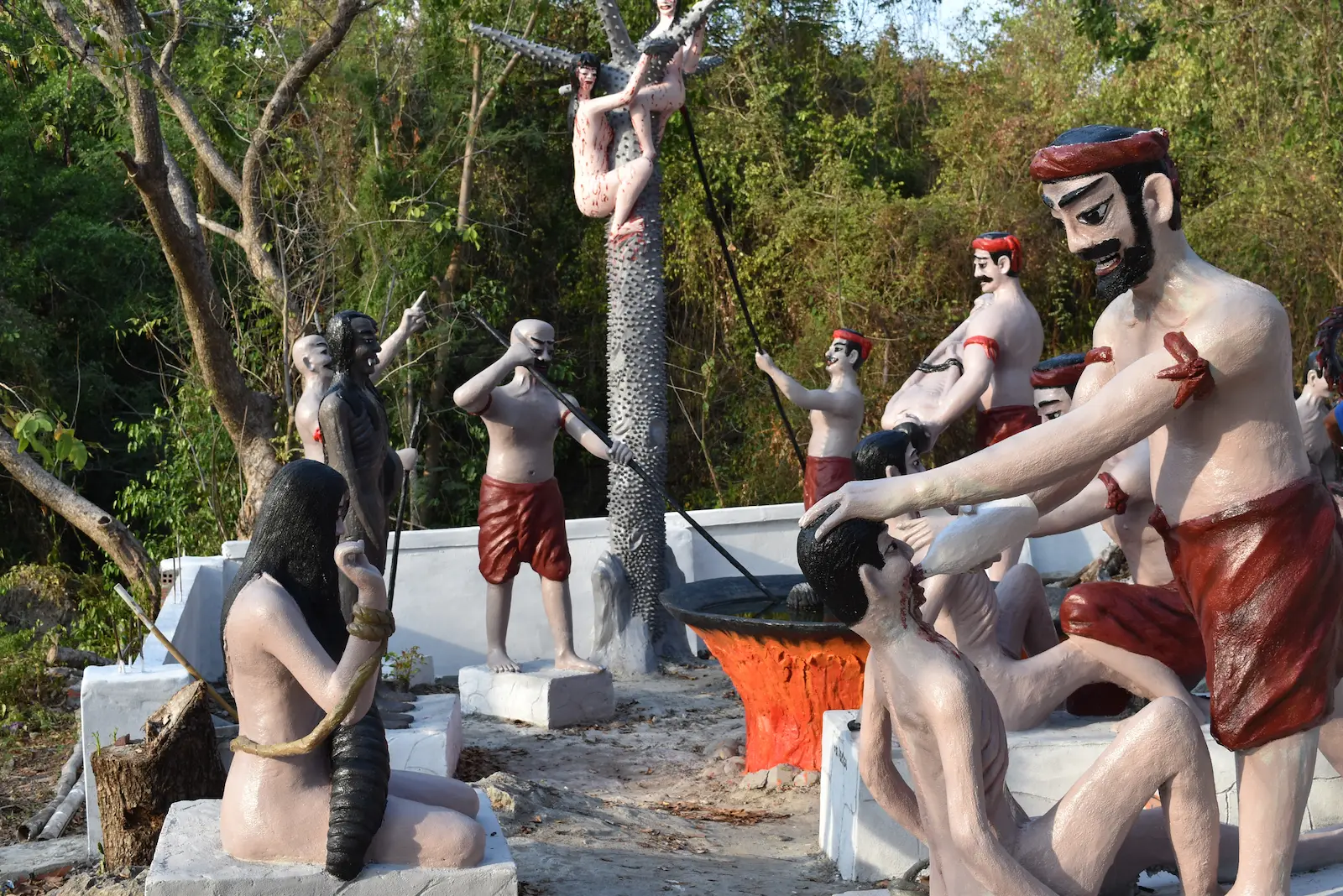
The rather gruesome scenes of people being boiled in cauldrons, tortured and forced to climb thorn-covered trees depict the suffering associated with harmful actions such as killing, stealing and sexual misconduct.
4. Laang Lakhon – The Killing Caves
Take the path to the left of the statues to visit Laang Lakhon (Theatre Cave), which is now mainly known as the Killing Cave.
There are actually 12 caves on the hill, with names connected to the ship from the legend of Phnom Sampov. As the ship was carrying the wedding dowry as well as performers, the caves are named after different parts of the ship or items it carried. Laang Lakhon represents the performers, while other caves such as Pka Sla (Areca Flower Cave) and Laang Pich (Diamond Cave) relate to gifts in the dowry.
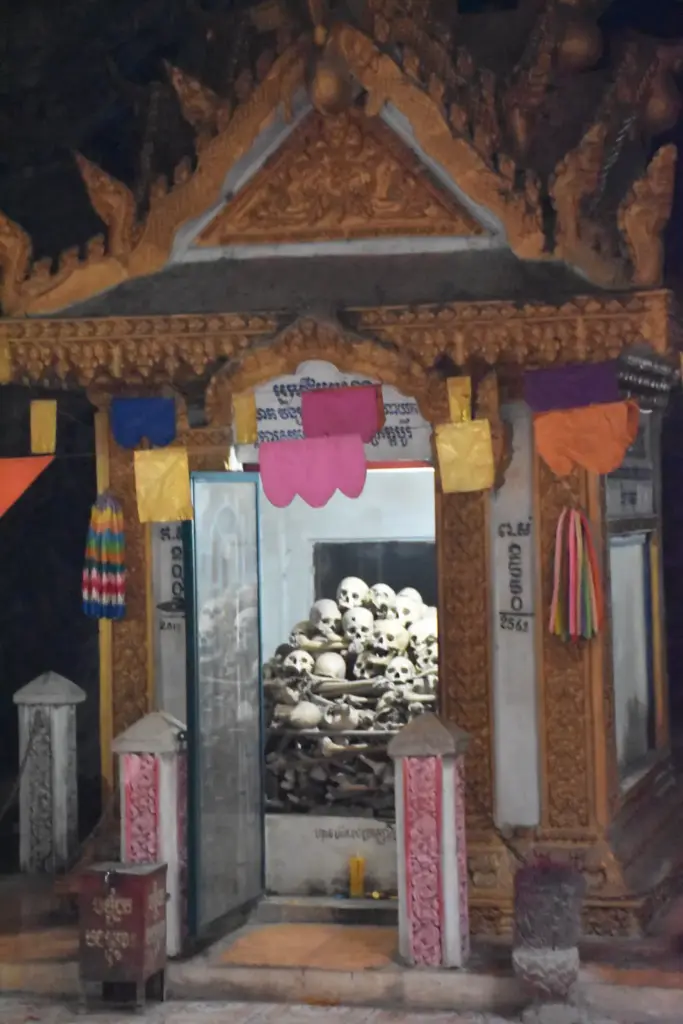
The Killing Caves are reached by a steep set of stairs leading down into the mountain. During the Khmer Rouge period, Phnom Sampov was used as a security centre, with prisoners detained at Wat Kirirom, which you just passed, and other locations nearby. According to witness testimony documented by the Extraordinary Chambers in the Courts of Cambodia (ECCC), prisoners were executed at the pagoda and their bodies thrown into the nearby caves.
Today, the caves form a memorial to those who were killed here. At the bottom of the stairs, there are some Buddha statues and a small shrine containing human bones recovered from the site. It’s a sombre place to visit and not for everyone, so you can make your own decision whether to include this stop on your route. If you step onto the tiled shrine area, remove your shoes.
There is another set of stairs leading further down into the limestone caves, which you can visit. Despite what people may tell you, there are no bones to be seen down here, although you might spot a few bats.
5. The Viewpoint Over Phnom Krapeu and Phnom Andoek
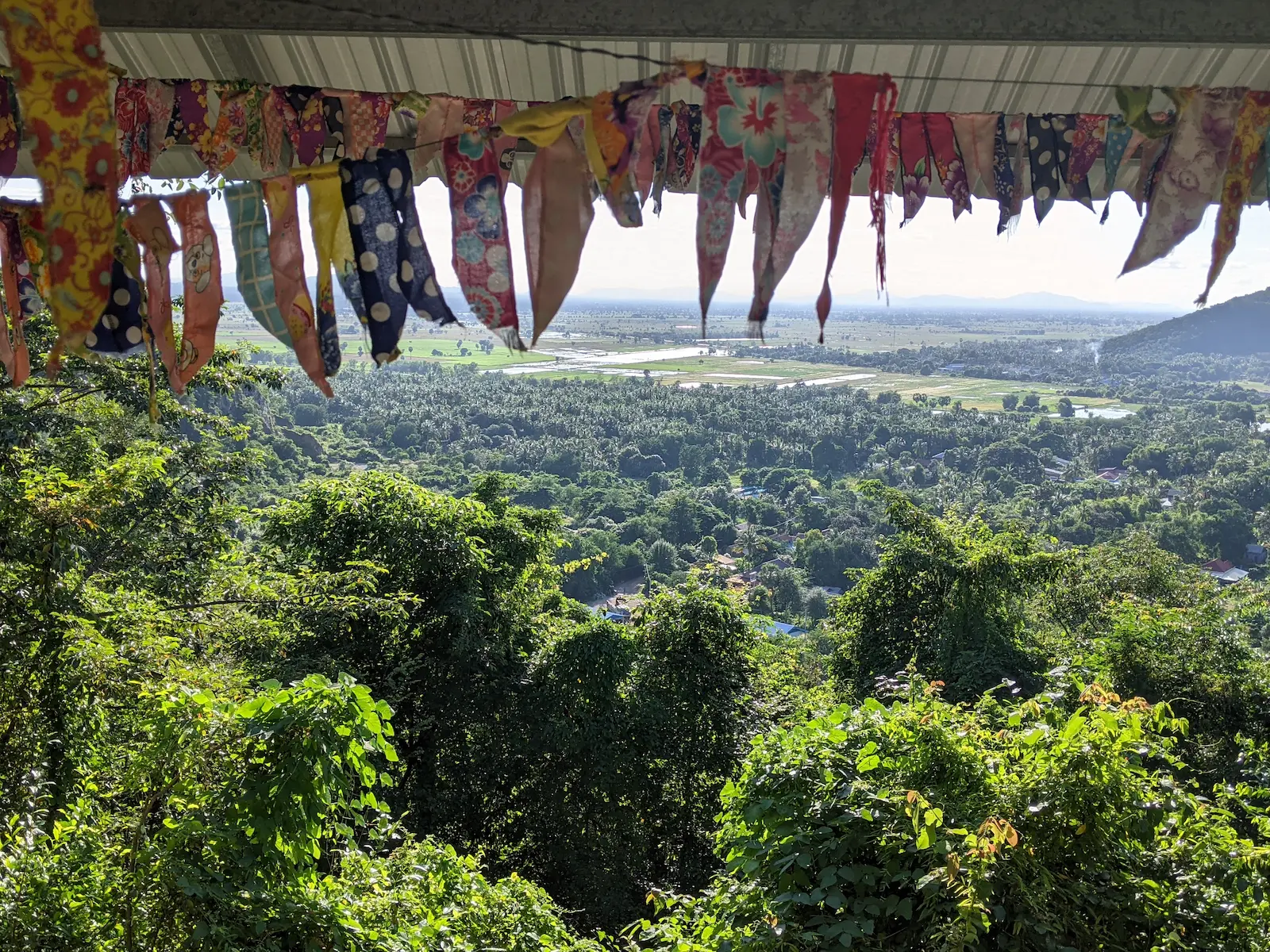
Climb the stairs again to return to the route. Walking out of the cave, you’ll get a good view across the plains towards some of the other hills from the legend, including Phnom Krapeu (Crocodile Mountain) and Phnom Andoek (Turtle Mountain). A small hut off to the side gives you the best views.
6. Neang Ramsay Sok and the Path Back to the Road
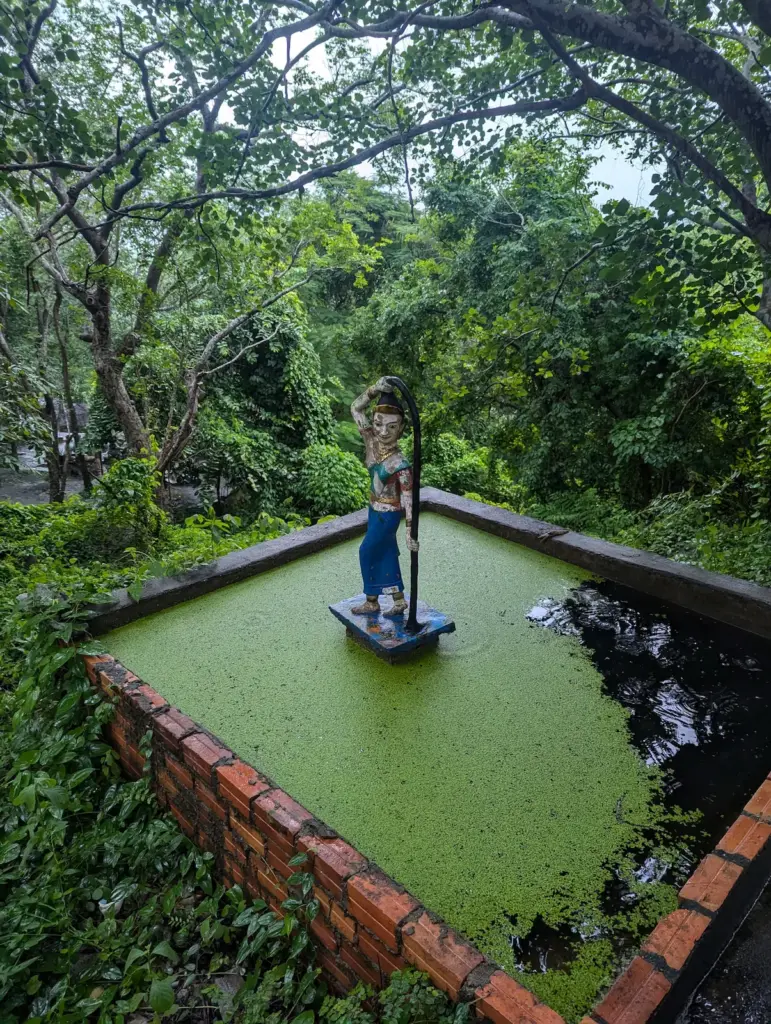
You can head back exactly the way you came, but we like to turn left at the Buddhist statues of Norok. This takes you along a different path back to the road, where you’ll see more Buddhist statues, including one of Neang Ramsay Sok (នាងរំសាយសក់), the woman who let down her long hair in the Phnom Sampov legend.
Head under the boat gate again and turn left towards Pka Sla Cave. You’ll soon come to another fork in the road. Take the right for the steep walk directly to the summit, or continue left if you’d like to visit Pka Sla Cave.
7. Pka Sla Cave (Areca Flower Cave)
At the end of this road, you’ll come to a flat area with two large Buddha statues and some stalls. This is a popular place for Cambodians to worship. There are signs here, but essentially, heading left past the large Buddha statues will take you down to Pka Sla Cave. Straight ahead leads down the stairs towards the bat caves, while the set of stairs to the right takes you towards the summit.
We quite like Pka Sla Cave. As you head down the stairs, you’ll see a shrine and a number of statues. Further inside, the cave opens up into quite a large area, with more shrines.
There are a few passages off into other caves here, some of which you can walk through. On your way back out, look for a small cave entrance on the right, near the bottom of the stairs. This narrow passage takes you through the limestone and brings you out about halfway up the staircase. It’s quite tight and enclosed, but you can stay standing the whole way. If you can’t find it, the caretaker will usually show you where to go.
Pka Sla (ផ្កាស្លា) means areca palm flower, which has a traditional role in Cambodian wedding ceremonies, hence its connection ship in the legend.
Because of this it is a popular place for newly married Cambodian couples to visit and make offerings.
8. The Artillery Guns
Retrace your steps back to the giant Buddha statues and look for the set of stairs heading towards the summit. These will bring you back to the road you would have been on if you’d skipped the cave. This is the steepest section of the climb, so take your time here.
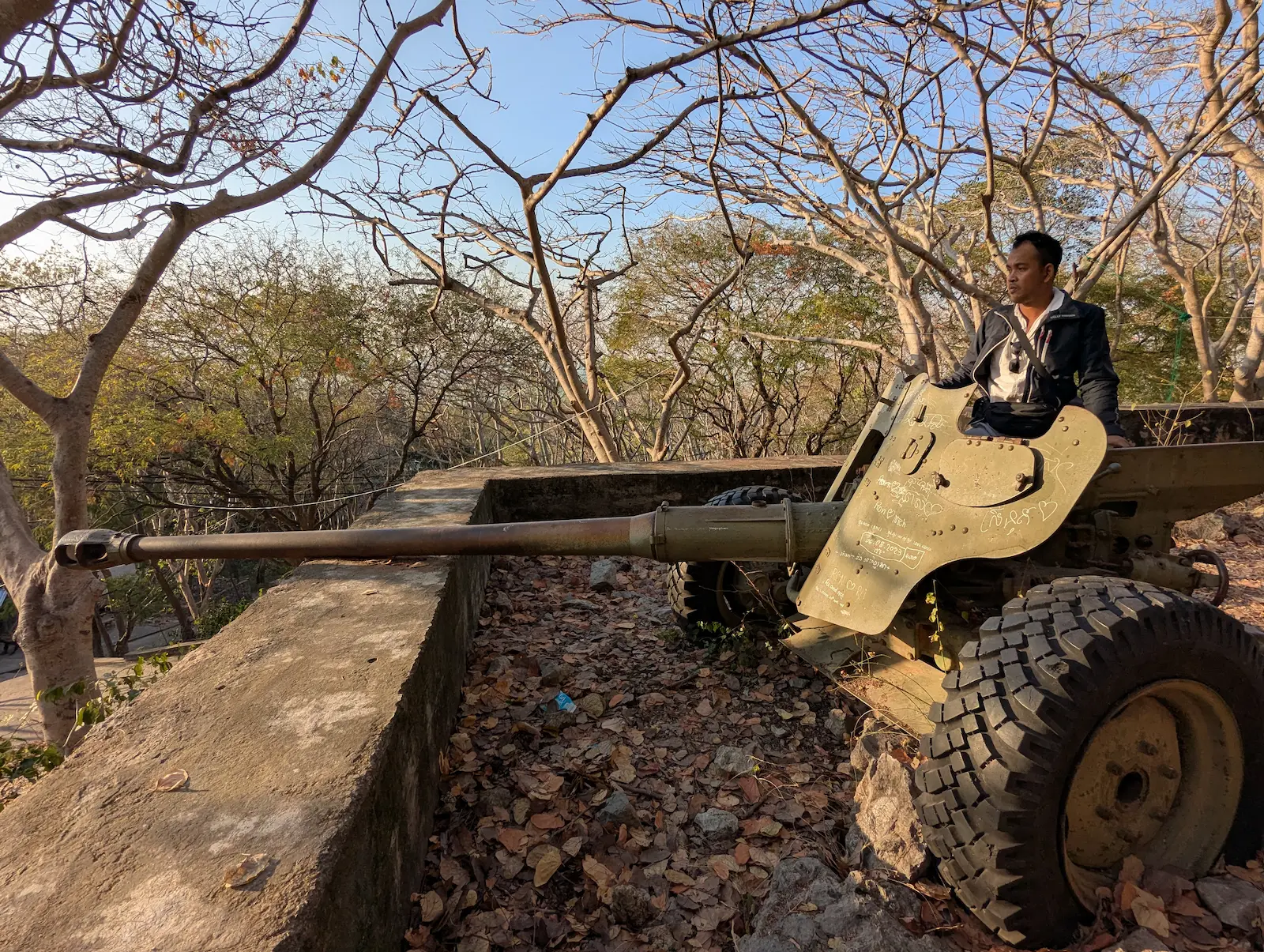
About halfway up the mountain, just in time for a break, you’ll come across two old artillery guns on your right-hand side. These are reminders of the fighting that continued in this area after the fall of the Khmer Rouge in 1979. The guns point west towards Phnom Krapeu (Crocodile Mountain), which was a Khmer Rouge stronghold during the 1980s. Both are Soviet-made guns, although one has German markings. We’ve heard that this gun was captured by the Germans during World War II before eventually making its way to Cambodia.
9. Laang Sthani (Station Cave)
Once you reach the top of the hill, where there are a few stalls, take the small path to the right that leads past a stupa and some small buildings. On your way you’ll see another set of steps leading down to Laang Sthani (Station Cave, ល្អាងស្ថានីយ៍).
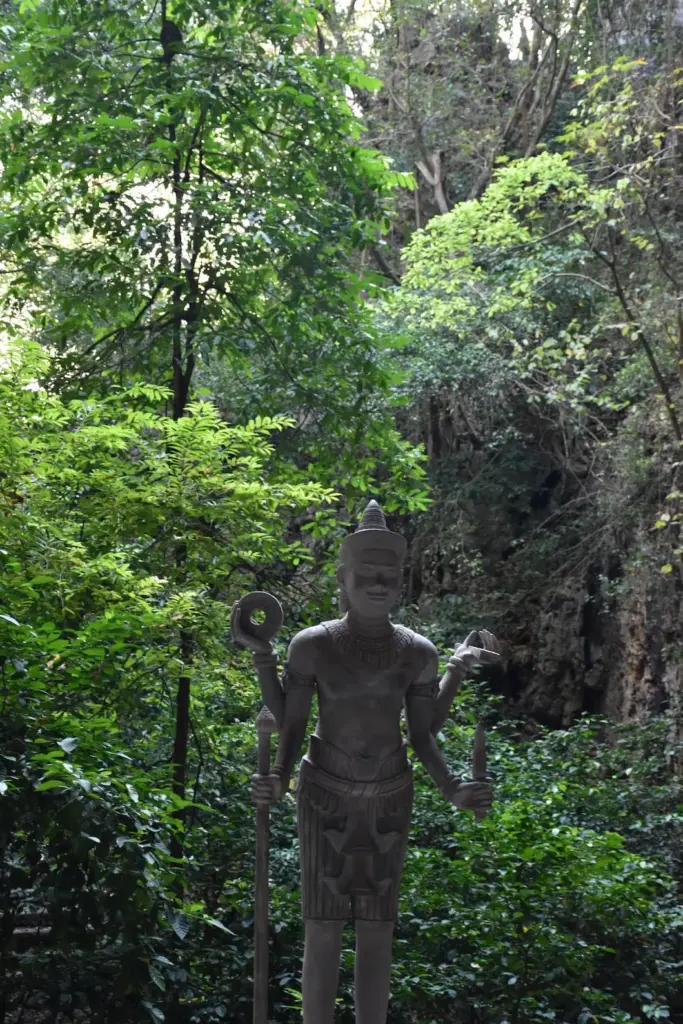
Also known as Laang Thom (ល្អាងធំ), or Big Cave, this is another of the caves named in connection with the ship from the Phnom Sampov legend. It has a huge natural opening in the limestone mountain, almost like a deep gorge. There are about 140 steps down to the bottom, where you’ll find two guardian statues standing inside the cave. It’s quite beautiful to stand at the bottom and look up into the rock ceiling above.
10. The Summit and Wat Phnom Sampov
Back at the top, you can head up to the summit and wander around the stupas and pagoda buildings. There are quite a few vantage points overlooking the province, and it’s a wonderful place to take some photos.
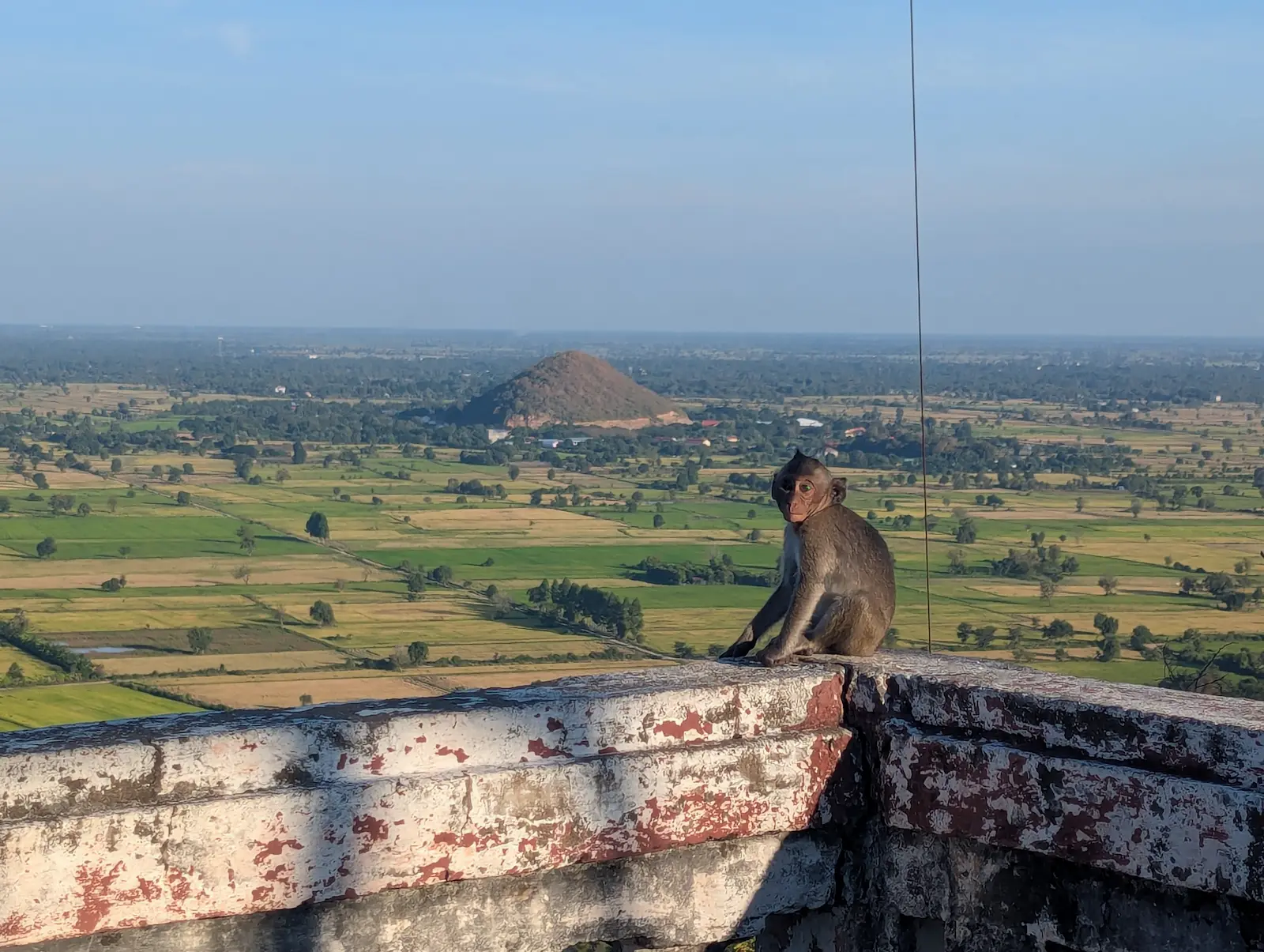
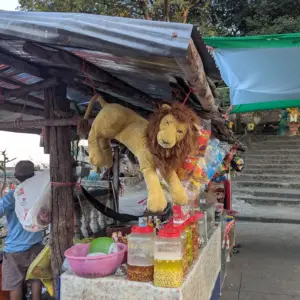
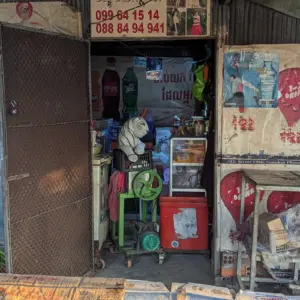
The monkeys cause a bit of havoc up here, so watch your things. The shop owners are generally on top of it and will often be walking around with slingshots to scare them away. Also look out for the giant plush snakes and tigers in the stalls, which are used to frighten the monkeys.
Heading back along the paths that wind between the stalls, the same way you came in, turn right instead of taking the path back down the hill. This brings you to a large concrete landing, which is a great place to watch the monkeys and get a final photo looking towards Battambang city, in front of the blue Battambang sign.
You can also grab a drink or snack from one of the stalls before heading down.
11. The Hidden Stairs Back Down
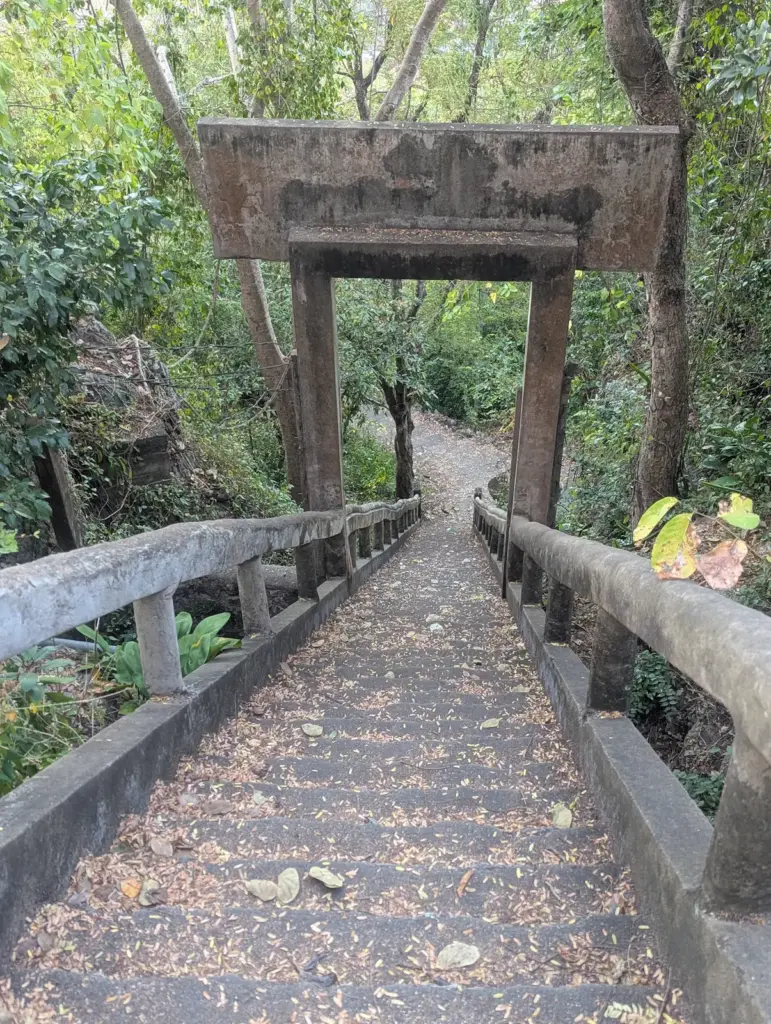
From here, there’s a quicker way down, although steep might be a better word for it! The stairs are a little tricky to find. With the view of Battambang and the blue ‘Memory of Phnom Sampov’ sign directly behind you, look for a small yellow concrete marker with blue writing. This marks the start of the stairs.
The first section is quite steep and not for the faint-hearted, but after a short descent, you’ll join another, more gentle set of stairs. They’re still quite uneven, though, so take care. It’s only about 5 minutes down to the bottom from here.
The last thing to look for on your way down is another nod to the ship legend in the gate at the bottom of the stairs.
Watching the Bats at Phnom Sampov
By the time you arrive back at the base of Phnom Sampov, you’ll find the area has filled up with little red chairs, food sellers and tourists. It’s a popular place with locals, so it’s regularly busy.
Hopefully, you’ll have arrived just in time to see the bats. Unfortunately, they don’t have a schedule, so their appearance can’t be guaranteed. They usually emerge around sunset each evening, and the tuk tuk drivers generally know what time to expect them at different times of the year. We like to head down from Phnom Sampov at about 5pm. The bats usually emerge between 5.30pm and 6.30pm, although we’ve been there when they’ve arrived as early as 5pm. And once we were there when it rained and they didn’t come out until well after the rain had stopped at 7.30pm.
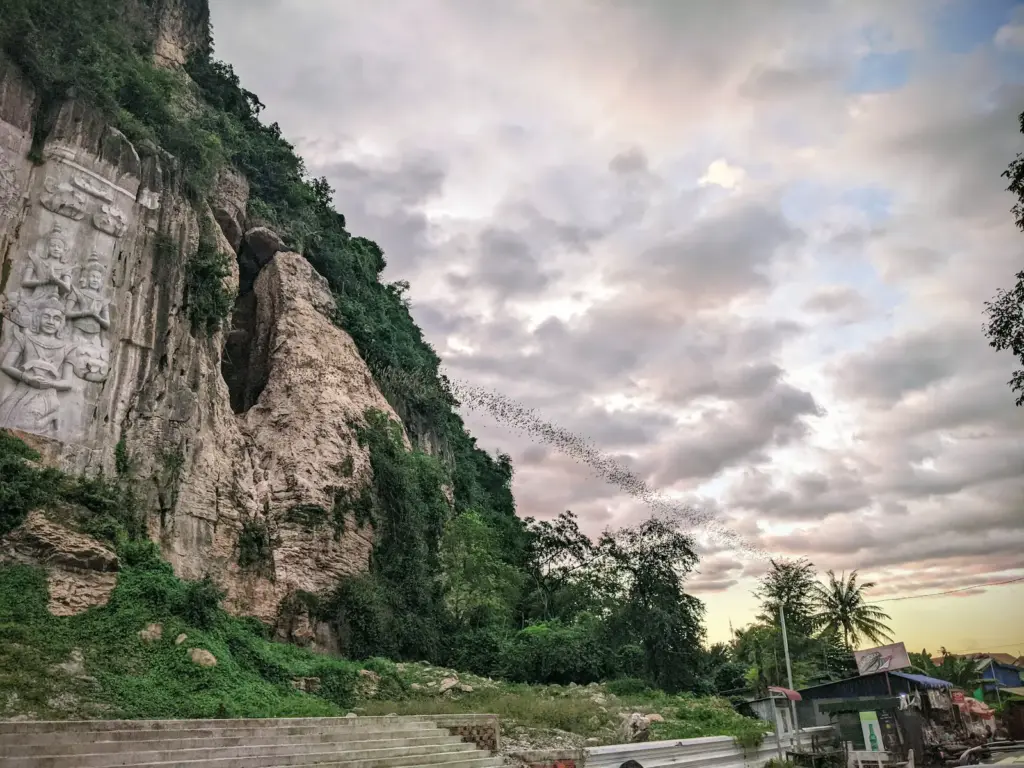
There are several places to sit and wait for the bats, including a new viewing platform. You’ll see the cave opening to the right of the Buddha carvings, and while sitting closer gives you the best view, it can be a bit smelly. A little further back is still a good spot to watch from. We like the place on the corner where they have stools and sell fresh coconuts or cold beer, but really, most of the places here are quite similar. Your tuk tuk driver may have a particular place they prefer to take you.
If you’ve arrived a little early, you can also spend some time exploring Wat Phnom Sampov at the base of the mountain. Behind the viewing platform are some older pagoda buildings, including one made from mud. The pagoda itself is quite beautiful, with its faded paint, raised hall and elaborate staircase. The walls and ceilings are covered in colourful paintings depicting scenes from Buddha’s life.
While you wait, you can also try some of the local delicacies, such as grilled rat. These are caught in the surrounding rice fields, where they feed on rice. You’ll find different sizes for sale near the bat-viewing area, or look out for them along the road on the way in, where they’re grilled over hot coals. There are also plenty of ice creams, rice snacks, insects and snails to try.
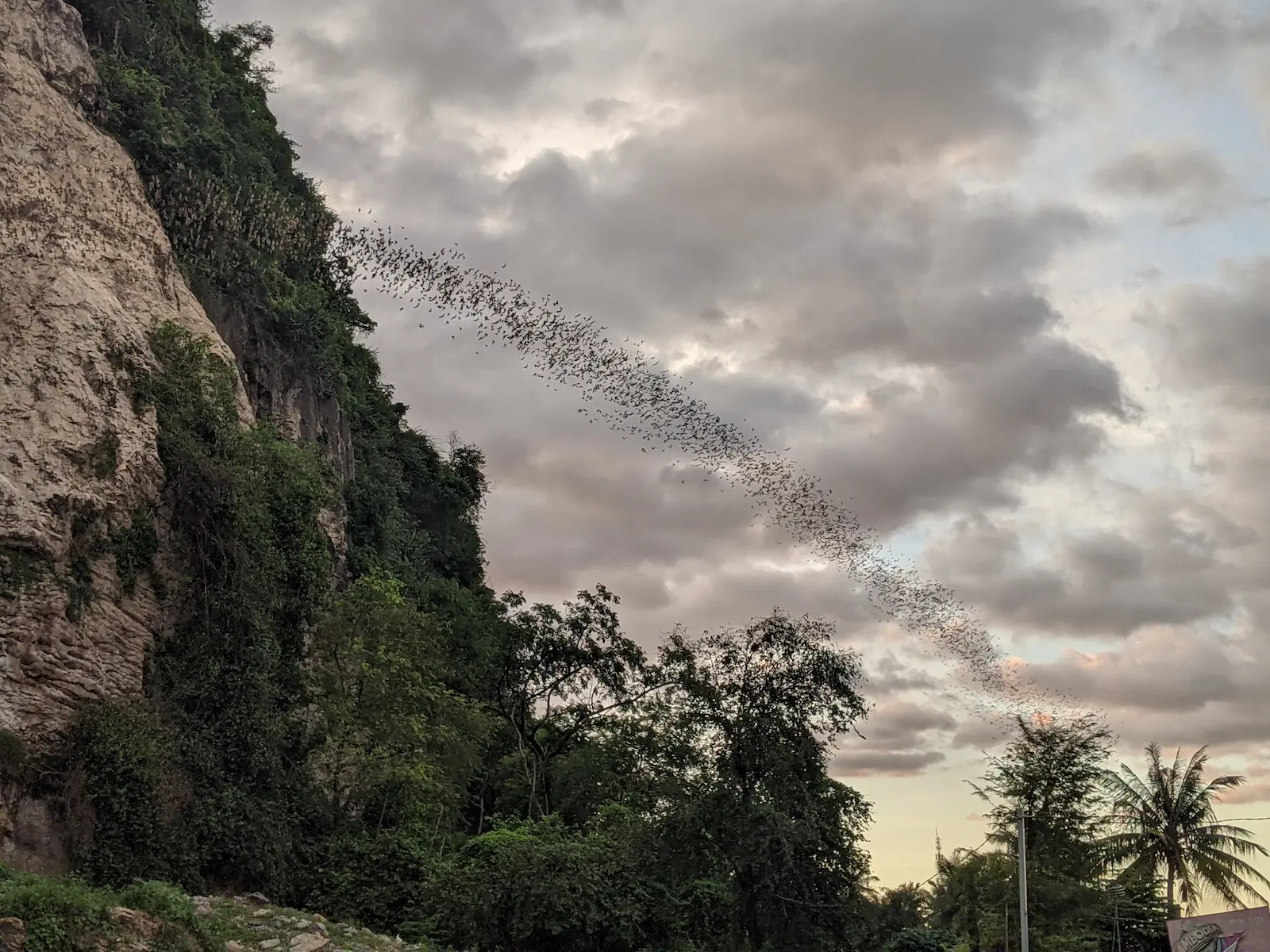
Once the bats begin emerging, they stream out of the cave and across the sky. Which direction they’ll head is always a mystery. Sometimes they fly towards Kamping Puoy, while other evenings they head across Ek Phnom towards Tonle Sap Lake. The sheer number of them is quite astonishing. They flow out of the cave in an almost endless procession, swooshing across the sky in a great swirling ribbon.
The Asian Wrinkle-Lipped Bats
The bats are Asian wrinkle-lipped bats (Chaerephon plicatus). Definitely google them to see a picture as they are an interesting and not so pretty kind of bat. Each night, around one million bats leave this particular cave in search of insects in the surrounding fields, sometimes travelling up to 25km from the cave.
At first, just a few early risers come out. You’ll hear a few chirps and wonder whether it’s a swallow or a bat. But soon they’re emerging in their thousands, creating wispy lines across the sky. Like wafts of thick smoke.
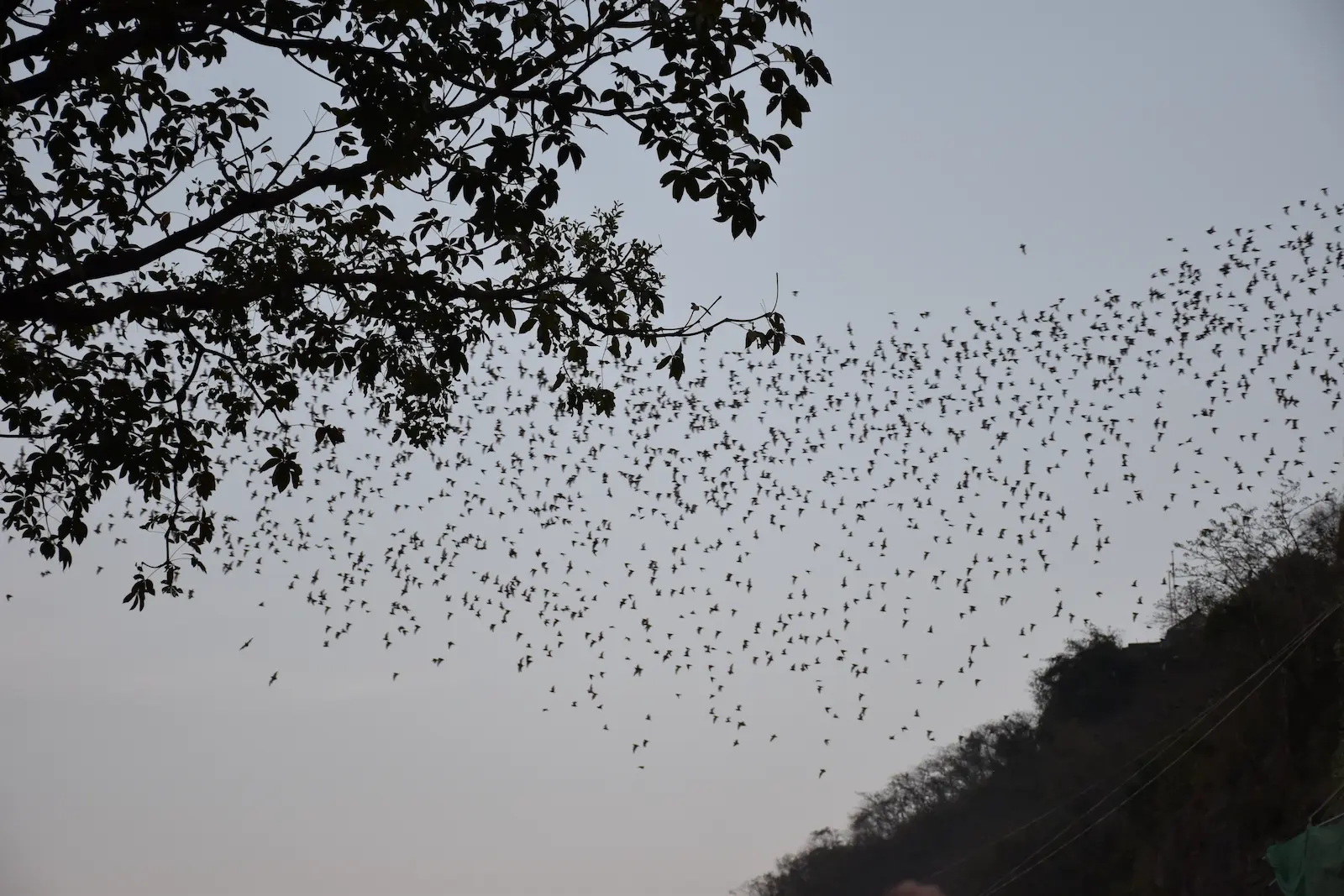
Many people head off after a few minutes of watching, but the bats continue pouring out of the cave for a good half an hour.
Nehru is a wealth of information about the bats, having filmed a couple of short documentaries and news pieces about them. He’s always happy to talk to tourists about the bats, so we often end up chatting to strangers while we’re there. You can watch his latest story about the bats here.
If you’d like to learn more about bats and their conservation in Cambodia, we recommend reading the Fauna & Flora guidelines for Cambodian caves. It’s an interesting introduction and gives a lot of background about the bats.
Where Else Can You See the Bats Around Battambang?
Phnom Sampov isn’t the only place to see the bats. If you’d prefer somewhere less touristy, you can ask a tuk tuk driver to take you to one of the nearby roads where you can watch them flying across the fields.
There’s also another cave around the back of Phnom Sampov, where nearly two million bats emerge each evening. There used to be a path leading up to a rocky viewing area where you could sit and watch the sunset and the bats emerging from the cave. It was quite a climb over the rocks, but once you reached the top, you could sit and enjoy the views. Local sellers would sometimes come by with drinks, so you could settle in and wait for the bats.
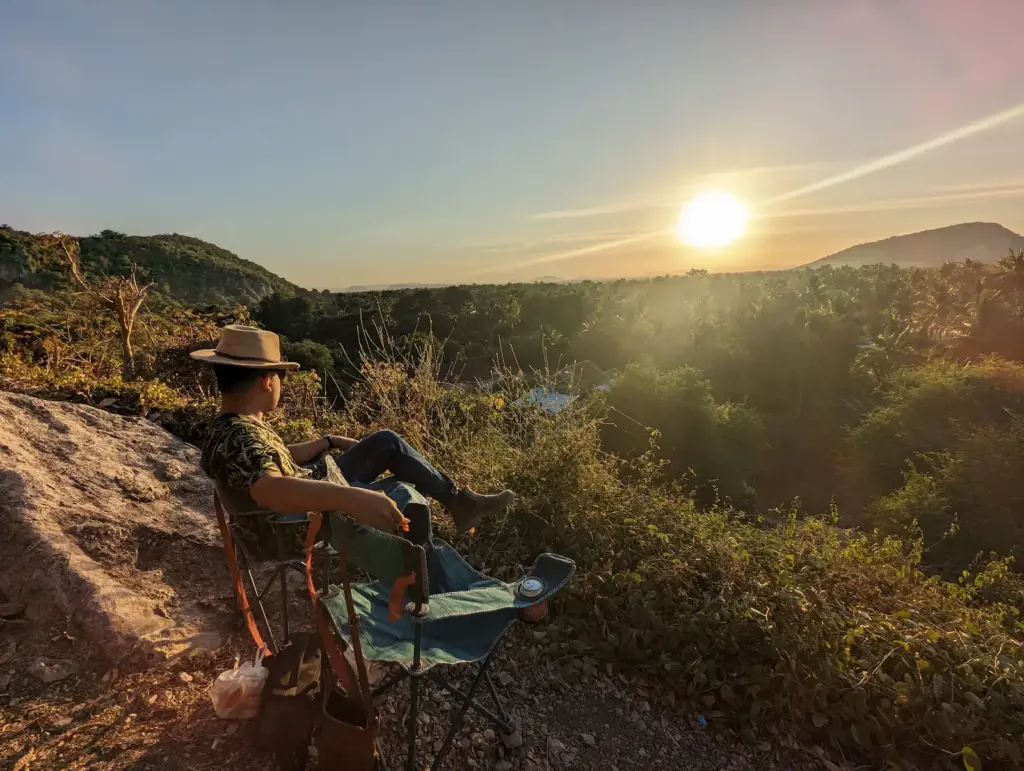
Unfortunately, the last time we visited, access to the path had been blocked to stop people climbing over the rocks to the viewing area. It was never an easy climb, so we’d recommend checking whether access is permitted before attempting to visit.
We’ve also seen the bats flying around Banan, but Phnom Sampov is definitely the easiest and best-equipped place to watch them emerge from the caves. If you are wanting to see fruit bats on the other hand, there is a large colony that sits outside Wat Bay Damram (វត្តបាយដំរាំ) in Banan.
Planning Your Visit to Phnom Sampov
Entrance is usually 4,000៛ ($1) for foreign visitors, although we’ve found that when we arrive earlier in the afternoon, they aren’t always collecting money.
If you go to the top of the hill, there is quite a lot of hiking involved, some of it over uneven steps, so definitely bring good walking shoes. Although the paths are covered by trees most of the way, it is quite a strenuous walk, so make sure you bring a hat, sunscreen and water. There are a few places along the way to buy water or a coconut if you need it.
The dress code here isn’t as strict as at the temples in Siem Reap, so wearing shorts is fine. However, as you’ll be visiting several pagodas and places of worship, it’s respectful to dress modestly.
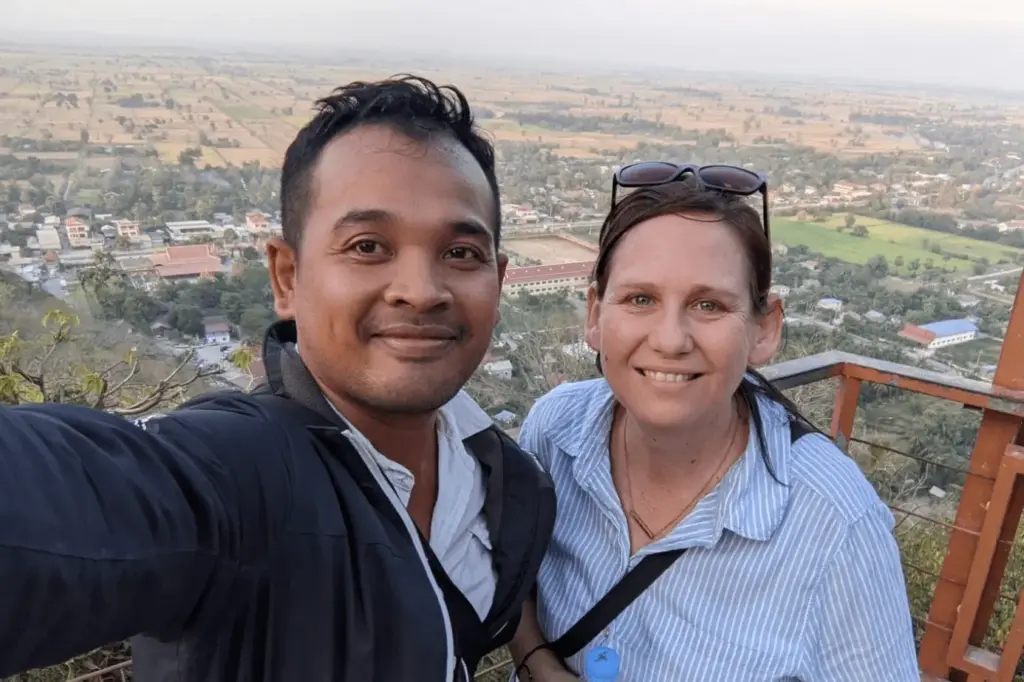
We regularly visit Phnom Sampov. Because of the popularity of the legend associated with it, the mountain is usually busy with both Cambodian and international visitors. We enjoy heading out and taking a seat to wait for the bats to emerge, but sometimes we visit just to explore the pagodas and surrounding area.
You can easily combine a visit to Phnom Sampov with a trip to Banan Temple and the Banan Bamboo Train, making a full afternoon of exploring the countryside around Battambang. But even if you’re short on time and only have a chance to see the bats, it’s still definitely worth it.
We visit Phnom Sampov regularly and were last there in October 2026
Related Posts