KEP
Exploring Kep: Crab Market, Coastlines & Kep National Park
Kep may be Cambodia’s smallest province, but it has an interesting history. Once a fashionable seaside retreat during the French Protectorate, it continued to attract Cambodia’s wealthy and powerful after independence. Today, its abandoned villas are a reminder of times past and it enjoys a more modest escape.
Kaeb, or Kep in the French spelling, means saddle and is said to be named after the legend of the lost saddle. According to the story, Prince Sakor Reach stole a commander’s prized white horse and fled southwest. As the commander caught up with him on the beach at Kep, the horse reared, throwing the prince and the saddle onto the sand. The prince quickly remounted and escaped, leaving the saddle behind. The locals began calling the area Kaeb Seh, or “Horse Saddle.” Another theory suggests Kep comes from the French word cape, which certainly suits the coastline, but it doesn’t come with nearly as good a story.
Today, Kep is probably best known for its crab and the bustling crab market is one of the main reasons many people visit. For many Cambodians though, it’s Kep Beach that draws the crowds, especially on weekends and public holidays. The first trip I made to Kep was the January New Year and there were traffic jams across all the streets, and there’s not that many streets. Not what I expected to say about Kep but does highlight how much of a domestic destination it is.
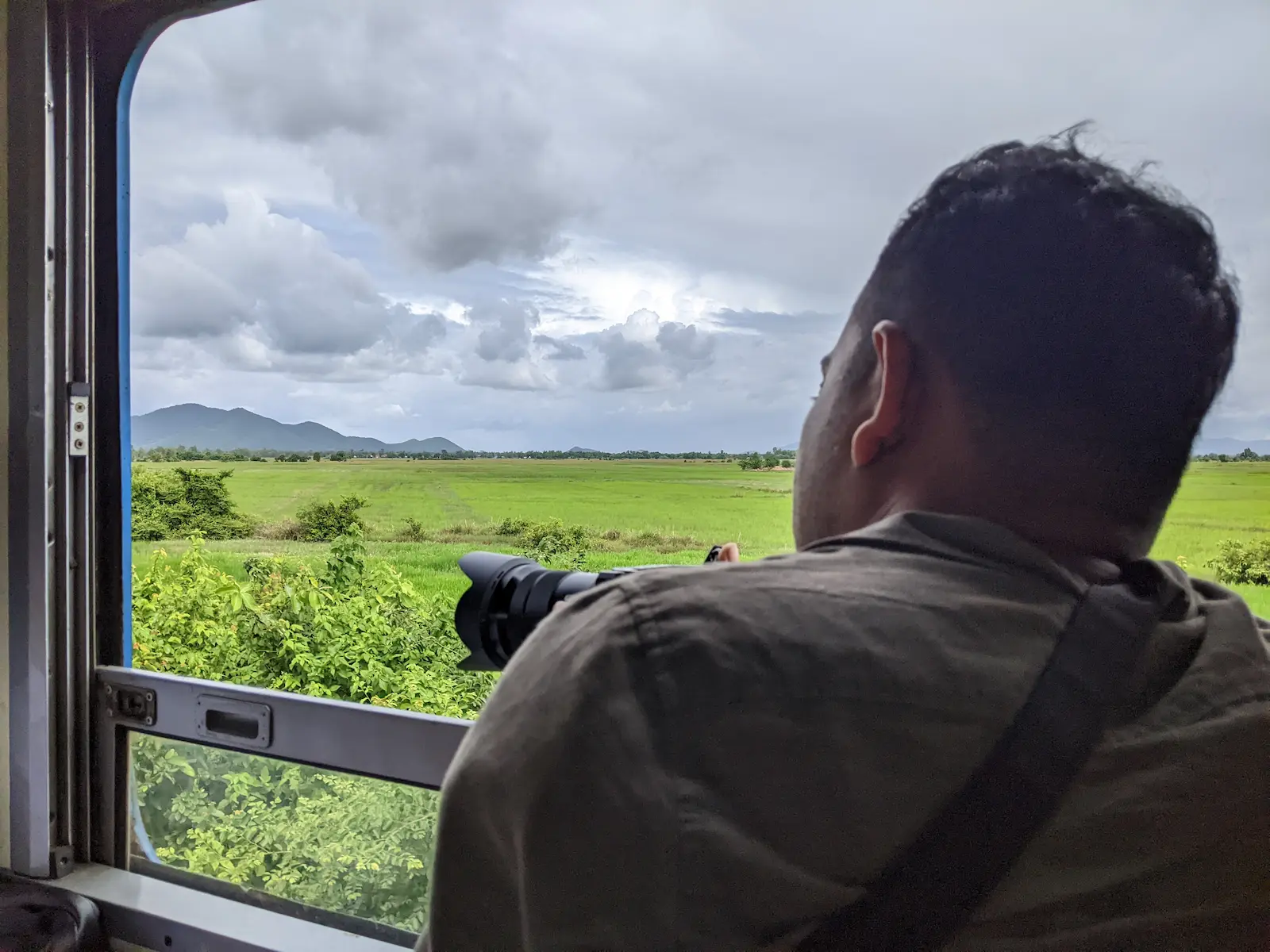
Only 3 ½ hours from Phnom Penh it is easily reached by taxi, bus or train which is on the Southern train line where it drops you before heading to Kampot and Siahanoukville. Many people choose to also visit on a day trip from Kampot, which is only 20km away.
The Abandoned Villas of Kep
As you make your way around town you can imagine what it was like holidaying in the resort town in the 1920s. Many of the old villas are still there, left abandoned from Kep’s “Cambodian Riviera” era.
Founded as a French colonial resort in 1908 and formerly known as Kep-sur-Mer (which also happens to be the same name as our favourite restaurant and the French colonial name, meaning “Kep-on-the-Sea”). Kep later became a glamorous playground for Cambodian elites in the 1960s
You can find hundreds of abandoned buildings around town, especially around the base of the national park. Some are slowly being restored, but most are now just shells with nature taking over.
Taking in some Nature
The 50km square kilometre Kep National Park sits in the middle of Kep and meets the sea nearby Kep Beach. It is an 8km loop around the park and there are a variety of different trails you can hike. On our last visit we opted for a motorbike (which we always hire from Kep Sur Mer) to meander around the park. There are quite a few locations to stop and take some photos and many people recommend Led Zep Cafe for drinks with a good view. Foreign visitors pay 4,000៛ ($1) to enter.
In good news, Kep was the first province in Cambodia to declare itself landmine free in 2022, but as with all of Cambodia please take care when hiking and stay on dedicated trails. Never enter an area with a Landmine warning sign.
Kep Beach
Kep Beach, which is a kilometer-long stretch of sand on the Kep coastline, is probably not the best beach you will visit in Cambodia but it is very popular with local tourists, especially on the weekends or during holidays. The waves coming into the beach from the gulf generally are gentle, making it a good spot for families.
Many of the Cambodian tourists come to Kep beach and set up their families on one of the huts that line the water or on the beach. The main strip of Kep Beach has a large car park behind which has been developed heavily over the last few years but it does mean there are plenty of stalls and restaurants selling food and drinks.
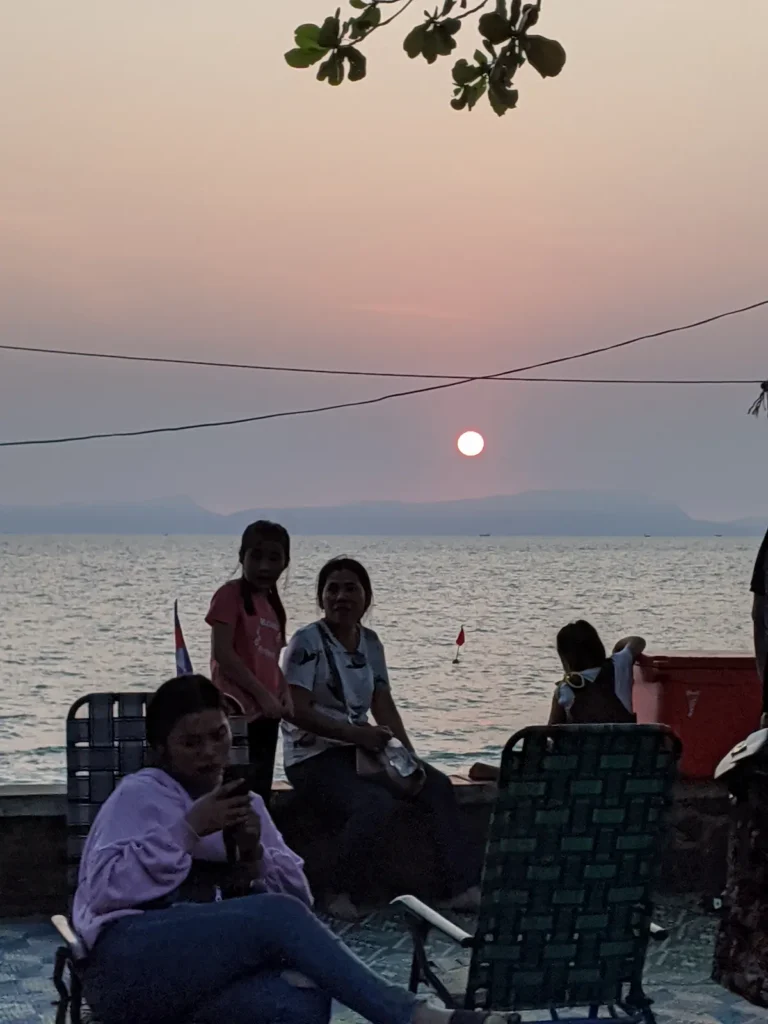
We usually end up wandering along the beach with an iced drink before finding somewhere in the shade to sit for a while and people-watch. It’s also a wonderful place to watch the sunset.
At the end of Kep Beach, looking out towards Rabbit Island, you’ll find the White Lady statue. The statue depicts the wife of a local fisherman who, according to legend, refused to eat or sleep while waiting for her husband to return from the sea. Sadly, he never did.
Many Cambodians also associate her with a young Yeay Mao, the guardian spirit of Cambodia’s coast. The much larger Yeay Mao statue on top of Bokor Mountain is said to represent her later in life. You’ll often see offerings left at the statue, and from time to time she is draped in brightly coloured cloth as a sign of respect.
Even if history isn’t really your thing, the views alone make it well worth the stop. From the monument we could look out across the forests, mangroves, coastline and ocean. The following day, while exploring the mangroves, we could still see the monument standing in the hills above.
Have you really been to Kep if you don’t have a photo of the crab?
Even if you miss the market, or the row of restaurants all selling crab dishes, you probably won’t miss the giant crab statue just near Kep beach, where the obligatory photo is a must.
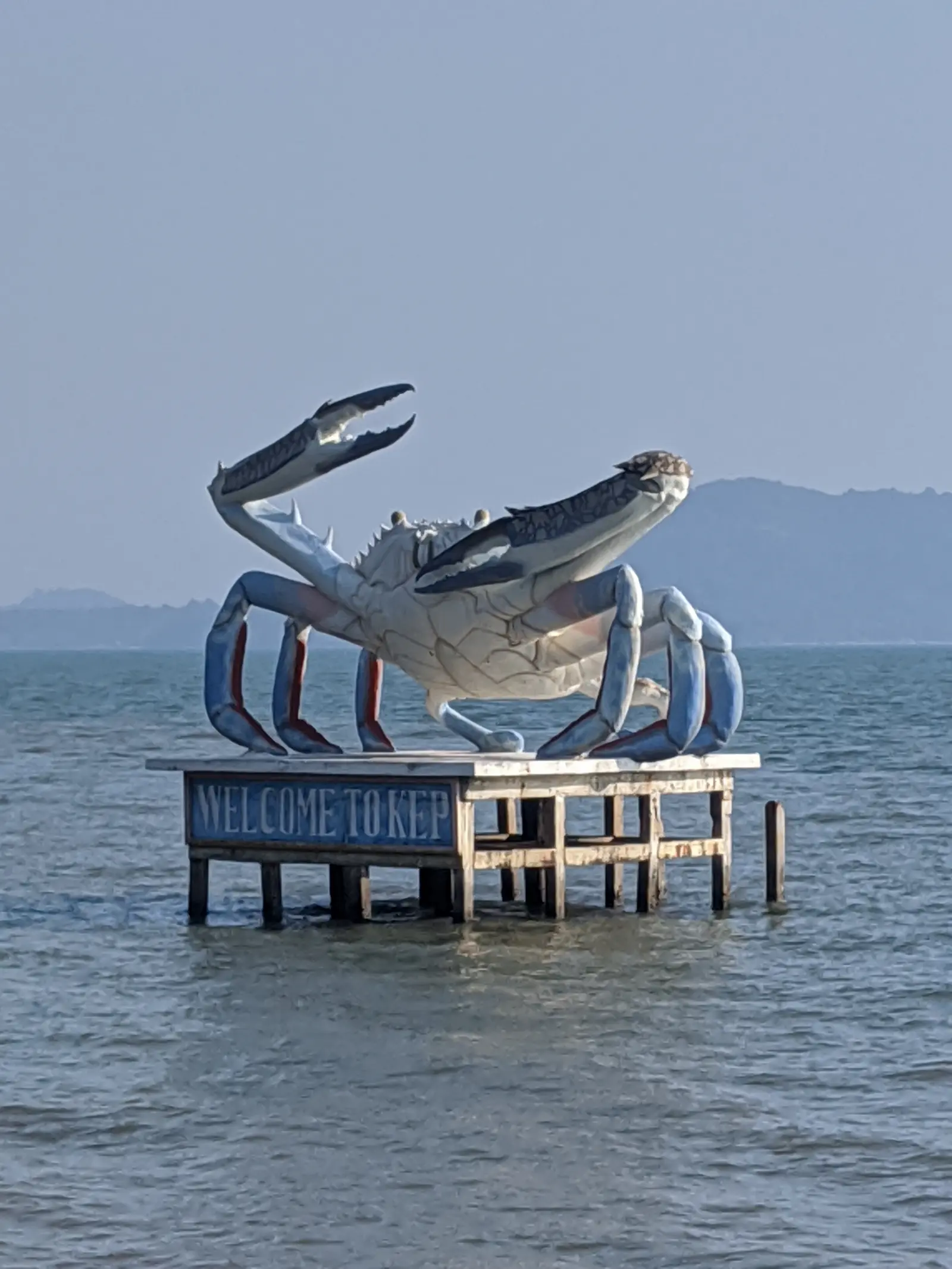
A few other places around town that might warrant a quick stop or a photo on your way past are the Independence monument, mirroring the famous lotus-shaped design of the iconic landmark in Phnom Penh and the beautiful bay dolphin sculpture at the entrance to the port. The white horse statue is at the roundabout between Kep and Kampot, and is often used as a navigational tool, “Turn right at the White Horse to head to the beach”.
Kep Crab Market
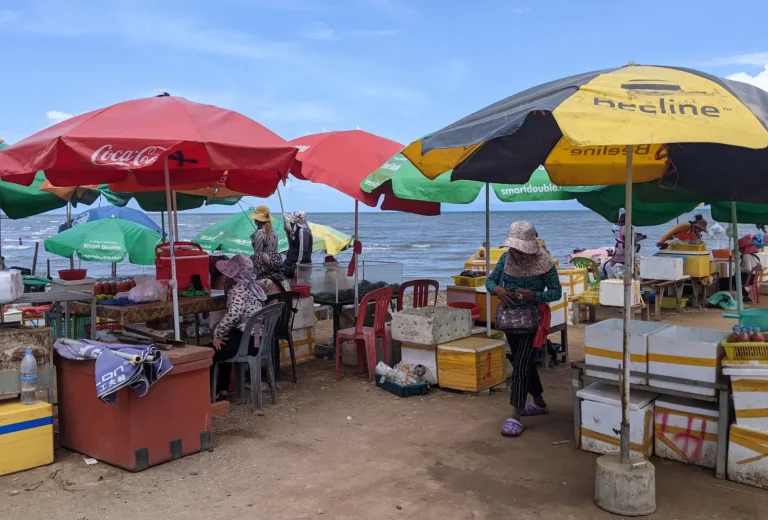
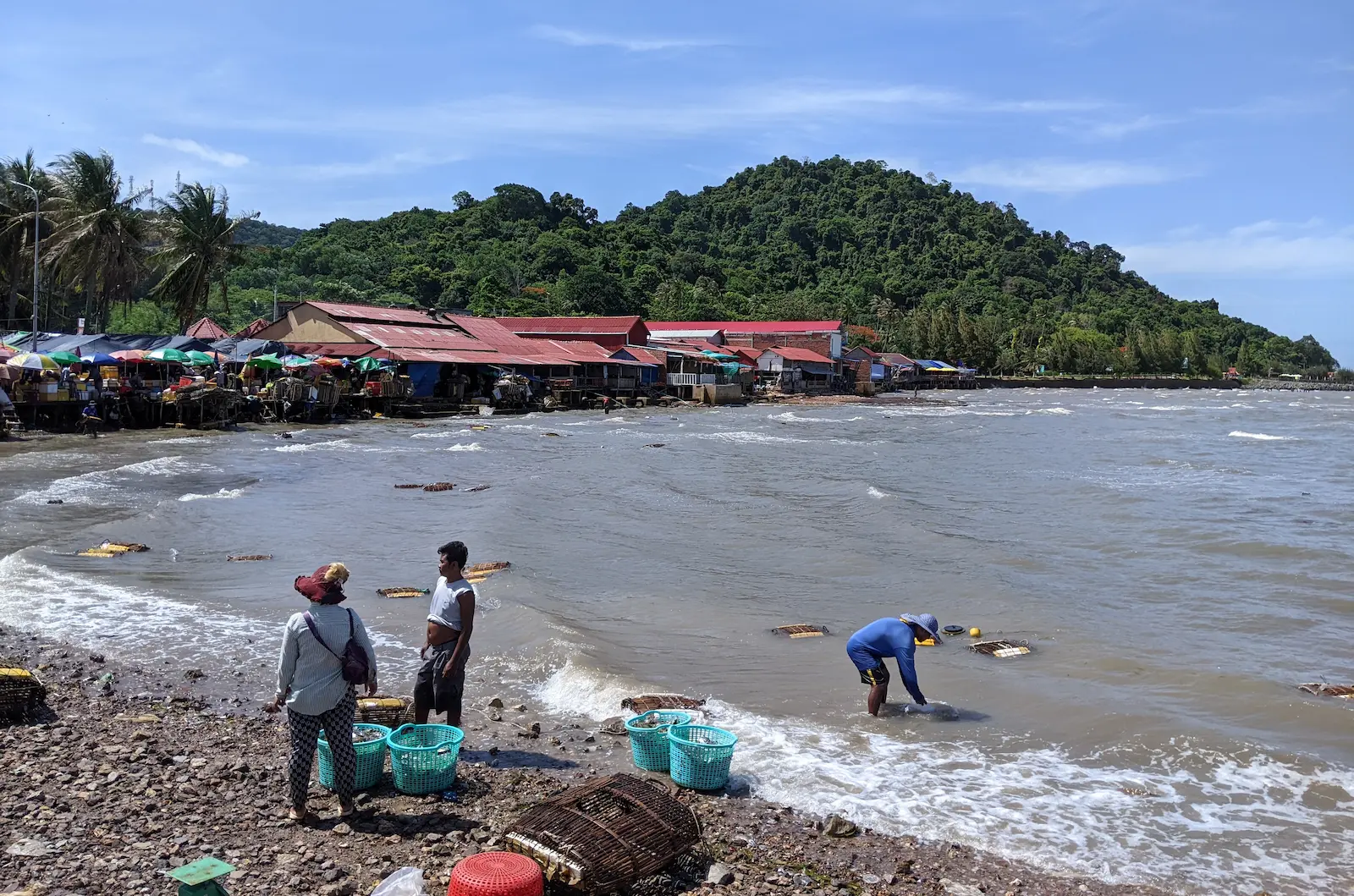
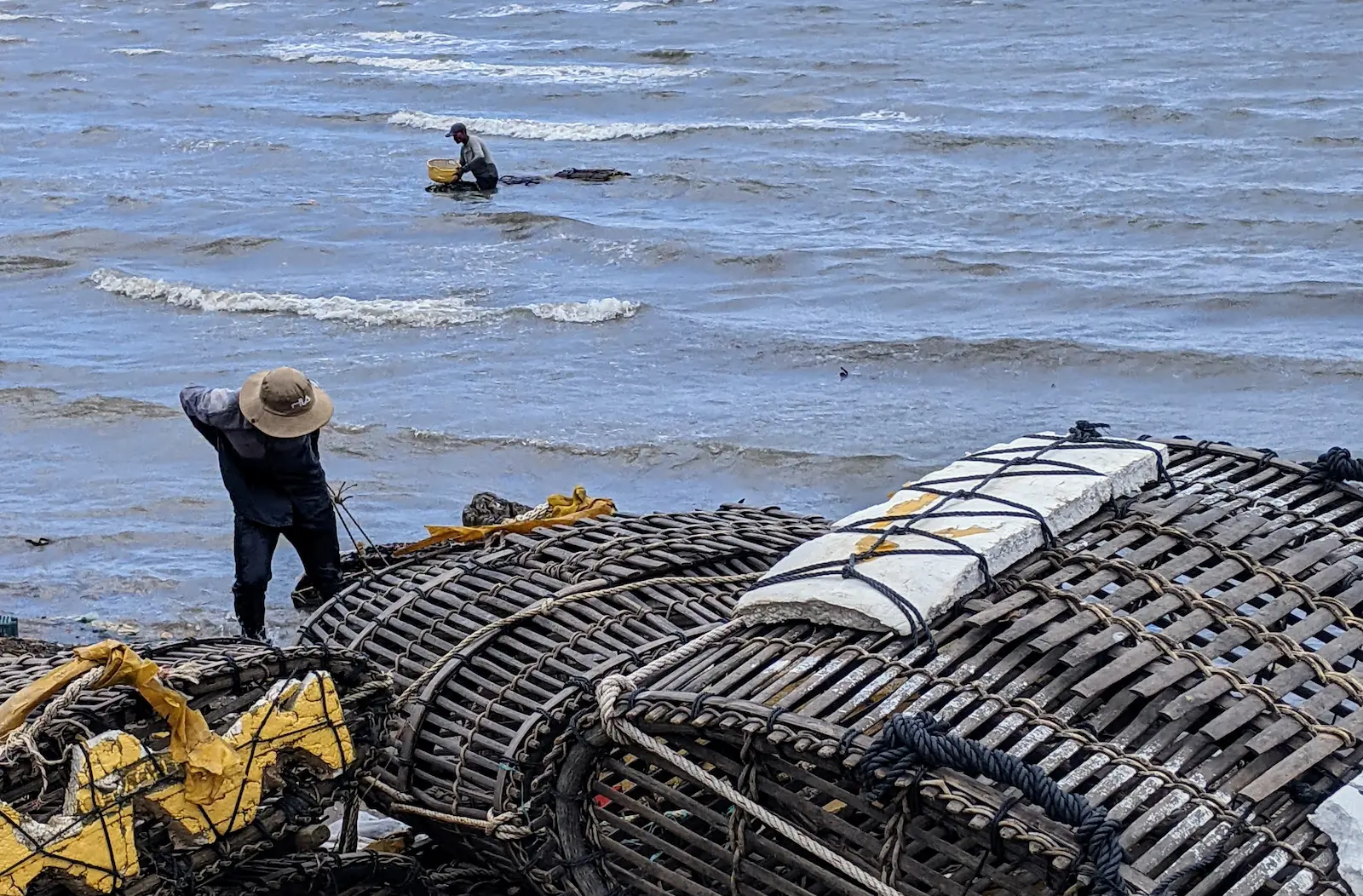
If you’re visiting Kep, chances are you’ll end up at the crab market. Even if seafood isn’t your thing, it’s worth wandering through just to watch the activity. Fishers bring in baskets of live crabs from just offshore before they’re weighed, sold and carried off to restaurants and suppliers. Inside you’ll also find fresh seafood, dried fish, sauces and plenty of snacks.
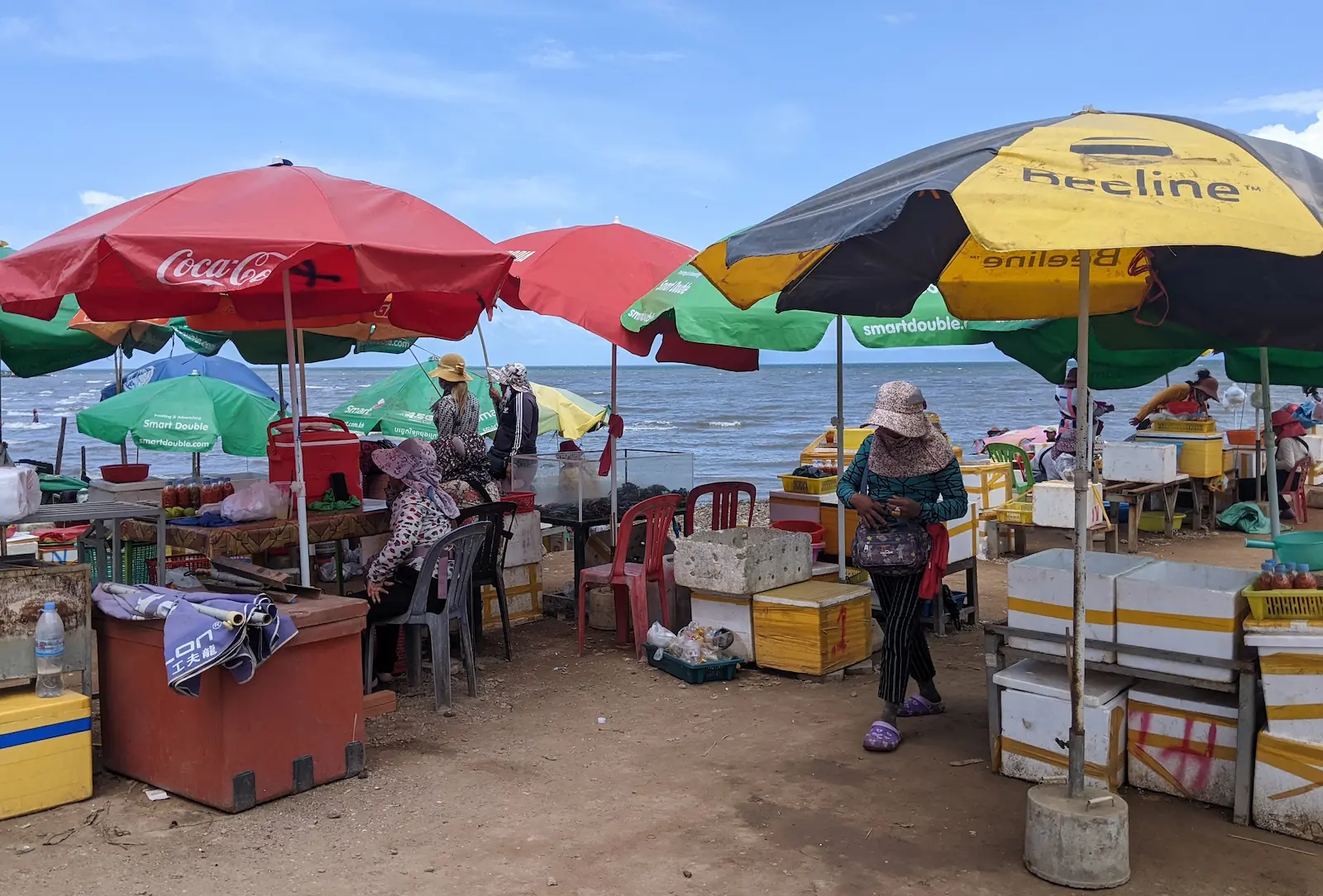
Whether we’re buying crab to take back to our hotel or stopping for lunch, we always end up here.
Where to eat in Kep
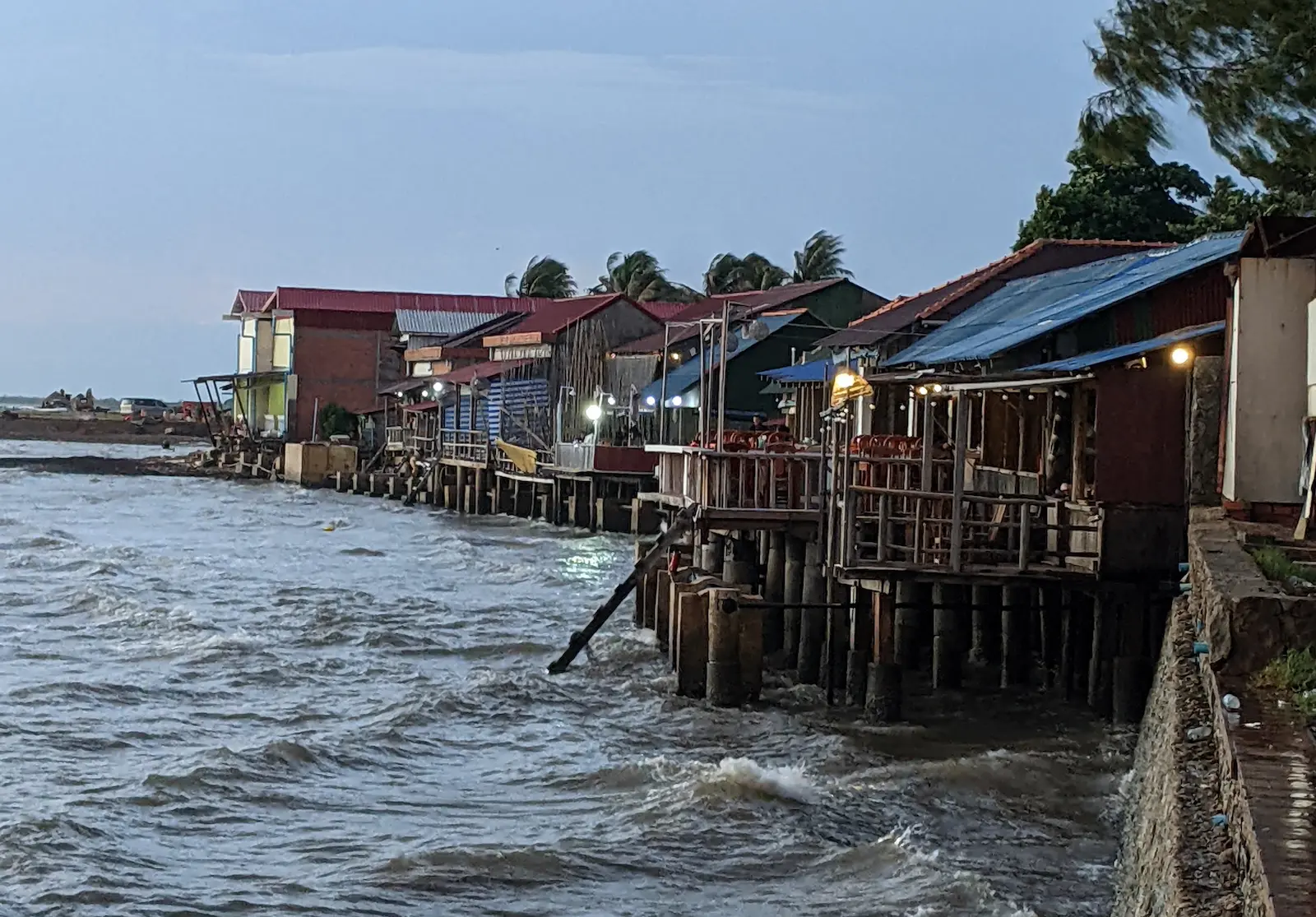
Next to the market there is a row of restaurants, you guessed it, all selling crab. Our favourite is Kep Sur Mer and we always stop here on every trip to Kep. The Holy Crab next door is also very good. Both restaurants back onto the water and are great for watching the boats in the distance as you tuck into your crab. We’ve also eaten at the Magic Crab and Kimly, although some time ago, the latter had a worrying number of child workers so it is worth peeking inside to check that they have changed that before eating there.
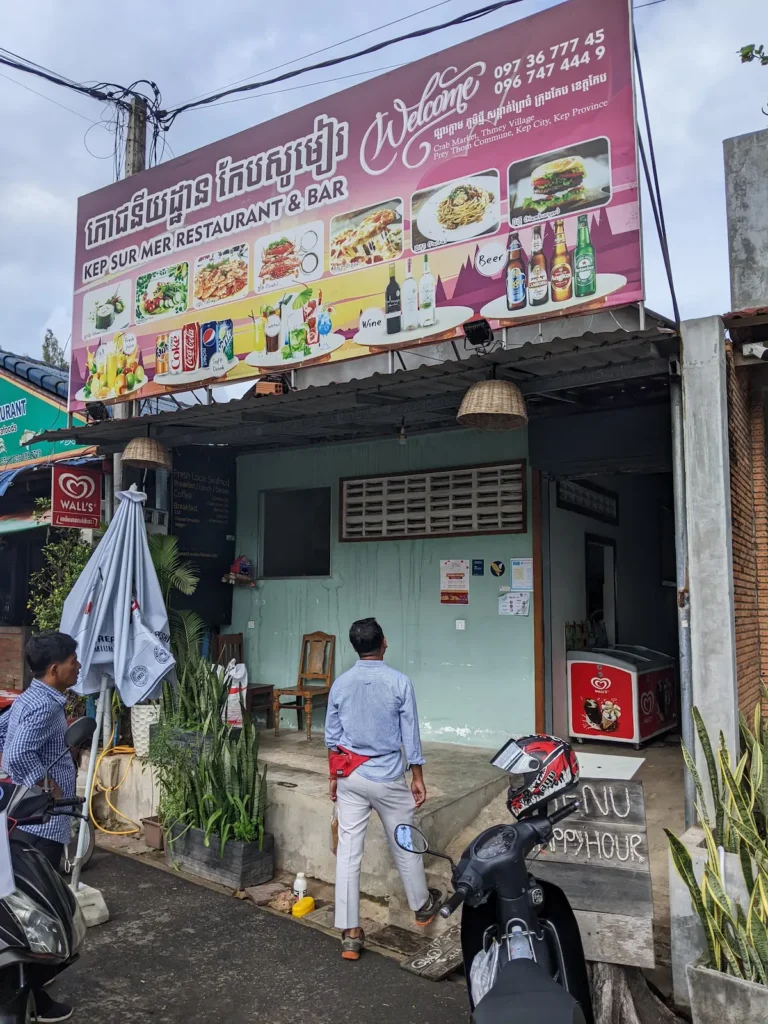
Near the Kep beach you’ll find noodles sold from sidecars, small restaurants with huts and hammocks to more restaurants on the water. The night markets are a great place to try a range of Cambodian snack foods, albeit more expensive than you might find in non-touristy locations.
For a more upmarket meal, head to the Sailing Club, Knai Bang Chatt. It’s one of the nicest places in Kep to sit for dinner. The resort is based around restored 1960s colonial villas and the food is very good. There have been some issues with a moving coastline (land filling and coastal development by the Kep administration) so we are not sure where the restaurant sits anymore but we are looking forward to visiting again soon. As the name suggests, they also do sail boat hire, lessons and boating trips.
Where to stay
On my first trip to Kep, with a friend from Australia, we stayed at Bouganvilla Hotel. Thankfully no longer going, it was not great at customer service and Covid really ended what was probably inevitable (it’s now Season Bay Resort but I have no idea what it is like).
We have also stayed at Kep Lodge, which was lovely. Tiny views of the sea but beautiful gardens, a nice pool and I also remember this place as having power sockets exactly where you would expect them, which is not always what you get in Cambodia.
We’ve also heard great things about Sabbay Kep and The Beach House, which has been booked out every time we’ve tried to stay there.
While Krong Kaeb is the official name of Kep city and you can see it inland on the map, most visitors stay along the seafront or around Kep National Park, where you’ll find the majority of hotels, restaurants, beaches and attractions.
Best time to visit
We don’t think that there is ever a bad time to visit Kep, they are all just different. The rainy season from May to October might see some rain interrupting your afternoon but the lush greenery and moss growing on the abandoned buildings makes for amazing photos and it generally doesn’t last very long.
November to February sees some of the best weather for international tourists and it makes it easy to spend time outside during the day, fitting in as much as you can. But the nearby fields are dry and you’re sharing Cambodia with loads of other tourists.
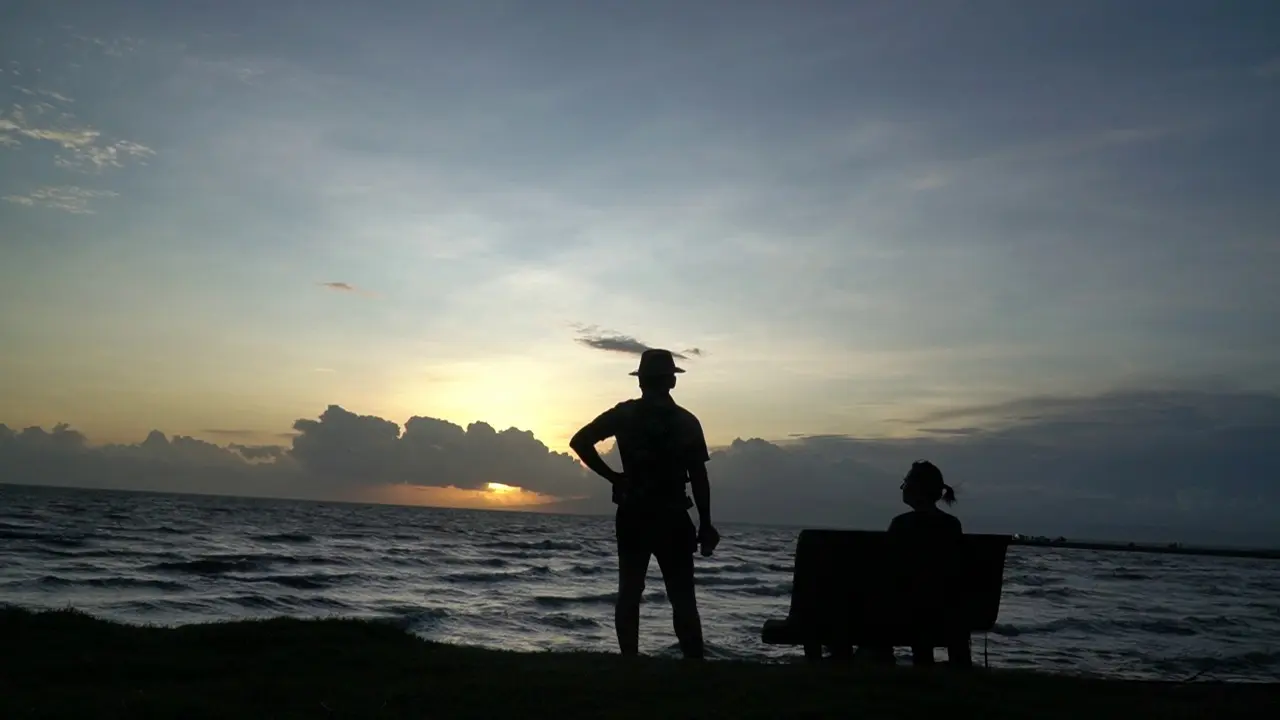
The hot weather from March to June might not be a great time to head to the Kep Crab Market at lunch time, but you can easily counter this by heading out a little earlier and taking the hottest part of the day to stay under cover in the Kep National Forest, swim at the beach or in your hotel pool, or read a book under the air conditioner for a couple of hours, heading back outside at dusk.
We’ve always found Kep to have a quieter feel than nearby Kampot. While Kampot has become a popular base for many international visitors, Kep still feels a little more local, particularly away from the weekends when Cambodian families head to the beach. It’s one of the reasons we often find ourselves choosing to stay in Kep and visiting Kampot for the day instead.
Getting around
Motos are available to rent at a number of places around town but we always go to Kep Sur Mer because we’ve always received great service from them. Their motos are automatic and helmets are available, although not the greatest of quality.
Pass App, the Cambodian ride hailing service is available, although not completely reliable, especially at night. When arriving by train, you are quite a way from town but there are always tuk tuks waiting for you. Negotiate your way to town, often they will give you a relatively cheap ride to your accommodation in the hopes of more work in the coming days, which if you like your driver can be a great way to get a contact number quickly.
Kep is often treated as a day trip from Kampot, and if that’s all the time you have, it’s well worth the visit. But after several trips, we’ve come to appreciate Kep as a destination in its own right. It’s quieter, slower paced and has a character that’s quite different from its neighbour. Whether you’re here for the seafood, the abandoned villas or simply to spend a couple of days by the coast, we’d recommend looking a little closer at Kep.
We last visited Kep in March 2025 and have visited several times in the last few years.
Related Posts