MONDULKIRI
Nam Lear (Nam Lyr): Mondulkiri’s Giant Volcanic Rock
Nam Lear (ណាំលៀរ), also spelt Nam Lyr doesn’t make it onto many itineraries, but we think it should. It was one of the highlights of our trip to Mondulkiri and somewhere we’d happily recommend if you’re spending a few days in the province.
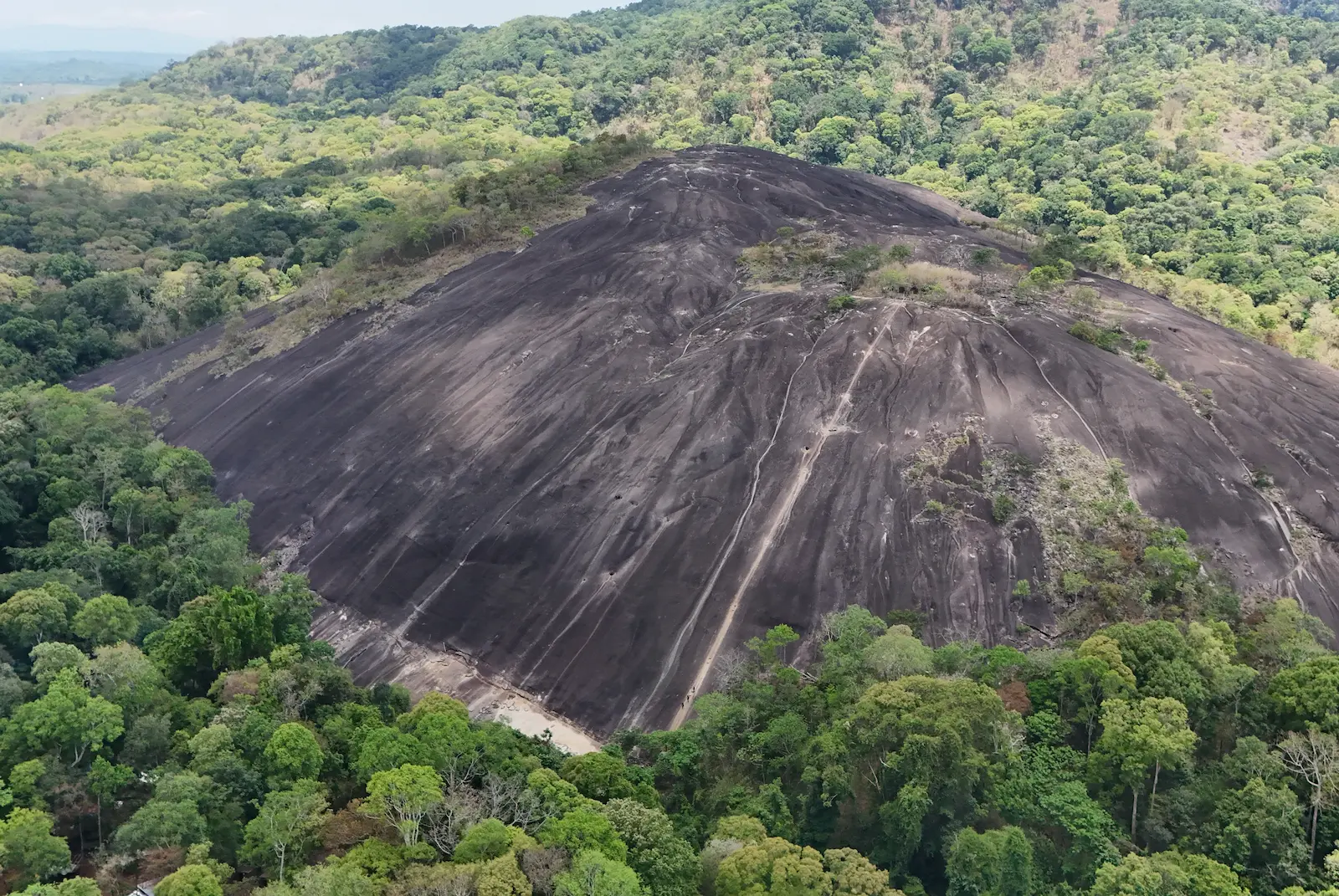
At first glance, Nam Lear is essentially one enormous rock rising above the surrounding forest. Sitting not far from the Vietnam border, this ancient volcanic basalt dome was formed over millions of years. Wind and rain eroded the softer surrounding landscape, leaving this huge outcrop standing above the forest. It is also a sacred place for the Bunong people, whose traditional lands extend across much of Mondulkiri.
Getting to Nam Lear
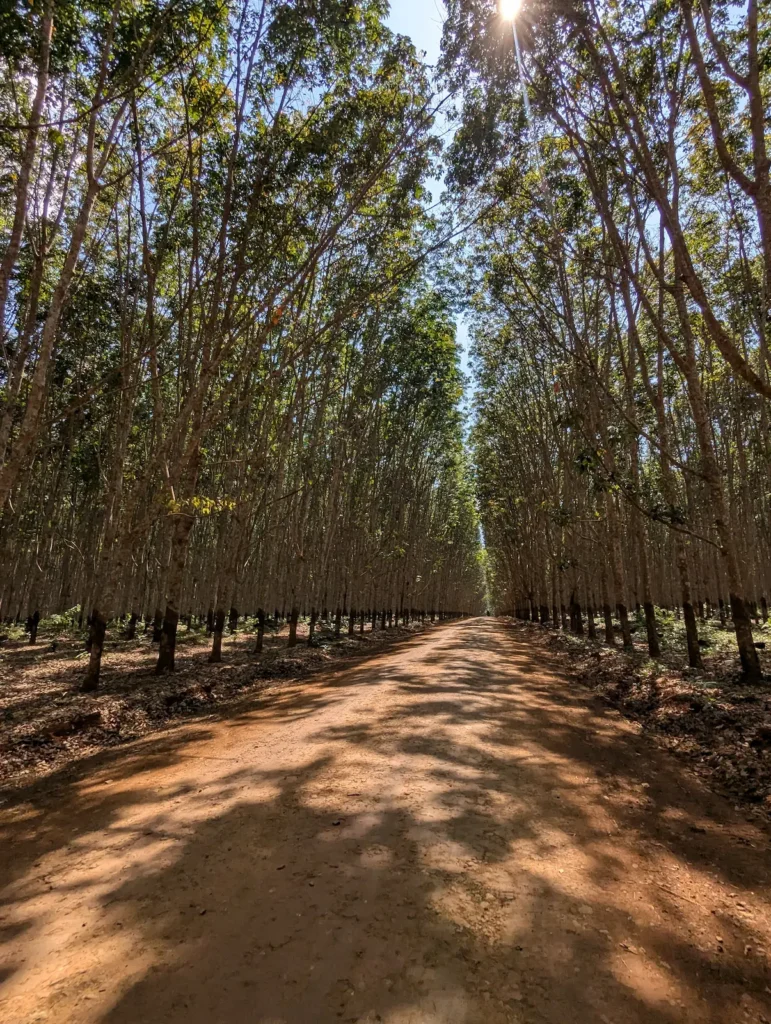
We hired a motorbike from Mondulkiri Pizza Bungalows and rode the roughly 45 km to Nam Lear, but tuks tuks will also take you out there. Most of the road is sealed, except for the final 10 km. The final section passes through a large rubber plantation, which includes a checkpoint. We simply told them we were visiting Nam Lear and were waved through.
Driving through the plantation is quite striking, especially if the sun is shining through the trees, but it also highlights how much this landscape has changed over recent decades. Large-scale rubber concessions have transformed parts of Mondulkiri and affected Bunong communities and the forests they have traditionally relied on.
The entrance has a sign but it is easily missed so it’s best to keep Google Maps open, if travelling by motorbike.
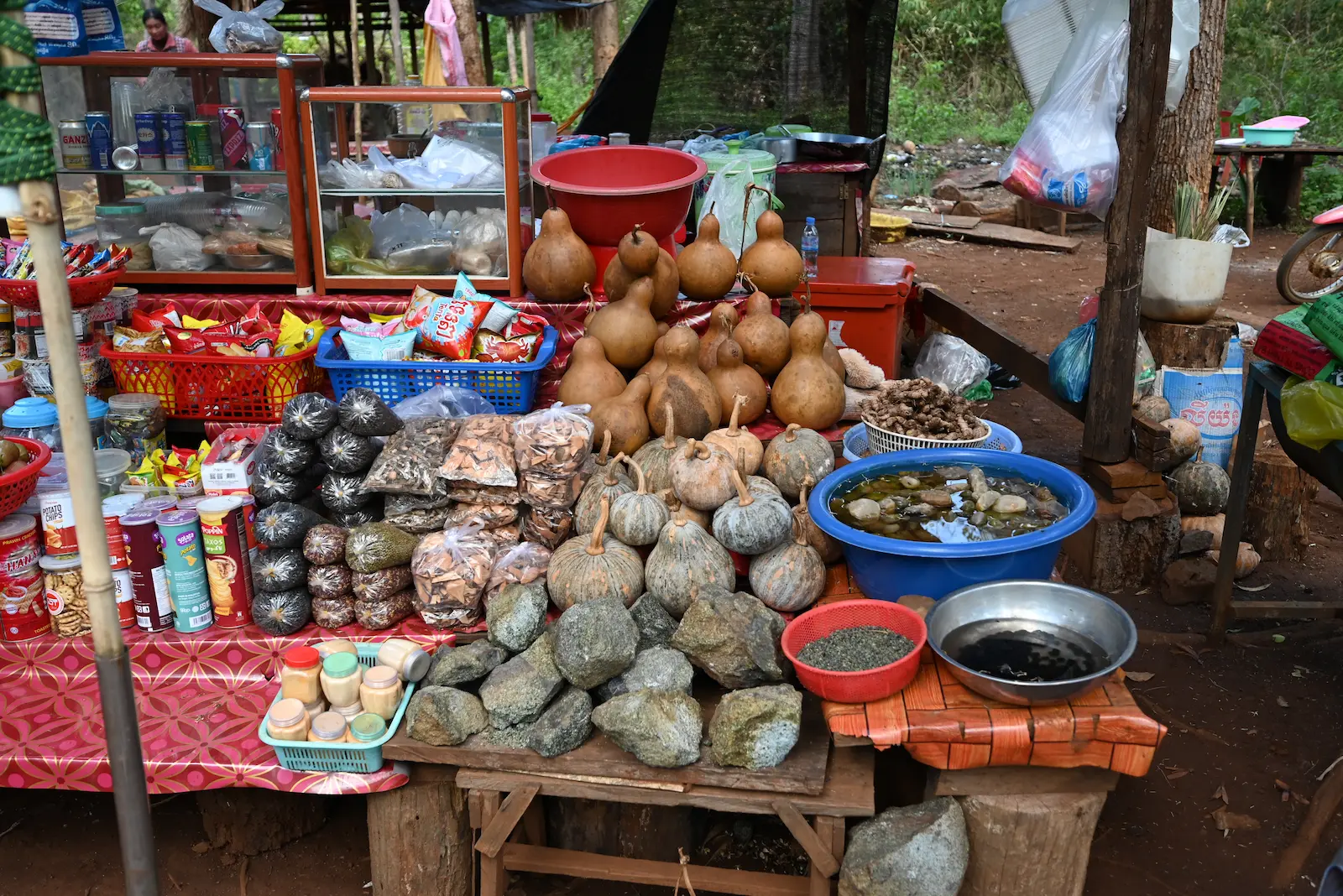
Walking down from the parking area, you’ll find several stalls selling herbal medicines and local products near the start of the climb. We stopped here for lunch before climbing Nam Lear but there wasn’t a lot on offer so best to eat before arriving.
Climbing to the Top
We followed the path down to the small bridge and turned right. From here the climb begins. You’ll see the rope running most of the way up the rock to help on the steeper sections.
A few children offered to guide us but we don’t want to encourage children to rely on tourism for income, so we politely declined.

It’s a steep climb, which explains the rope. We actually enjoyed pulling ourselves up the rock, stopping every so often to admire the view behind us and take a breath.
I’d been sick for a few days beforehand, so we took it very slowly but even at our slow pace it only took about ten minutes to reach the top. There’s very little shade though, so we’d recommend bringing water, a hat and decent shoes, as well as dressing modestly. We visited in the dry season, but imagine it would become quite slippery after rain.
I’m not particularly good with heights, and there were a couple of sections where I focused firmly on my feet rather than how steep it was. Once on top though, the rock levels out and it’s easy to wander around.
Views from the top
At the top there are wide views across the surrounding forests and plantations, along with a couple of small shrines where people have left offerings.
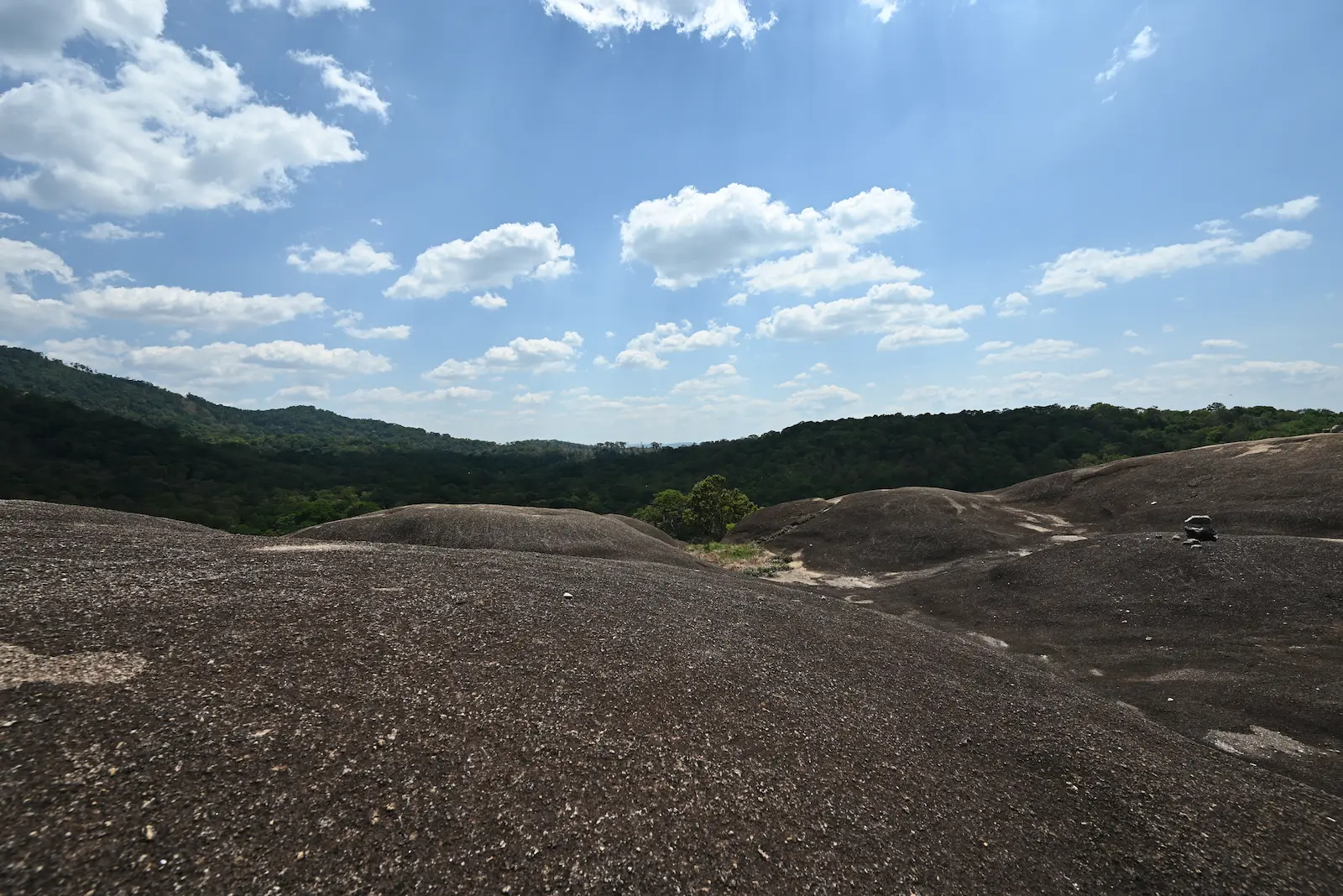
Phnom Nam Lear is a sacred place for the Bunong people, who regard the mountain as spiritually important, and standing on top of the rock, it’s easy to understand why. One local tradition says that taking a small stone from the mountain, placing it in water and keeping it nearby brings calm and contentment. We didn’t take the stone though. It didn’t seem right.
We visited on a weekday and had the place almost entirely to ourselves. Apart from a couple of monks, and some people who lived nearby, we only passed another Cambodian couple on the way down, exchanging the familiar words of encouragement, “Su Su” (“keep going”).
We spent about half an hour on top, wandering around and taking photos. Being there in the middle of the day meant it was hot so that’s about all we could manage. You head back the same way, and the rope is just as useful on the way down as it was on the way up.
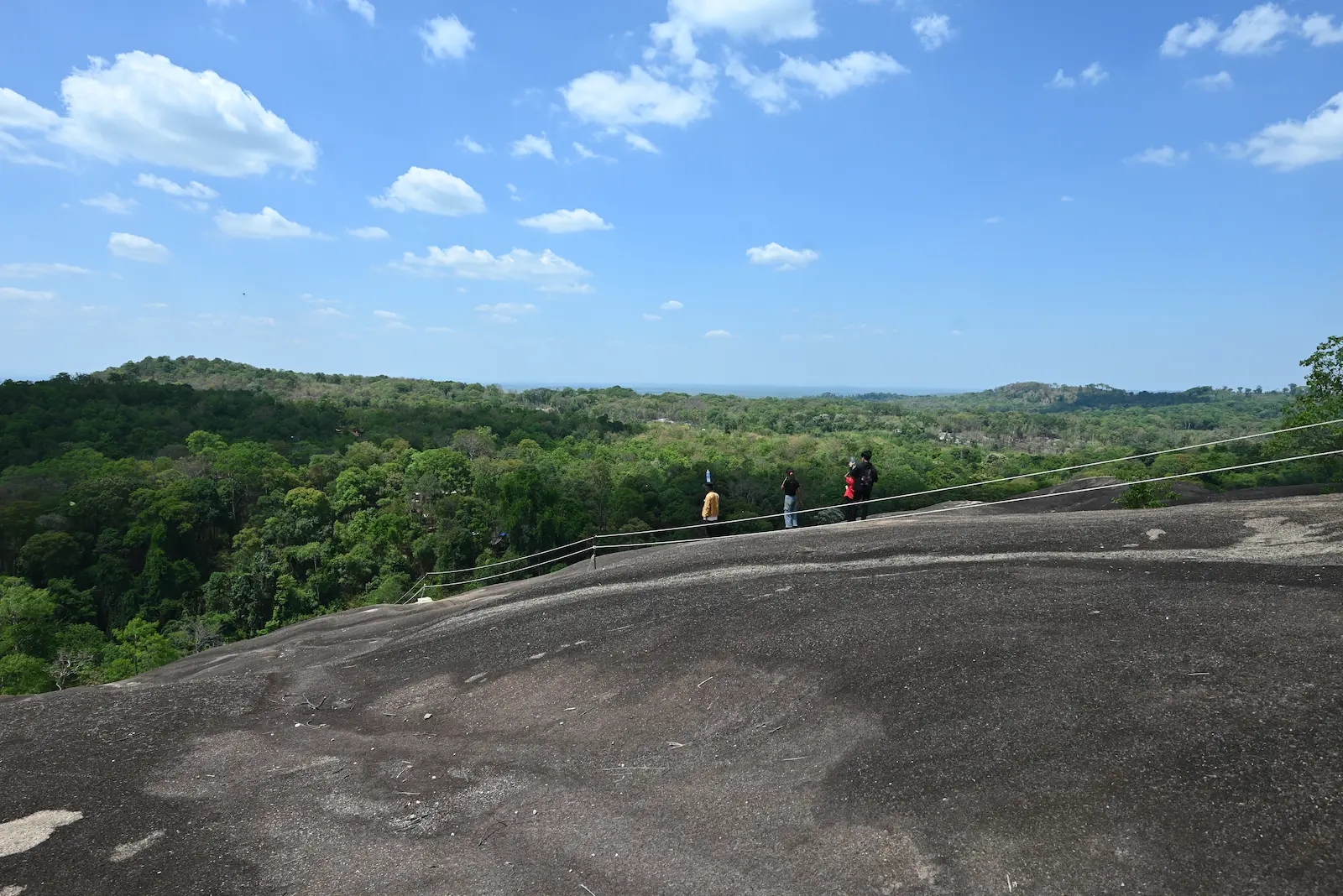
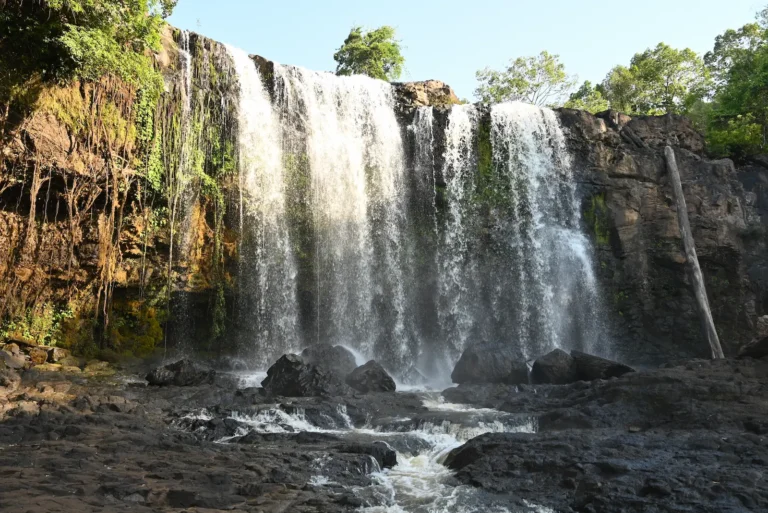
We would recommend visiting Nam Lear to anyone travelling to Mondulkiri. It’s unlike anywhere else we’ve visited in Cambodia and hasn’t yet become a stop on most visitors’ itineraries. More importantly, it’s a place that remains deeply important to the Bunong people, and we hope it continues to be treated with the respect it deserves. It also pairs really well with a trip to Bousra Waterfall.
We visited Mondulkiri in April 2025
Related Posts