BATTAMBANG
Battambang Bamboo Trains: The Original vs Banan Bamboo Train
It’s hard to visit Battambang without going on the bamboo train. Along with the Bat Caves, it is definitely seen as one of the must-do things in Battambang, and we think it probably is worth the hype.
The other thing you’ll quickly realise is that there are actually two bamboo trains, and people tend to have a lot of opinions about which one is better. Easily distinguished by the old and the new, they are very different experiences, and both ones that we loved. But they are both unique so we cover them both here.
OK, let’s start with the “old” one. Probably more correctly called the original one, this is the ride on the train tracks through the countryside, and the one that most first-time visitors really want to experience.
So What Even Is a Bamboo Train?
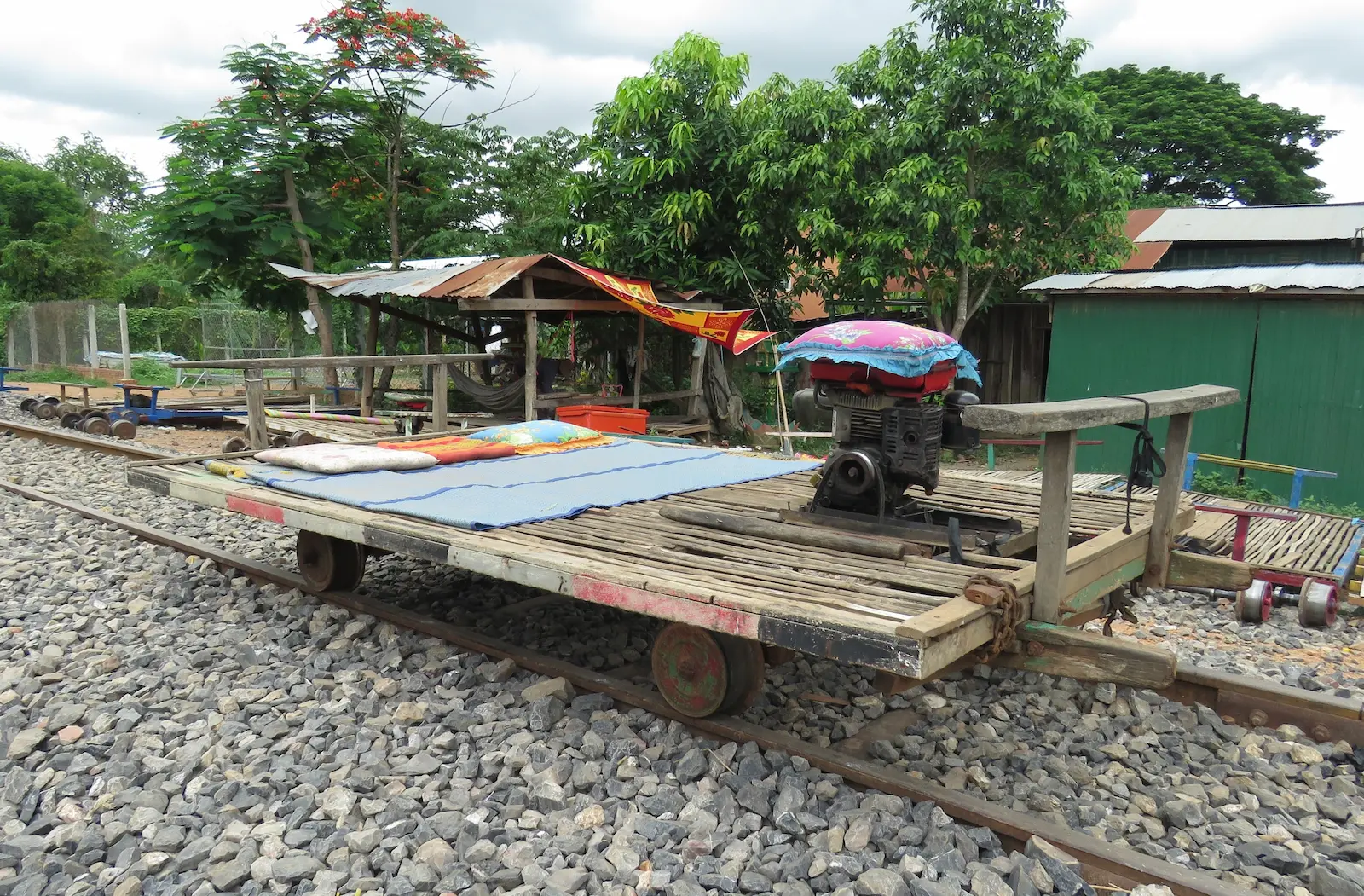
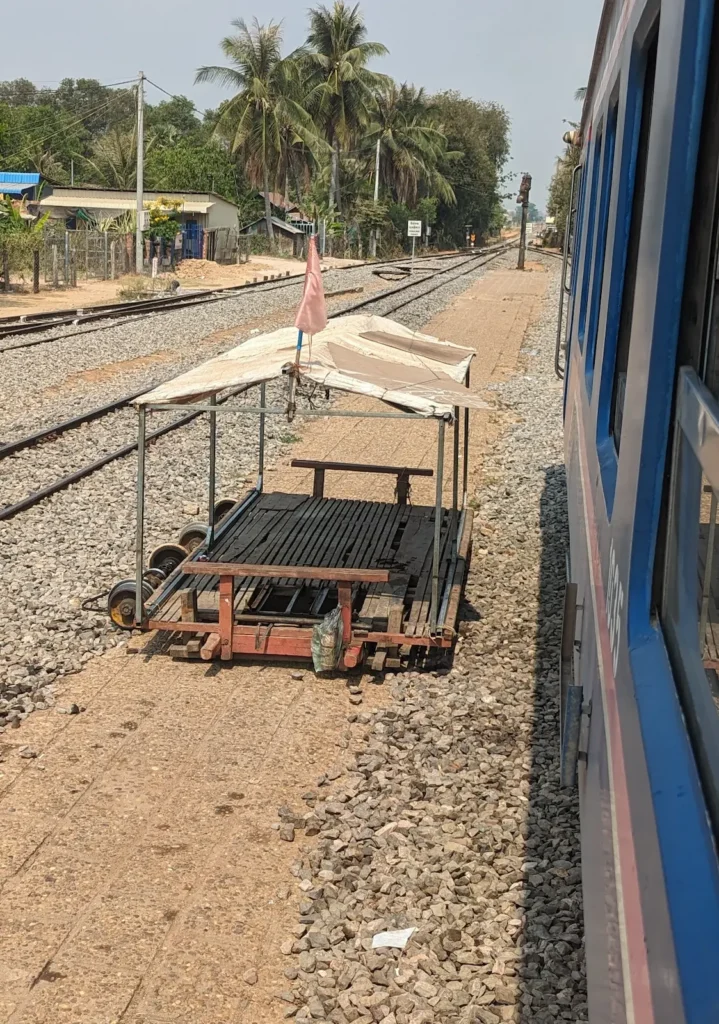
It is actually exactly what it says, in that it is a bamboo platform, on four wheels that goes on a train track.
Known locally as a norry, it developed as a practical way of moving people and goods along Cambodia’s railway tracks at a time when regular train services were limited and unreliable.
The railway through Battambang dates back to the French colonial period, when a line was built from Phnom Penh towards Poipet and the Thai border. By the 1980s, years of war and instability had taken their toll on the railway lines.
For people living near the railway lines, the bamboo trains were an inexpensive way to move around and transport their rice or livestock. They used salvaged parts, including wheels from old military vehicles and tanks, to make the axles before adding a bamboo frame. The earlier versions used the same flatbed on wheels but used long poles to push them along, before the small petrol engines were fitted.
Over time there was less need for the bamboo train. But it had piqued the interest of foreign visitors, and eventually became one of Battambang’s best known tourist attractions.
Bamboo trains are actually still used for maintaining the now functional train lines, and you can sometimes see them from the train, keeping the tracks safe. But they are no longer used by people transporting goods.
Is the Original Battambang Bamboo Train Still Running?
You’ll read many blog posts about the end of the bamboo train because of the passenger trains. Regular passenger trains have been running to Battambang for a few years now, and the bamboo trains are still there. At first they would only go as far as the newly built main bypass road, but they have now returned to their full 7 km route before turning around and coming back.
We have recently seen the trains taking a different direction, heading into town over bridges and busy roads. We don’t think this will last long though, as it’s quite dangerous with all the other traffic.
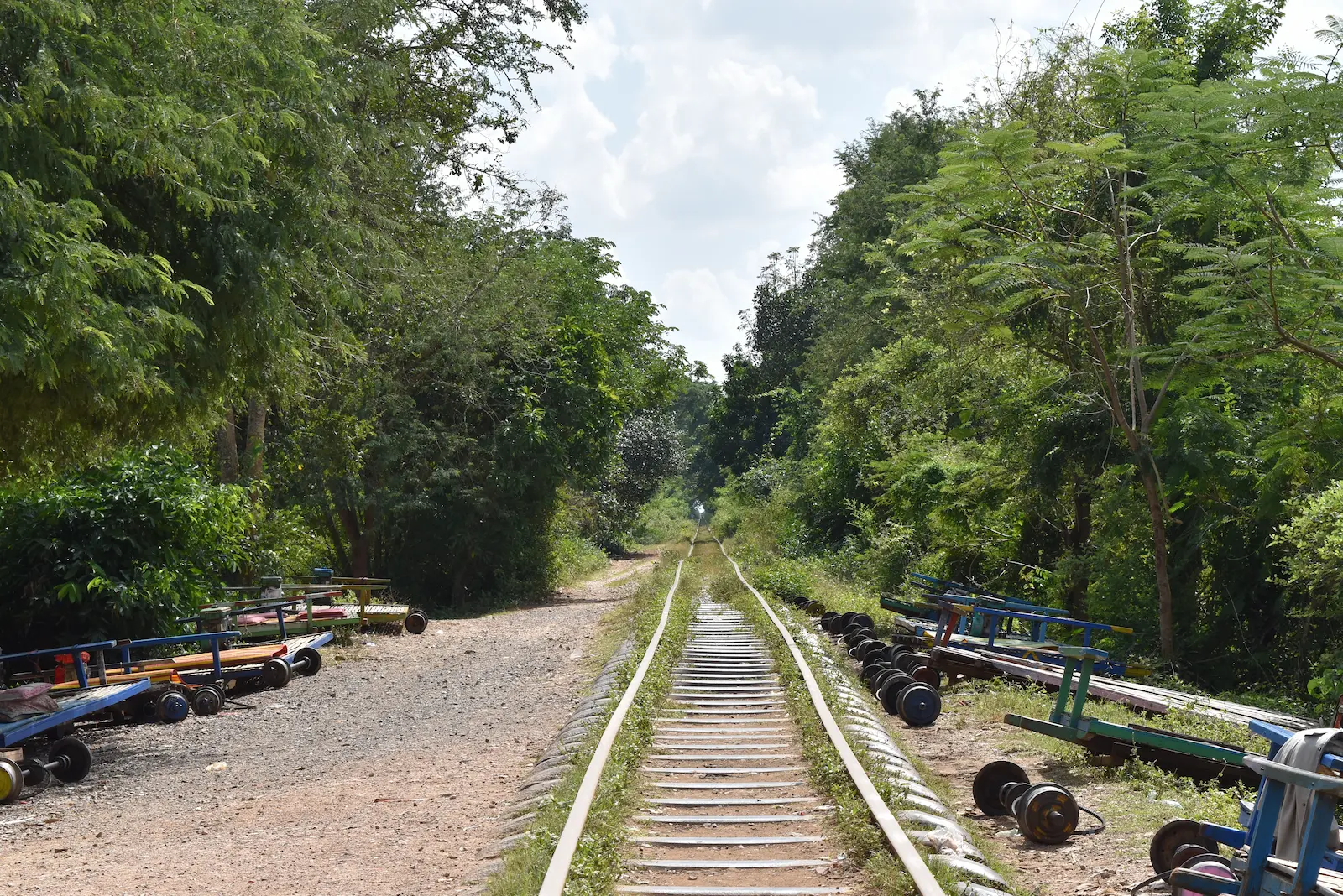
The passenger train passes by twice a day, once after lunch and then again around 3.30pm, but there are also cargo trains that may pass by. In this event the staff know they are coming and will simply take the bamboo train off the tracks and wait for it to pass. We’ve had this happen a couple of times and it just adds to the experience, although it can add waiting time.
What to Expect on the Original Bamboo Train
It’s loud, thrilling, fast, bumpy, bouncy and quite jolting. But it is certainly an adventure and oh so much fun. On the bamboo train there is a mat and a few cushions, with a handrail at the front and back. That’s pretty much it. You’re sitting on a bamboo platform over two axles, and it does get up to quite a speed. On one ride we clocked it at around 55 km/h, so it certainly gets fast.
It’s not for the faint-hearted. I’ve had a number of friends get off white-knuckled and declare they would never do that again, but the majority get off exclaiming how amazing it is. I remember taking my niece on her first trip in 2019. We had to wait for the passenger train and then the driver decided he wanted to catch the train before we hit the turnaround point, which he successfully did.
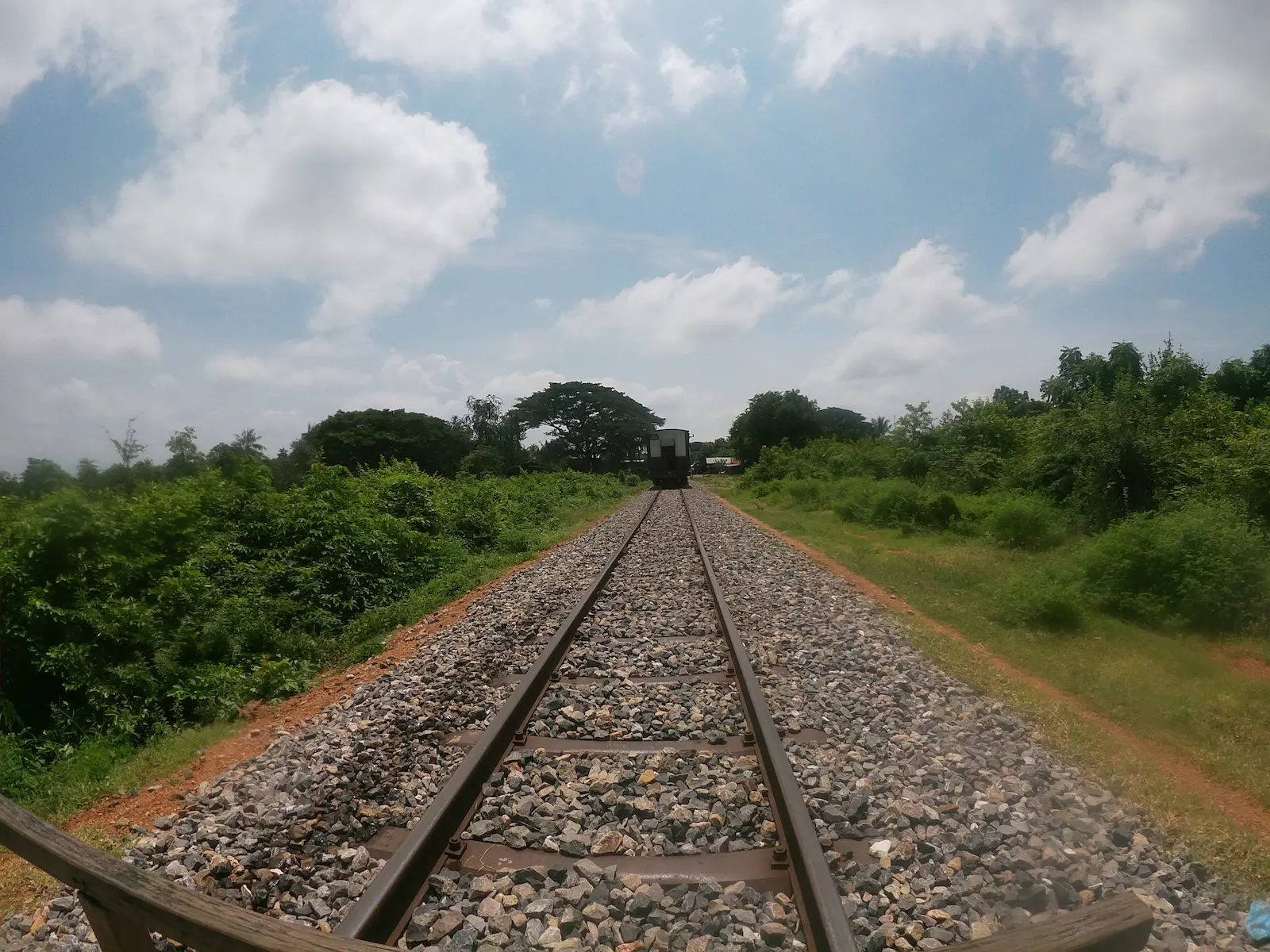
The best time to go is when you meet another train along the way. If two meet on the line, the one with the lighter load is removed from the rails and carried round the other. It really seems to come down to common sense – the one with the least number of people, or the one that hasn’t had to do it too many times that day. But it is the most fun to watch this occur.
Unfortunately you can’t really organise this to happen, but it is usually busiest earlier in the morning around 9am and after 3pm so there’s more chance of coming across another bamboo train.
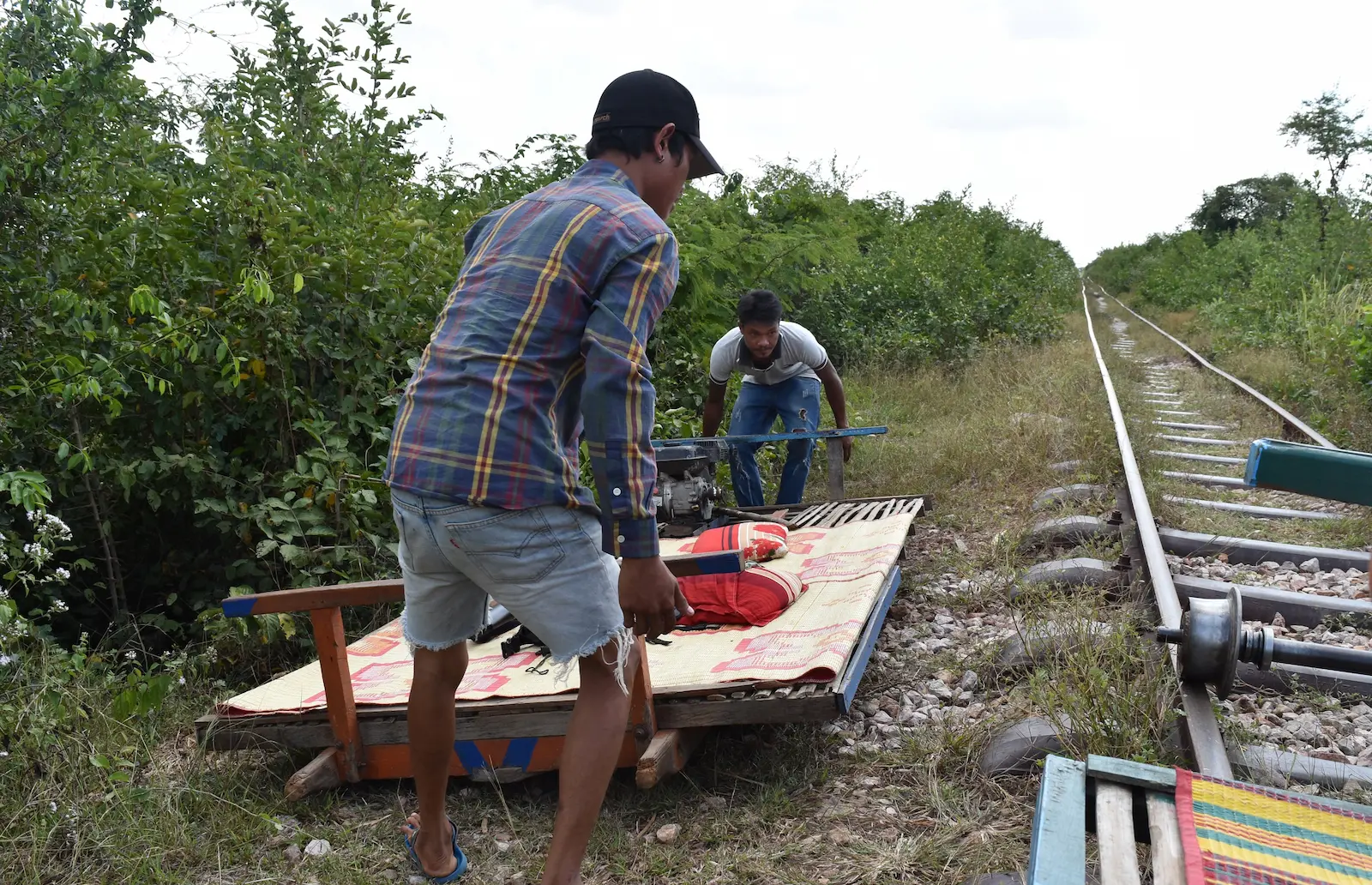
Tickets are 20,000៛ ($5) per person. If you are on your own, they may ask you to wait for some others to turn up and we have heard of them asking for $10 for a single person.
There is no booking, you just turn up when you want and they will prepare a train for you. They run every day and we’d allow about an hour out of your time. The actual trip is around 30–40 minutes: 15 minutes on the train there, a few minutes to stop (depending on what you buy at the other end) and 15 minutes back. You can also pair the bamboo train with a trip to Banan or stop in at the Baháʼí temple nearby.
At the turnaround there are drinks and souvenirs for sale, and you may also be encouraged to tip your driver. We usually grab a drink, sit for a few minutes and watch them turn the train around. You don’t have to buy anything or tip, even if you’re told you should.

Sadly there are a lot of children selling in the area. Hopefully they are still in school but even so we would never buy from a child who is clearly being used to encourage a sale.
There is no shade, so best to take sunscreen and a hat that can tie. Depending on the time of day, there are bugs so bring glasses or a krama (Cambodian scarf) to protect yourself. The motor sits on the bamboo train and is quite loud too, so you might consider earplugs.
We’ve also ridden our bikes out there and taken the bikes back towards town on the bamboo train, which was a pretty unique way to do it. We haven’t tried this recently, so aren’t sure if they still allow bikes, but if you’re keen it’s worth asking your hotel or a tuk tuk driver. You can hire cycles from Soksabike.
Now, people will passionately tell you that the old bamboo train, the original, is the best, and they might be right, but they often jump to that conclusion without ever trying the other one.
What About the New Bamboo Train?
We hadn’t tried the new bamboo train until recently. Plenty of people had told us not to bother, although quite a few of them had never actually been. But then we started hearing from people who had been, and they were telling us it was actually a great day out.
We had an opportunity to head out with Nehru’s family who were visiting at Khmer New Year, so we jumped at it.
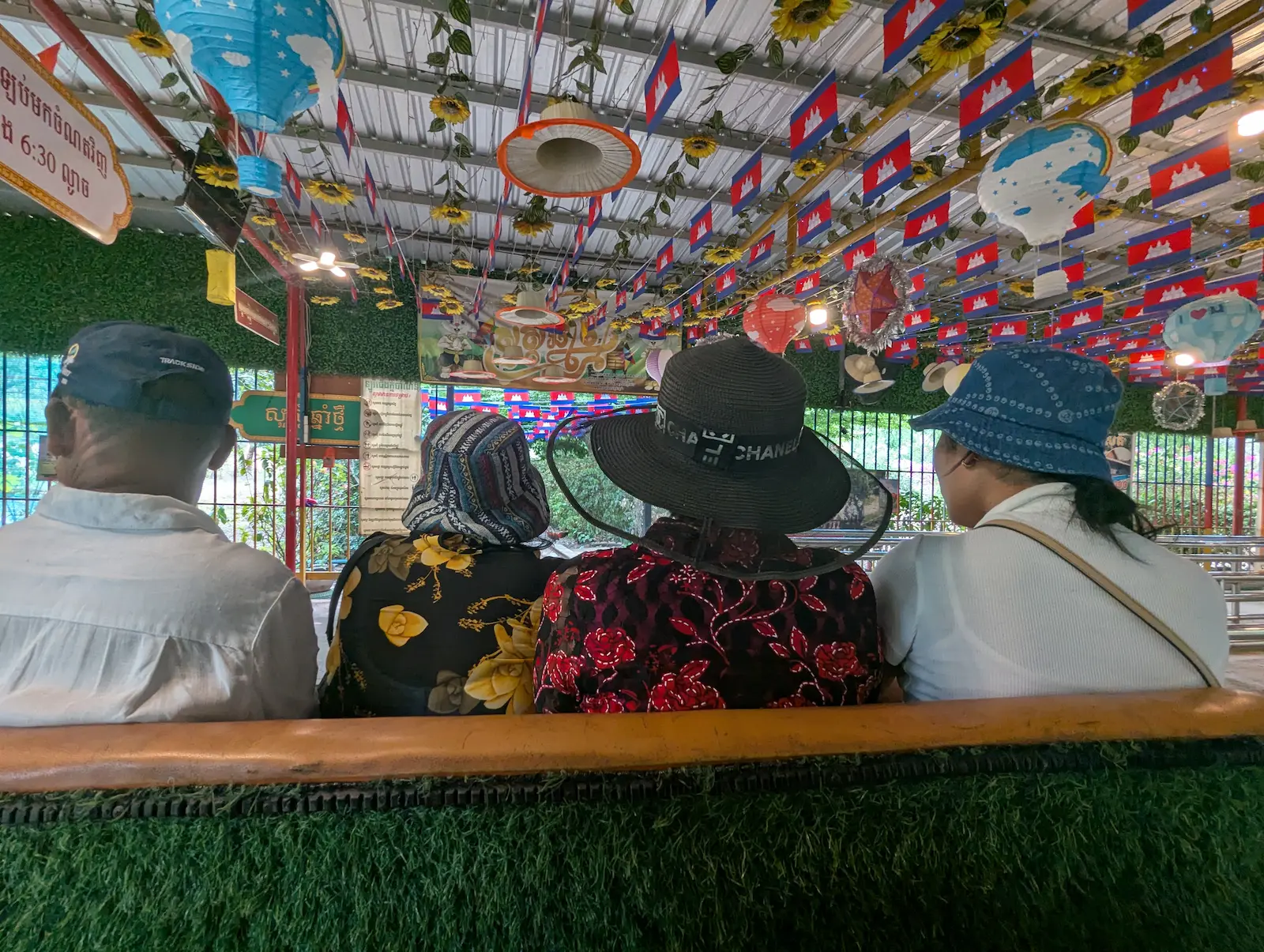
Now you can’t come here expecting the same experience as the old bamboo train. The Banan one is set up specifically for local tourism, and is much more than just a train ride.
You arrive and buy your ticket and head out the back to the ‘station’. Tickets are 17,000៛ ($4.25) for locals and 29,000៛ ($7.25) for foreigners. Join the queue and wait for the next available train to arrive. While you wait, you can take photos under the flags covering the ceiling. There are many opportunities for photos.
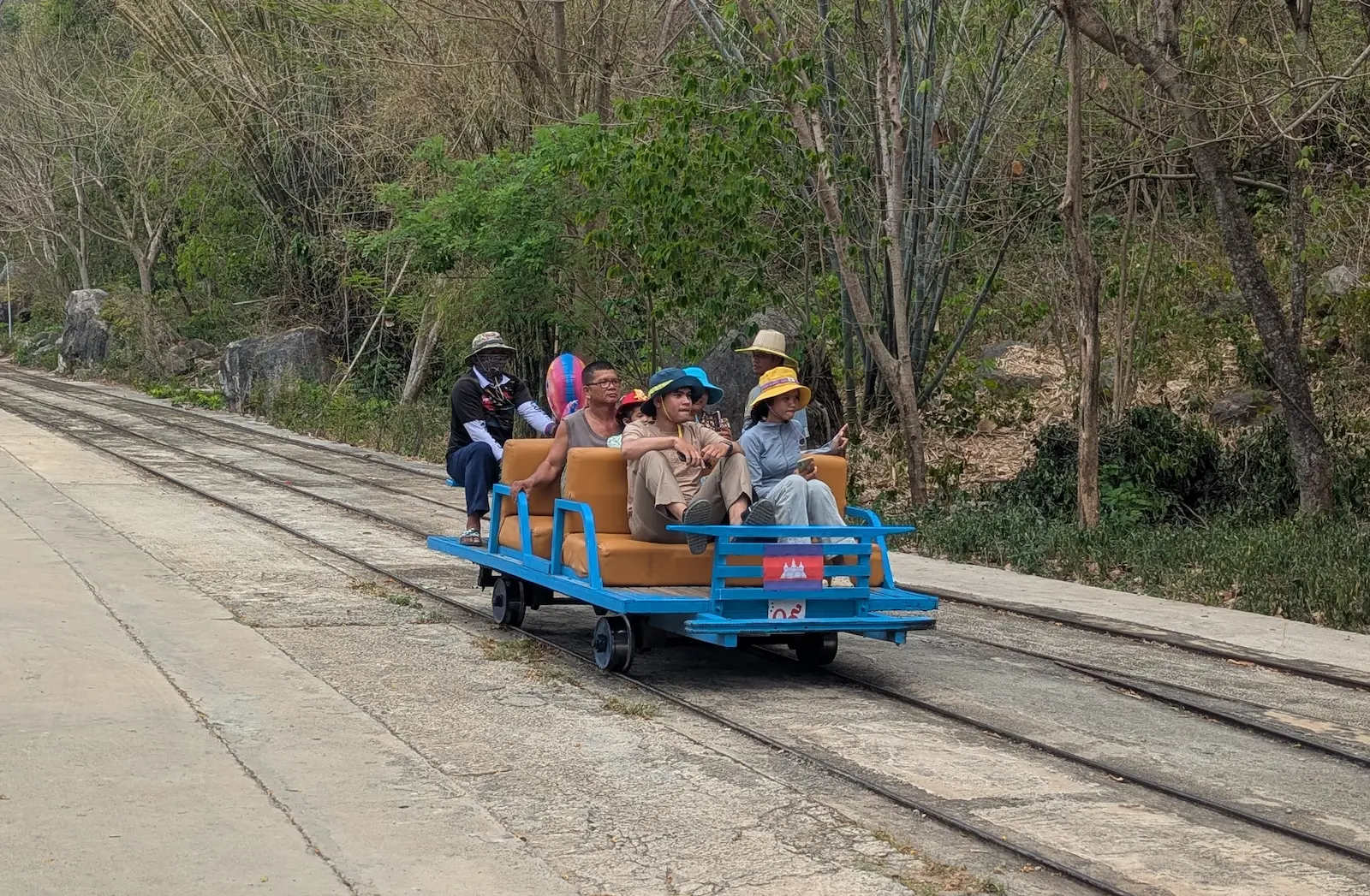
Each train takes six people (seven at a squeeze) and takes off at quite a speed. Think more like an adventure park ride, the train rattles along the tracks, sweeping around the rocks at the base of Mount Banan, through canopies of flags and past trees. There are plenty of corners that make it feel even faster, so you’ll definitely want to hold on tightly.
An Instagrammer’s Dream?
At the end you arrive at the gardens, which they describe as a free ticket included with your bamboo train ride, but really it’s part of the whole experience.
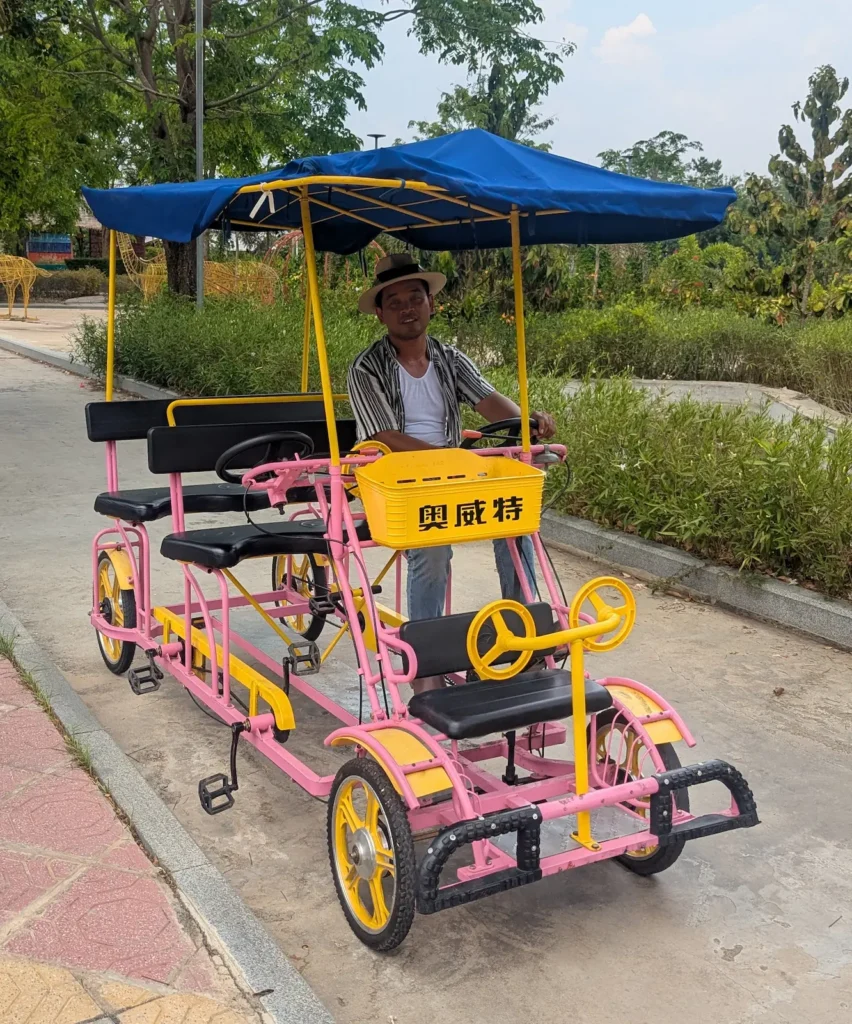
You start by walking through the snack area where they are selling everything from slushies to grilled beef to popcorn. Beyond that is the transport hub where you can hire a variety of transport options from bicycles to a bicycle tuk tuk that seats seven. The park was easy to walk around, but we had so much fun getting around on the seven-seater tuk tuk bicycle.
And then it’s out into the garden, where it quickly becomes obvious that taking photos is a big part of the experience. There are giant cats, a hot air balloon, a windmill with dolphins in a pond and flowers surrounding pretty much everything.
It’s kind of weird and wonderful all at the same time. What felt a little strange when we began, turned into a 90-minute photo shoot. We had so much fun. Swinging seats, riding kangaroos, taking photos between the hanging vines. All up, we spent about two hours here, including the bamboo train and wandering around the gardens.
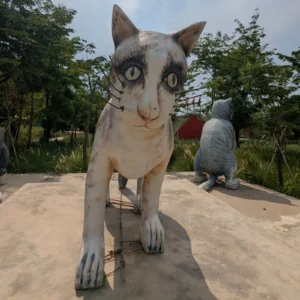
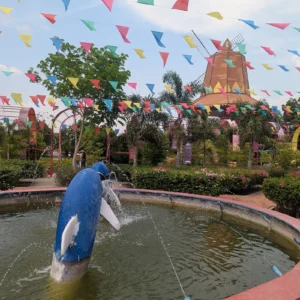
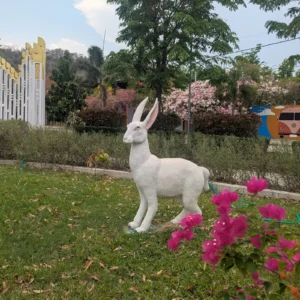
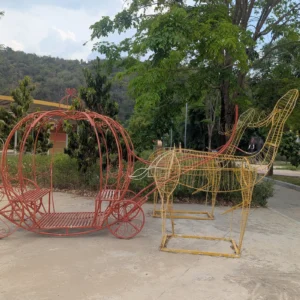


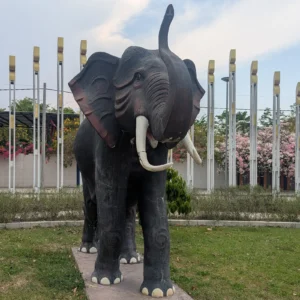
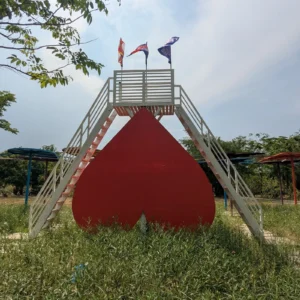

If you want a unique Cambodian experience, one that locals flock to do on a weekend or on holidays, the new bamboo train might be it. We wouldn’t suggest swapping a visit for the old bamboo train, that’s a unique experience. But if you find yourself at Banan, you have kids, or you just want to have a bit of fun somewhere that’s really popular with Cambodian visitors, maybe the Banan Bamboo Train is for you.
We last visited the original Bamboo Trainin April 2023 (but we see it around town often) and the Banan Bamboo Train in April 2026.
Related Posts