SIEM REAP
APOPO HeroRATs Siem Reap: Meeting Cambodia’s Landmine-Detecting Rats
Paying to go and see rats was not something we ever thought we would be doing, but seeing the rats at APOPO is a pretty amazing experience. These rats are no ordinary rats. You might say these rats wear capes, not literally of course, but they are known as HeroRATs, and for good reason.
The rats are African giant pouched rats, trained to use their excellent sense of smell to detect explosives. They’re also too light to trigger the landmines they’re searching for, so they get the job done safely. The rats are playing a vital role in clearing fields especially around Battambang, Preah Vihear, Siem Reap and Ratanakiri. And in Siem Reap, you can go and see them in action, well a demonstration anyway.
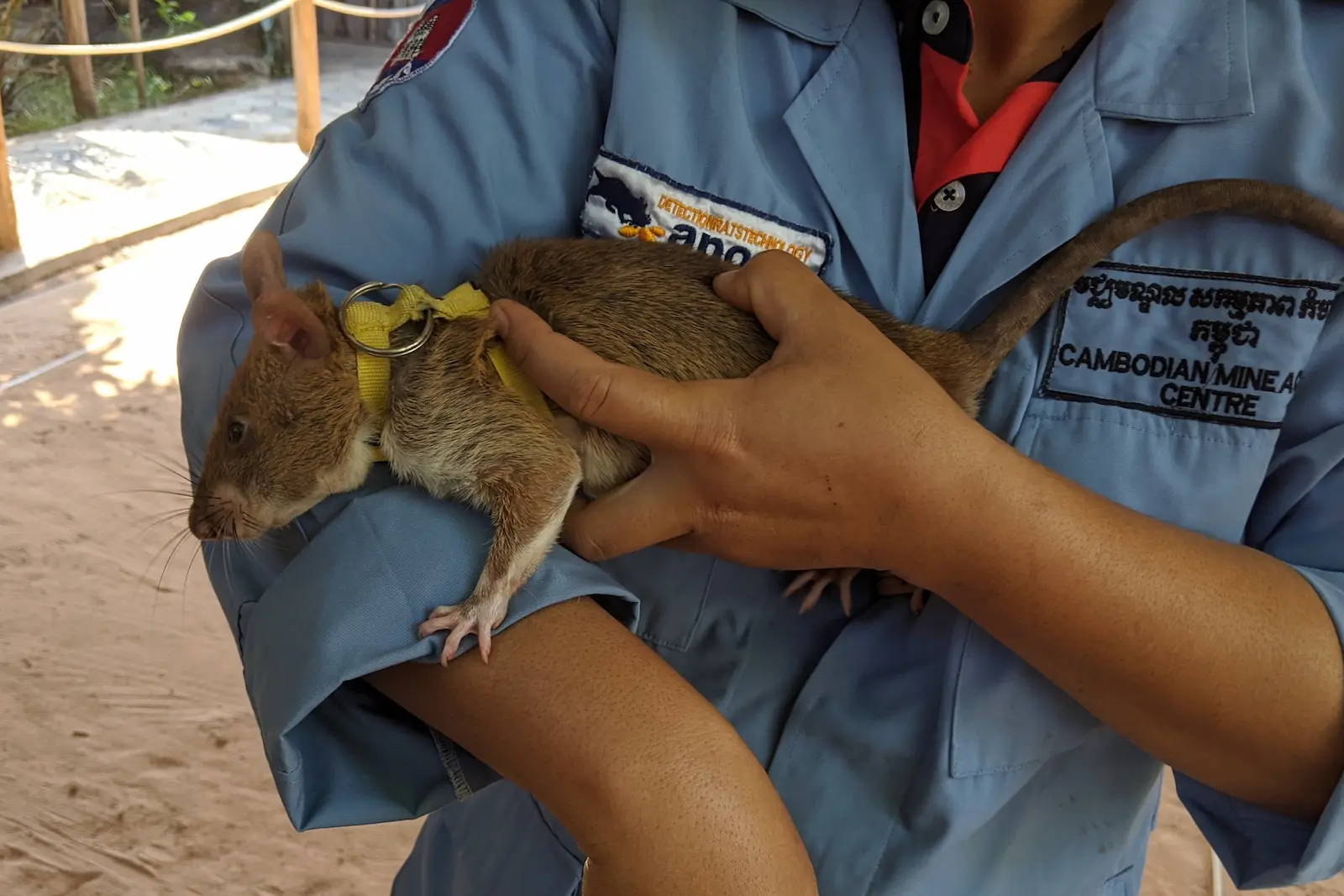
We know that rats are not everybody’s thing. People either love rats or hate them, but even when we’ve taken people who were not so fond of rats to APOPO, they’ve found it fascinating. And don’t worry, they won’t force you to touch a rat if you don’t want to.
What is APOPO?
APOPO is a Belgian NGO that started in the late 1990s, initially training rats to detect landmines in Tanzania. In 2014, they started detecting and removing ordnance in Cambodia along the Cambodian–Thai border.
Landmines and unexploded ordnance in Cambodia are the result of decades of conflict. During the Vietnam War, the United States dropped millions of bombs on Cambodia, many of which failed to explode. Landmines were also laid by different forces during the civil war, the Khmer Rouge period and the years of fighting that followed, particularly along the Cambodian–Thai border.
All of this has made Cambodia one of the most mine-affected countries in the world, and there are still large areas of land contaminated. These landmines and unexploded ordnance continue to pose a risk to people living in affected areas and they prevent communities from using land for farming and other activities. We’ve noticed this especially travelling around Samlot, where large sections of land are dotted with red danger signs.
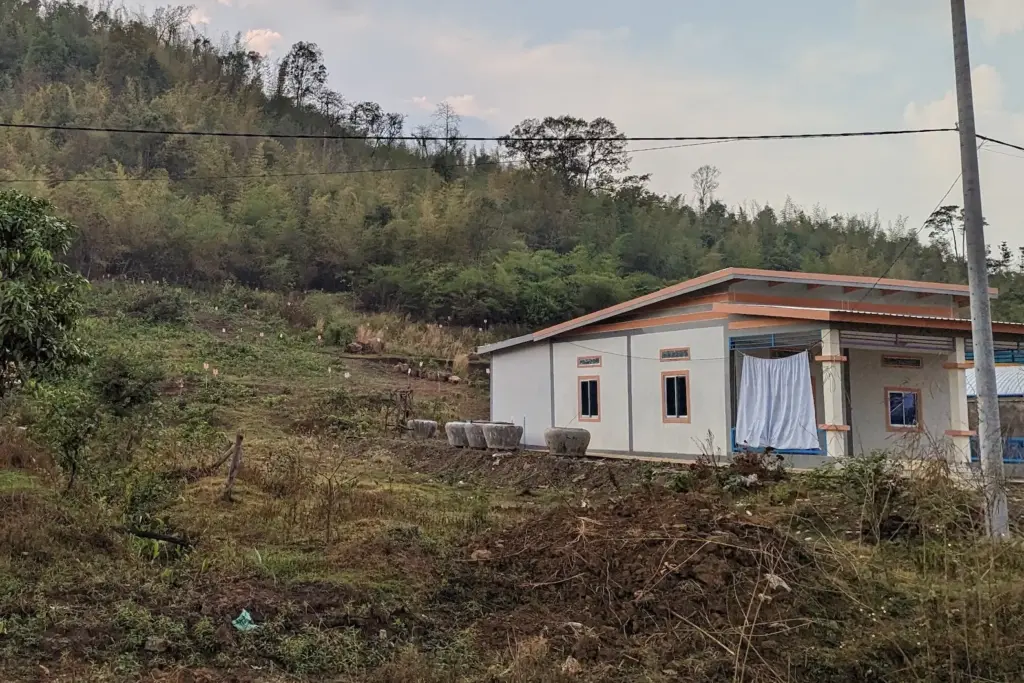
In Cambodia, APOPO works closely with CMAC, the Cambodian Mine Action Centre, and has over 100 people working with them, many from the villages affected by the landmines they are detecting.
Interestingly, the rats are also trained to detect tuberculosis in Ethiopia, Tanzania and Mozambique.
Visiting the APOPO HeroRAT Visitor Centre
When you first arrive, head inside to the visitor centre and let them know you’ve arrived, or buy your ticket if you haven’t already.
The visitor centre has a small museum with displays of landmines, information about APOPO and what they do, and some heartwarming stories of how they are changing the lives of people affected by landmines. If you arrive a little earlier, or need to wait for a time slot, it’s well worth having a look around the displays.
The hour-long tour starts outside, where they explain some of the background and give an overview of the current status of landmines in Cambodia. You then get to see a demonstration of how the rats work in the field with their human handlers. The first thing we noticed was how big the rats were, similar to the size of a small cat.
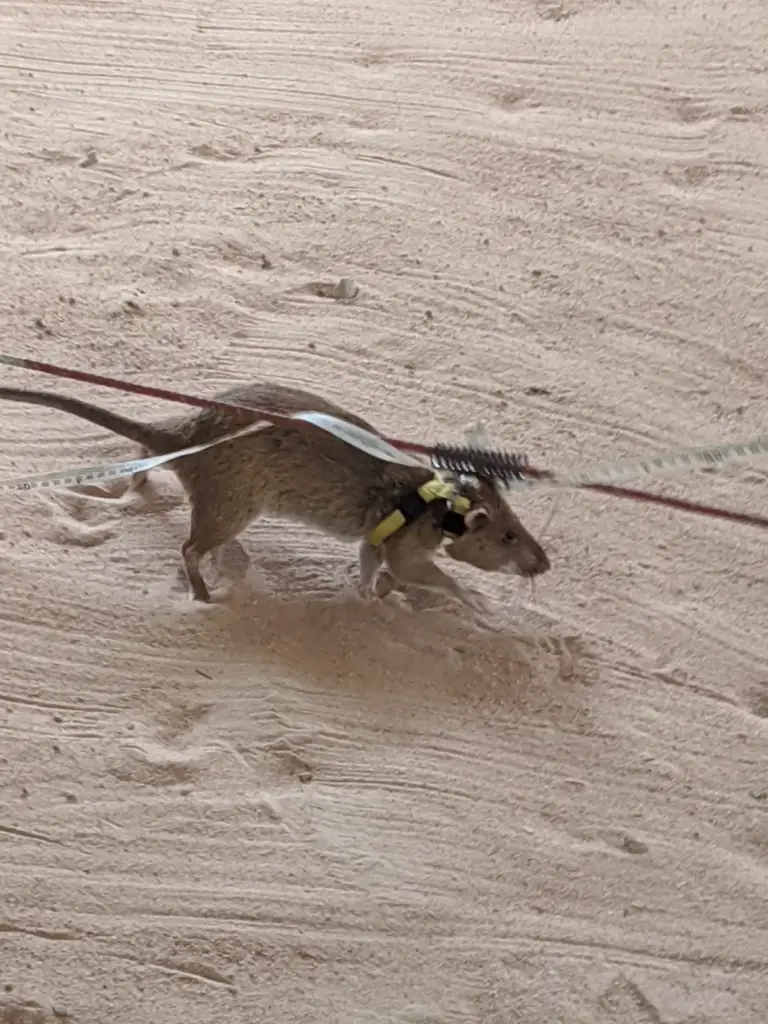
Once harnessed up, the rats, who all have a name, get to work sniffing the ground for the small amount of training TNT that’s been hidden. The handlers stand safely off to the side, guiding them across the ground. It’s rather fascinating to watch.
After the rat finds the explosive, which of course they always do because they are professionals, you have an opportunity to hold the rat and take some photos. This is completely optional. You’ll need to first wash your hands, and the handler is there to show you how to hold it.
The one I held just sat there and was quite placid, but it was a little more adventurous with some of the other visitors, even climbing onto their shoulders.
Back inside the air-conditioned media room, they show some of the different ordnance found in Cambodia and share a few short films about people affected by landmines and residents who have benefited from APOPO’s programs. This is followed by a Q&A session.
On your way out, there’s also a gift shop where you can purchase souvenirs.
Planning Your Visit to APOPO
The APOPO Visitor Centre is located on Koumai Road, one of the roads leading to the Angkor Wat complex. Nearby is the Angkor Botanical Gardens. After your visit, you’re only a few minutes’ walk from the botanical gardens if you’re looking for something else to do in the area.
If you’re interested in learning more about Cambodia’s history of landmines and unexploded ordnance, there are a couple of other places to visit around Siem Reap. The War Museum Cambodia has displays of weapons and military equipment from Cambodia’s conflicts and has a small section dedicated to landmines. It is not far from APOPO, but we have heard that it is quite run down these days. The Cambodia Landmine Museum is 25 km from town, near Banteay Srei, and focuses more specifically on landmines and their impact on local communities. There is also a new CMAC Landmine Museum scheduled to open in December 2026.
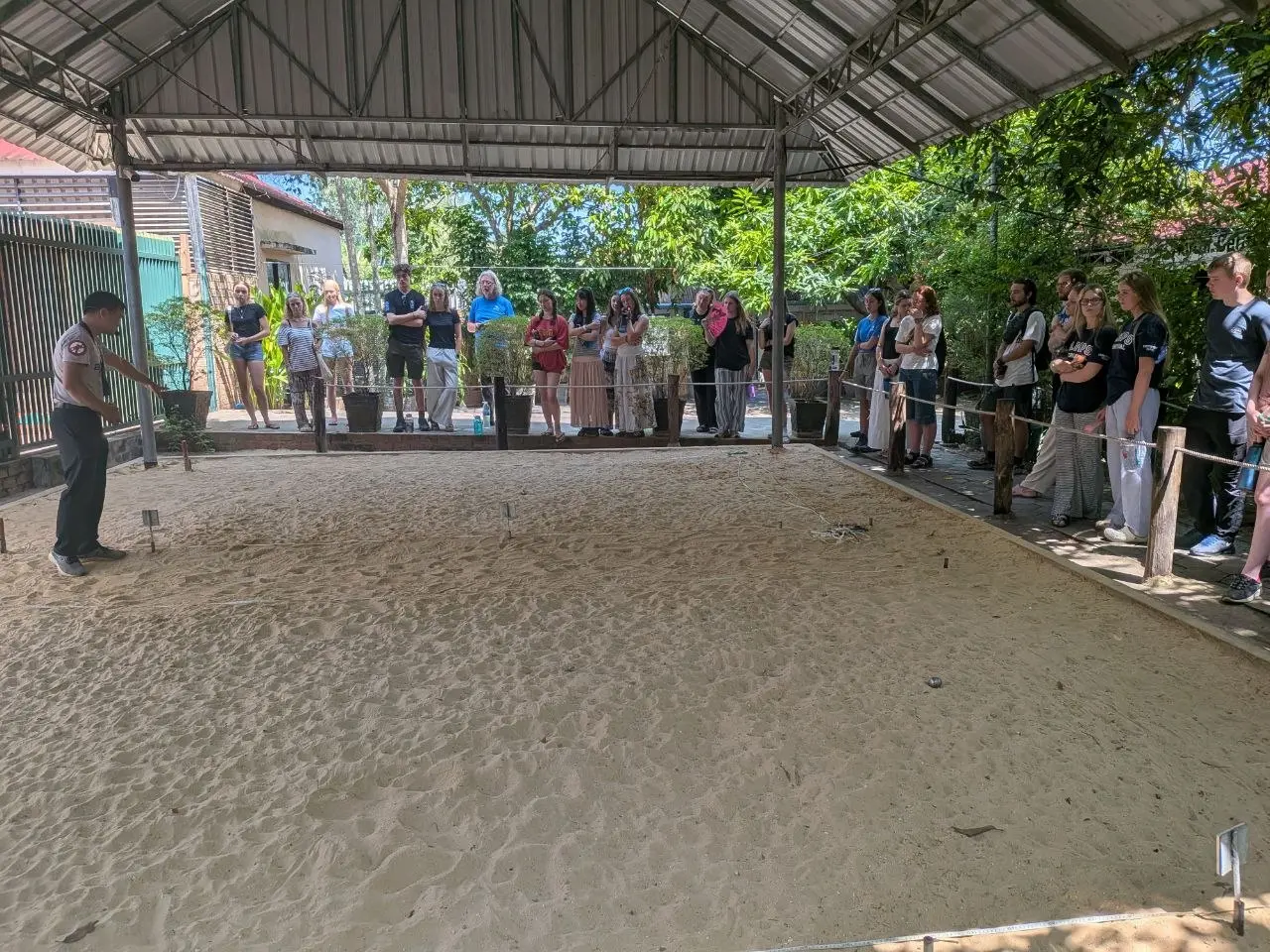
Tours are conducted in English and run every 30 minutes between 8.30 am and 4.30 pm each day. Tickets are 40,000៛ ($10) per person, with children under 10 admitted free. Although they have plenty of tours on offer, time slots can fill up quickly, especially in high season, so we recommend booking if you don’t want to wait. The morning and late afternoon slots are particularly popular because it’s cooler. There are shaded areas, but you do spend a little time in the sun, so it’s best to wear a hat and sunscreen.
Although rats might not be for everyone, we think most people will really enjoy the tour. You don’t have to get close to the rats if you don’t want to, and they really aren’t like rats you see in urban areas. And if you’re concerned about how the rats are treated, their website has a very informative FAQ section which reassured us about animal welfare.
It’s a thoroughly interesting hour-long session, where you learn about the history and impact of landmines in Cambodia and around the world, with some very cute and clever rats thrown in. We can understand why this is such a popular tourist attraction in Siem Reap.
We last visited APOPO in July 2026
Related Posts