KEP
Kep Crab Market: Buying, Cooking & Eating Cambodia’s Famous Crab
Kep crab is famous across Cambodia. Even sitting down to lunch at work, if someone has crab the first question is usually, “Oooh… did you go to Kep?” Even if they didn’t, someone will inevitably tell you that Kep crab is the best, or mention that an uncle brought some home from a weekend away.
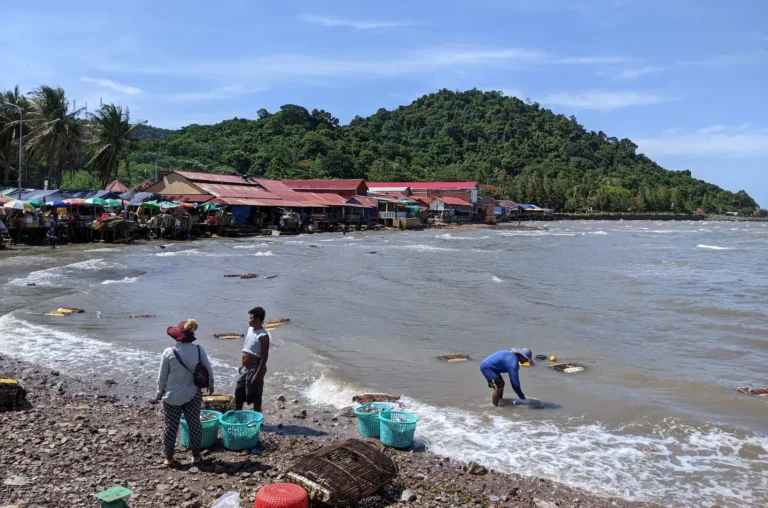
Crabs are caught just offshore from Kep and have become closely associated with the town over the years. Whether the crab really tastes better here is up for debate, but eating it overlooking the sea where it was caught is definitely part of the experience.
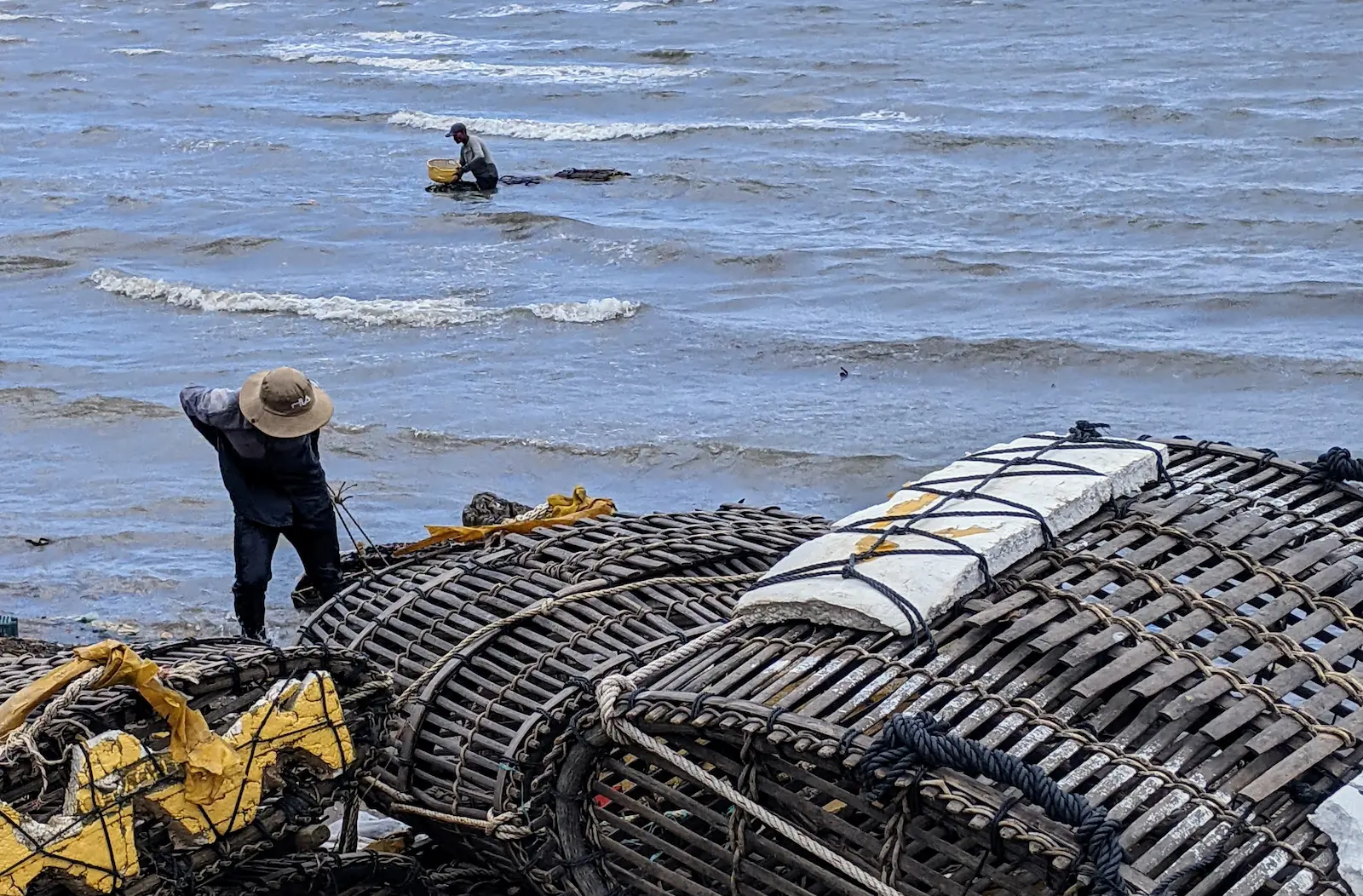
We always start our visit by having a look at the fishers bringing in their catch. If you arrive early in the morning, you can watch a busy shoreline as they bring in their early morning baskets, pulled by a rope to bring in the crabs and haul them up the beach to the market. At times you can buy them straight from the basket on the beach, but I always leave this to Nehru to negotiate.
Buying fresh seafood
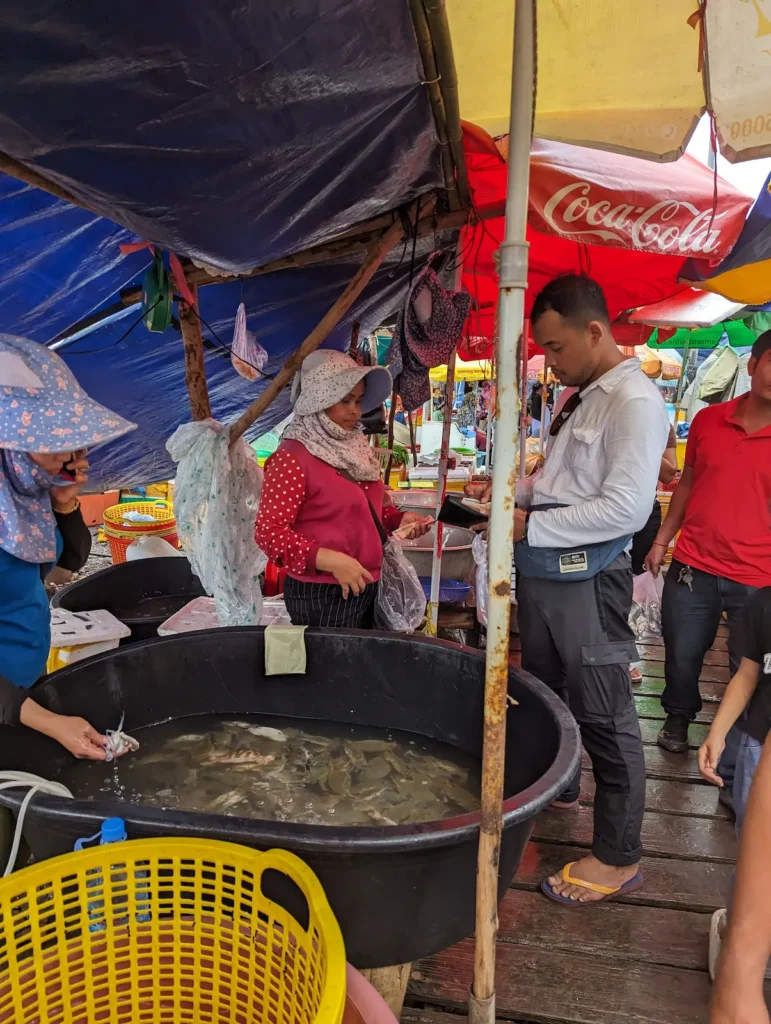
To order crab or any seafood the first step is to ask how much per kilo. Neither of us like to barter too much, so our strategy is to ask a few people their price first and then choose the cheapest as our starting point.
The price fluctuates all the time due to availability. Expect to pay around 30,000 – 40,000៛ ($7.50-10) per kilogram for crab and 20,000 – 30,000៛ ($5-7.50) for prawns depending on size. Most market sellers have enough English for the basics as long as you don’t overcomplicate it but your tuk tuk driver is usually happy to help out, or someone at a nearby stall will jump in and help you if it’s a struggle.
Cooking the crab
Once you’ve chosen your seafood, the seller will ask what you’d like them to do with it. Packed up to take away raw, or cooked. They don’t generally have a restaurant menu of different options, but it is surprising what they do have available to serve from their modest stalls.
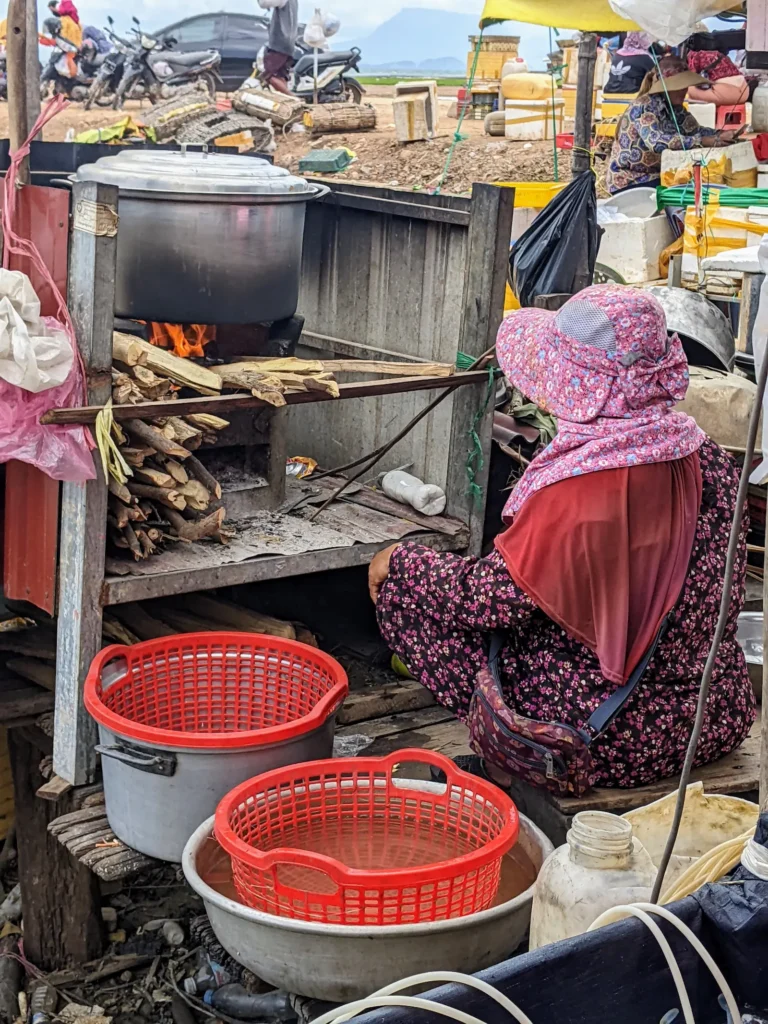
You can choose to have your catch grilled, boiled or steamed and every time we’ve eaten here, the seafood has been cooked perfectly. We tend to go with steamed or boiled, as it is just how we remember eating seafood growing up.
On top of just cooking your crab, some stalls will also offer crab meals. We usually order crab with green Kampot peppercorns or kroueng, a Khmer curry made with crab. You can order these in any restaurant but I love that they also do these from the market while we wait.
“Chong nham bai ot?” Do you want rice?” To complement your meal, they usually ask if you want rice, or can point you in the direction of someone selling rice.
Not all stalls have all of the options I’ve shared here, but if they don’t they will generally point you towards someone who will. And expect to pay a little extra on top of the price per kilo for the cooking.
It usually takes around 15 to 20 minutes to cook, which gives you plenty of time to wander around the market while you wait.
Around the market
The market itself is not very big, tucked into a corner between the road and the water. Around the edge of the market you’ll see rows of umbrellas, shading tubs full of live seafood and stacks of polystyrene boxes ready for transporting crab around the country. Further inside the market you will come to the “cooking” stalls and the familiar rows of stalls layered with dried squid and shrimp.
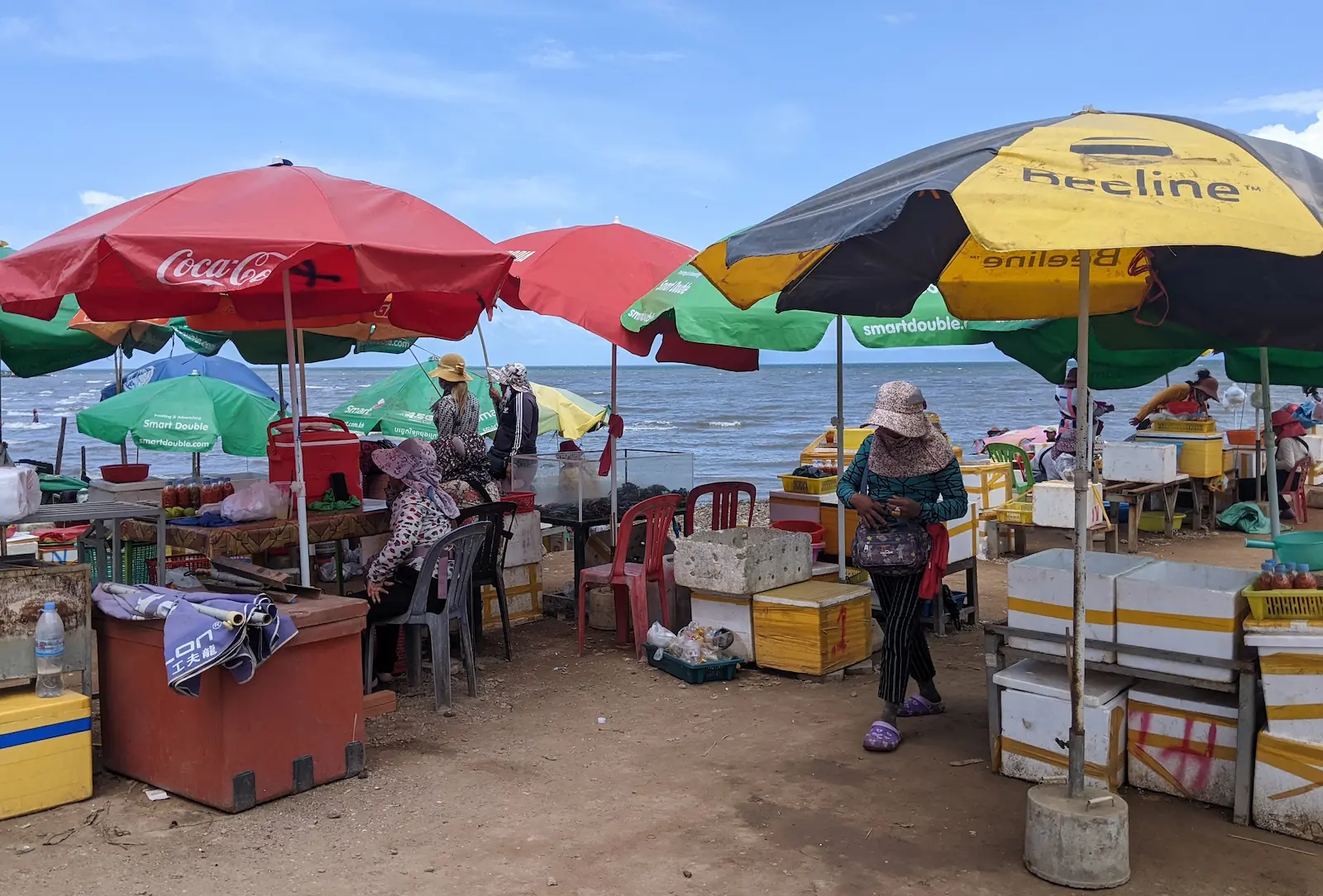
You’ll also spot bottles of Koh Kong sauce, a spicy lime and chilli dipping sauce that’s perfect with seafood, as well as a few other necessities such as shampoo and washing liquid if you’re after any supplies.
Eating your crab
By the time you’ve wandered around, your seafood is usually ready.
We’ve eaten crab in plenty of places around Kep now, from the beach to a ledge inside the national park. But sitting overlooking the water beside the market while eating crab that was swimming a few minutes earlier is still one of our favourite ways to spend lunch in Kep.
Crab Restaurants Near the Market
If you don’t want to worry about the hassle of bartering and getting things cooked at the market, that’s easily solved. Just walk around and then pop a few stores along to a series of restaurants. These are usually family run affairs, selling crab and seafood in a variety of ways. At these restaurants you can order crab soup, crab cakes, fried crab, crab in Kampot pepper sauce and plenty of other seafood dishes. Not as cheap as the market, but still very reasonable prices. Our favourites are Kep Ser Mur, which we visit on every trip (they also have very good ice cream) and Holy Crab next door.
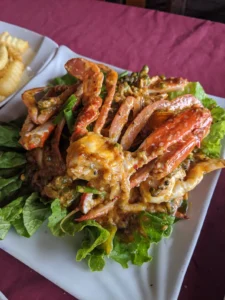
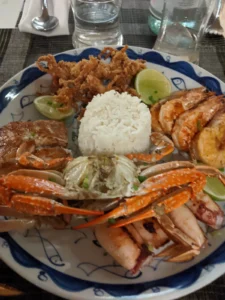
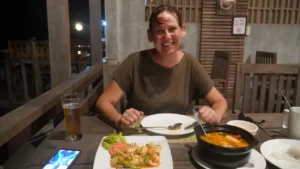
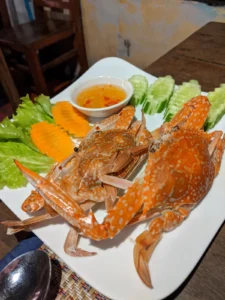
Leaving the crab market or the restaurants, turn right to take the road around to the beach and the national park. As you walk towards the beach and national park, look back towards the crab market to see the restaurants stretching out over the water on wooden stilts.
Taking crab home
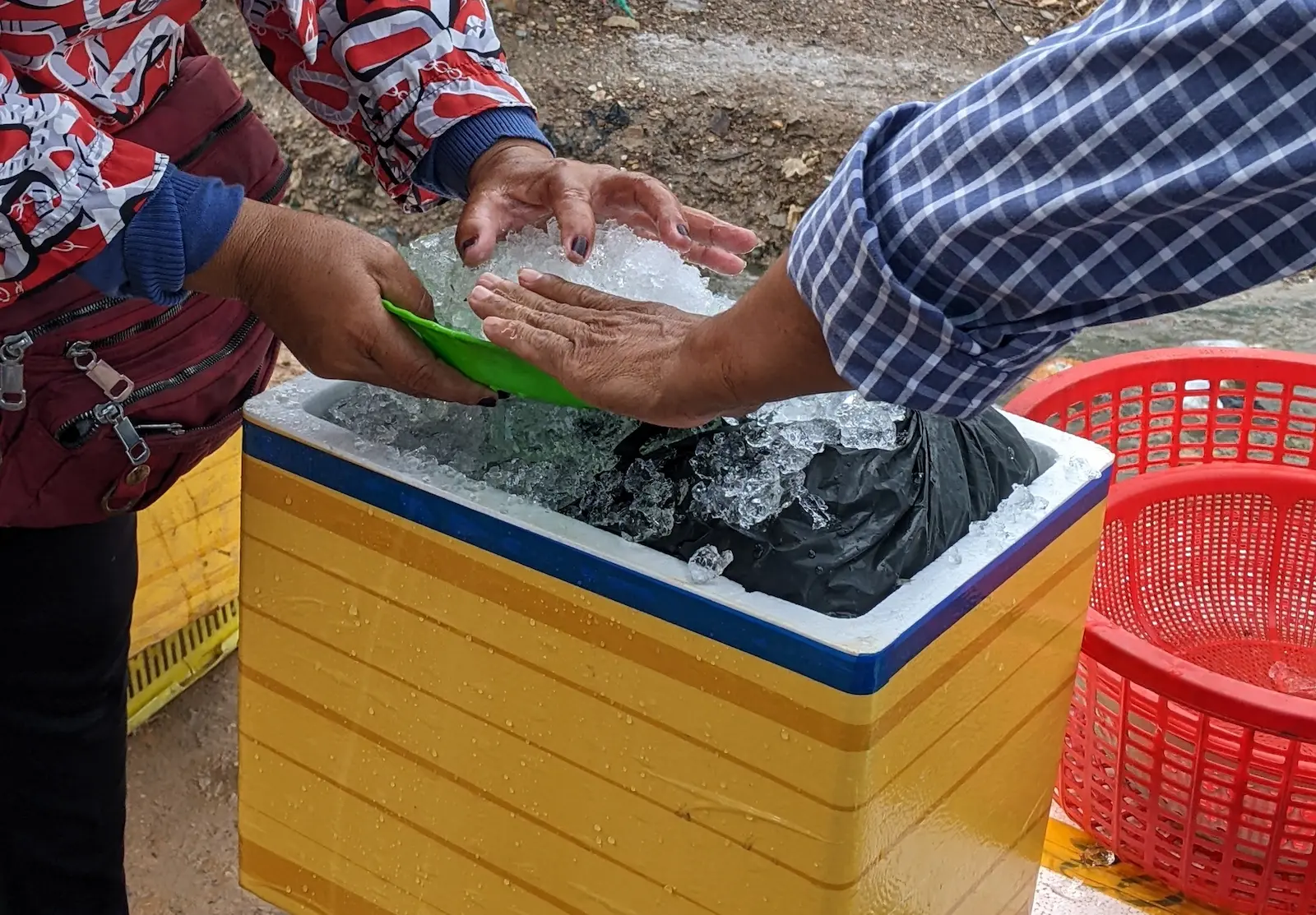
Before heading home we usually stop to buy another box of crab and prawns to take back with us. They’ll pack everything into a polystyrene box with ice, tape it up, and it’s happy travelling for the trip home. It probably isn’t something most visitors are looking to do, but it’s become part of our routine every time we visit Kep.
Best time to visit
We’ve visited early in the morning, just before lunch and again in the afternoon. Early morning is definitely the busiest, with fishers bringing in their catches and plenty of people buying seafood for the day. By lunchtime the restaurants are filling up, while the afternoon is generally quieter and you’re more likely to find sellers willing to negotiate on price.
We probably prefer arriving around 10 or 11 in the morning. There’s still plenty happening around the fishing boats, but it’s a little easier to wander around before the lunchtime rush.
Whether you buy a kilogram of crab to have cooked at the market or stop for lunch at one of the nearby restaurants, we make time for the crab market on every visit to Kep. Watching the boats come in, seeing the seafood change hands and then eating it overlooking the water is one of the reasons we continue to come back to Kep.
We last visited Kep in March 2025 and have visited several times in the last few years.
Related Posts